


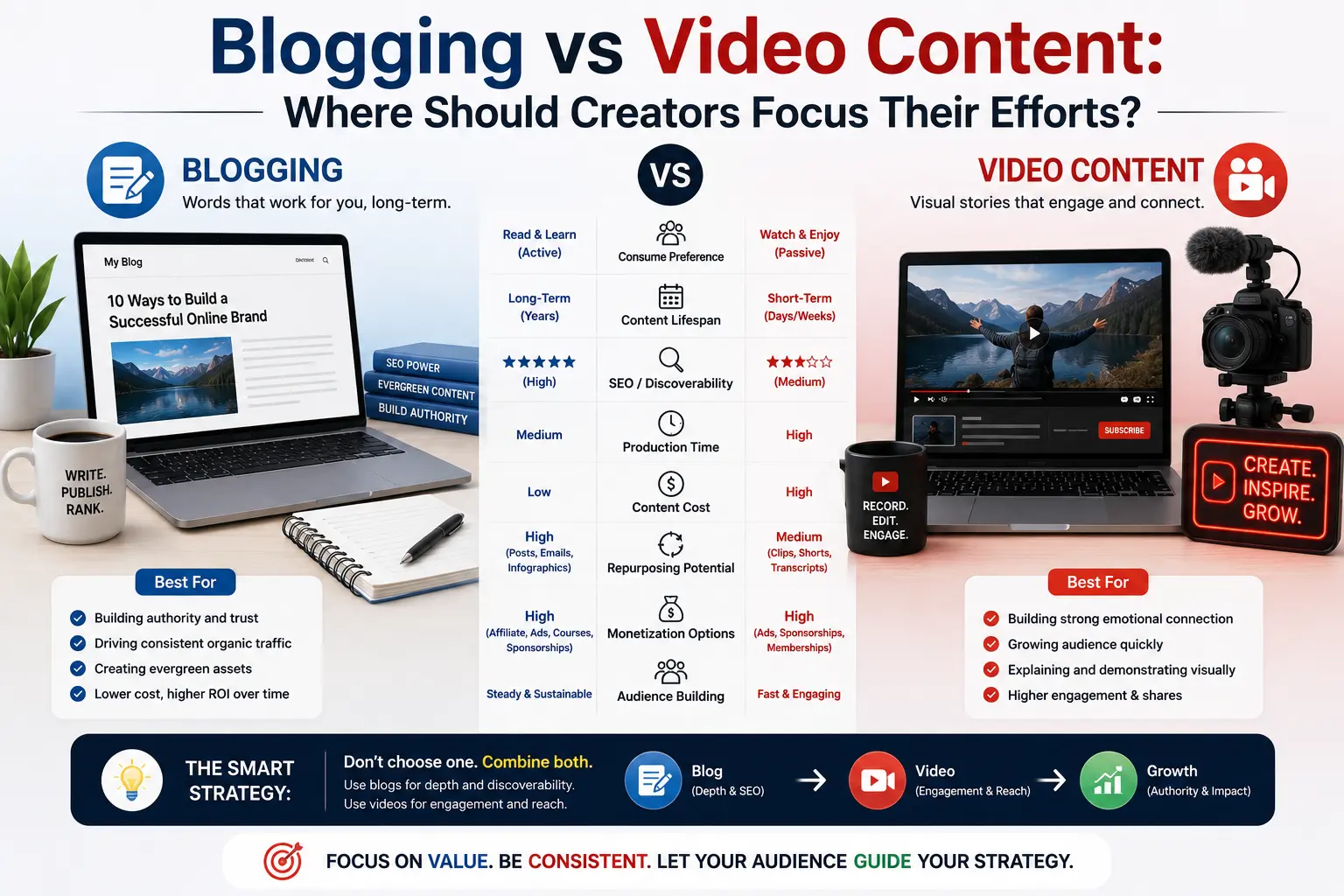
Choosing the right medium dictates how effectively an audience engages with digital content. Creators frequently face a crossroads when deciding whether to invest their resources into written text or video production. Maximizing return on investment requires analyzing structural advantages, production sustainability, and audience consumption behaviors.
The Distinct Advantages of Written Content Architecture
Textual platforms offer distinct structural benefits for deep informational processing and discoverability. Written content serves as a permanent, searchable archive that users can skim at their own pace to extract specific data points.
-
Deep Asynchronous Consumption: Readers consume written text at their own speed, jumping directly to relevant headers without sitting through linear introductions.
-
Low Barrier to Production: Publishing articles requires minimal equipment beyond a reliable computer and strategic analytical software, keeping operational costs exceptionally low.
-
Efficient Updating and Scalability: Refreshing outdated data points or expanding paragraphs takes minutes, allowing content to maintain historical search rankings indefinitely.
-
High Textual Search Density: Written articles provide rich semantic context, making it straightforward for search crawlers to index exact matches for nuanced queries.
The Unique Strengths of Digital Video Engagement
Visual media captures human attention through emotional resonance, personality, and multi-sensory storytelling. Video production shifts the focus from structural optimization to immediate personal connection and practical demonstration.
-
Rapid Trust Accumulation: Seeing a speaker build immediate credibility, fostering a loyal community faster than faceless text.
-
Dynamic Practical Demonstration: Complex physical tasks, software tutorials, and product unboxings become instantly clearer when shown in real-time motion.
-
Multi-Platform Syndication: A single long-form video effortlessly breaks down into short-form vertical clips for various secondary entertainment feeds.
-
Passive Consumption Accessibility: Audiences easily stream video while multitasking, capturing attention during commutes or domestic activities when reading is impossible.
Strategic Framework for Medium Selection
Evaluating organizational capabilities and target audience intent simplifies the final platform choice. Creators must align their natural strengths with the specific problem their content aims to solve.
If the primary goal is solving technical troubleshooting queries, step-by-step documentation remains superior due to its scannability. Conversely, lifestyle, entertainment, and experiential concepts thrive on visual delivery where mood and aesthetic dictate success. Many sustainable operations utilize a hybrid model, using text for comprehensive structural depth and embedded video files to boost on-page engagement metrics. Ultimately, consistency over long horizons matters more than choosing the theoretically perfect platform.
FAQs
Which medium offers better monetization potential for beginners?
Blogging typically yields higher profit margins early on due to negligible operational expenses and straightforward programmatic advertising. Video content offers immense monetization scale through direct brand sponsorships but requires significant upfront investments in audiovisual gear and editing resources to compete effectively.
How do search engine crawlers view video versus text?
Textual content provides immediate semantic data that algorithms index directly for precise search intent matching. Video content relies heavily on metadata, automated transcripts, and schema markup to help search engines understand the context and index specific timestamps for user queries.
Can a single creator successfully manage both blogging and video simultaneously?
Managing both formats concurrently often strains individual solo operations due to the vast differences in production workflows. Beginners should master one format to build a foundational audience before repurposing that existing catalog into the secondary medium.
Does video content convert casual viewers into buyers faster than text?
Yes, visual media often accelerates the buying journey because seeing a product in action removes cognitive friction and builds rapid trust. However, text remains essential for closing sales that require detailed technical specifications, pricing breakdowns, or feature comparisons.
Which format is more resilient against sudden algorithm changes?
Blogging on an independent domain offers greater systemic resilience because the creator owns the digital property and user database. Video creators are entirely dependent on host platform distribution algorithms, making their visibility more vulnerable to sudden policy shifts.





Leave a Reply