


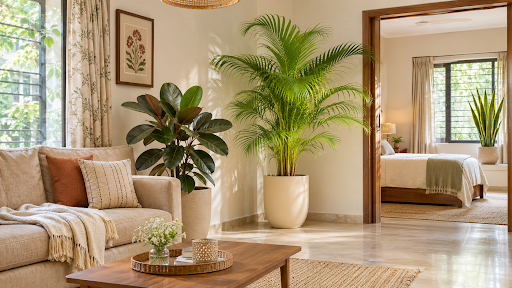
Indoor plants can make bedrooms and living rooms feel more natural, relaxing, and inviting. However, choosing plants for these two spaces requires different considerations. Bedrooms generally need compact, easy-to-maintain plants that fit beside beds or near windows, while living rooms can accommodate larger plants that add greenery to empty corners and decorative spaces. Instead of choosing plants only because they are advertised as air-purifying plants, consider their growth habits, maintenance needs, and suitability for your interiors. Let’s explore the best indoor plants for air quality that work best in these two important spaces.
Why Choose Different Indoor Plants for Bedrooms and Living Rooms?
A bedroom and a living room serve different purposes, so the plants you choose should suit their individual environments.
For bedrooms: Plants should ideally be compact, low-maintenance, and suitable for the available light. You may want varieties that fit on bedside tables, windowsills, or small shelves without making the room feel crowded.
For living rooms: You generally have more freedom to experiment with plant sizes, foliage, and arrangements. Larger plants can fill empty corners, while hanging plants and tabletop varieties can complement furniture and interior décor.
Best Indoor Plants for Bedrooms and Why They Work
Bedrooms are spaces where people relax and sleep. Plants with manageable sizes, simple care requirements, and attractive foliage are particularly suitable here.
1. Snake Plant: Ideal for Small Bedrooms
The snake plant is a practical air-purifying plant choice for bedrooms because of its upright growth. Unlike spreading plants, it takes up very little floor space and fits easily beside a wardrobe, near a window, or in an unused corner.
Its thick, vertical leaves also complement minimalist bedroom interiors. It tolerates low light, though it grows better in indirect light.
Why it suits bedrooms:
- Requires very little floor space.
- Does not need frequent watering.
- Works well in minimalist interiors.
- Easy to maintain for busy households.
2. Peace Lily: Suitable for Calm Bedroom Interiors
Peace lilies are popular for their elegant white flowers and glossy green foliage. Their appearance makes them suitable for bedrooms with neutral or pastel interiors.
They generally prefer indirect light and slightly moist soil. You can place a peace lily near a bright window or in a well-lit bedroom corner.
Why it suits bedrooms:
- Adds a soft, decorative appearance.
- Works well in smaller decorative pots.
- Prefers filtered light rather than harsh direct sunlight.
- Adds greenery without requiring a large arrangement.
Note: Peace lilies are toxic to cats and dogs if chewed.
3. Money Plant: Best for Bedroom Shelves and Hanging Pots
Money plants are ideal when you want greenery without using additional floor space. Their trailing vines look beautiful on wall shelves, bedside cabinets, and hanging planters.
They adapt to different indoor conditions and are relatively easy to maintain. You can also trim their vines to control their length.
Why it suits bedrooms:
- Makes use of vertical space.
- Suitable for compact bedrooms.
- Easy to propagate and maintain.
- Adds greenery to otherwise plain walls and shelves.
Note: Money plants are toxic to pets if ingested.
4. Aloe Vera: A Good Choice for Sunny Bedrooms
If your bedroom receives plenty of natural sunlight, aloe vera is worth considering. Its thick, fleshy leaves give it a distinctive appearance, and it does not require frequent watering.
A sunny windowsill is generally a better location than a dark bedside corner.
Why it suits bedrooms:
- Compact growth makes it suitable for windowsills.
- Requires relatively little watering.
- Its succulent appearance complements modern interiors.
- Suitable for people who prefer low-maintenance plants.
Best Indoor Plants for Living Rooms and Why They Work
Living rooms usually offer more opportunities to decorate with plants. You can combine large floor plants with smaller varieties to create different levels of greenery.
1. Areca Palm: Best for Empty Living Room Corners
Areca palms are excellent decorative air-purifying plants for spacious living rooms. Their tall stems and feathery leaves create a lush tropical appearance, making them suitable for empty corners beside sofas or large windows.
They prefer bright, indirect sunlight and regular watering when the top layer of soil begins to dry.
Why it suits living rooms:
- Fills unused corners beautifully.
- Adds height and volume to interior décor.
- Works well in spacious rooms.
- Creates a tropical garden-like appearance.
2. Rubber Plant: Ideal for Modern Living Rooms
The rubber plant is known for its large, glossy leaves and upright growth. It can become a striking focal point when placed beside a sofa, TV unit, or large window.
Its bold foliage works particularly well with contemporary and minimalist interiors.
Why it suits living rooms:
- Makes an attractive statement plant.
- Its broad leaves add visual interest.
- Works well in large decorative floor pots.
- Requires less frequent watering than many moisture-loving indoor plants.
Conclusion
The best indoor plants for bedrooms and living rooms depend on the space, lighting, and purpose of each room. Snake plants, money plants, and peace lilies are suitable options for bedroom arrangements, while areca palms, rubber plants, and bamboo palms work beautifully in larger living spaces.












Leave a Reply