


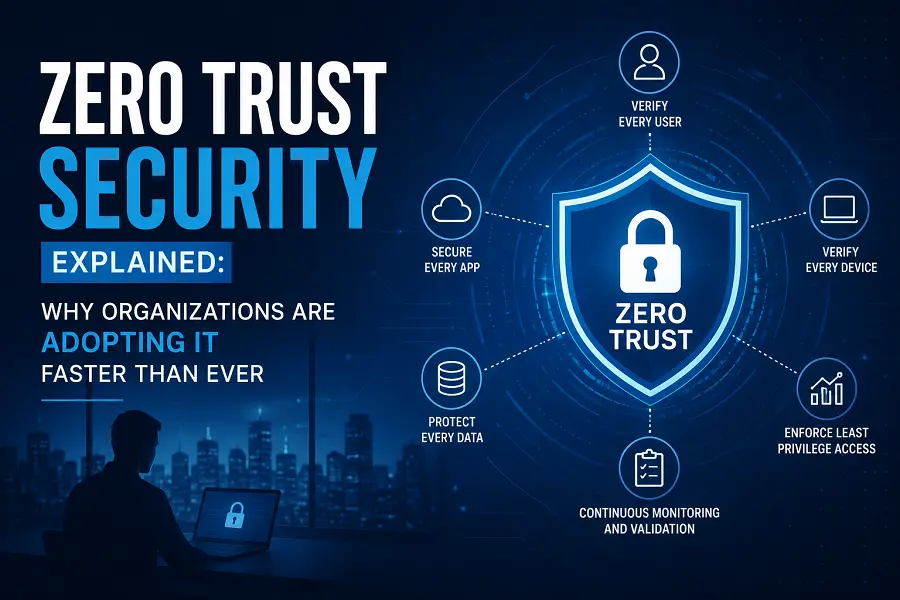
The traditional corporate network perimeter is obsolete. With remote workforces, multi-cloud architectures, and sophisticated cyber threats, companies can no longer rely on the old “trust but verify” model. Perimeter-based defenses assume that everything inside a network is safe, a flaw that modern hackers exploit daily.
This vulnerability is driving the rapid shift toward Zero Trust security. Built on the core philosophy of “never trust, always verify,” this framework treats every access request as a potential breach, regardless of where it originates.
What is Zero Trust Security?
Zero Trust is a strategic cybersecurity framework that eliminates implicit trust. It requires strict identity verification for every person and device trying to access resources on a private network. Whether an employee connects from a corporate office or a local coffee shop, the security protocols remain identical.
This model operates on three foundational principles:
-
Verify Explicitly: Always authenticate and authorize based on all available data points, including user identity, location, device health, and service or workload.
-
Use Least Privilege Access: Limit user access with Just-In-Time (JIT) and Just-Enough-Access (JEA) models to protect data and minimize lateral movement.
-
Assume Breach: Minimize the blast radius by segmenting access by network, user, devices, and application awareness. Encrypt all sessions and use analytics to gain visibility.
Drivers Behind Accelerated Zero Trust Adoption
The sudden acceleration of Zero Trust deployment stems from massive shifts in operational infrastructure. Organizations are realizing that legacy security tools cannot keep pace with modern business practices.
-
The Rise of Hybrid Work: Employees now access corporate data from various locations and unsecured home networks. Traditional VPNs create a single point of failure and grant overly broad access once breached.
-
Cloud Expansion: Data no longer resides in a single on-premise data center. It is scattered across public clouds, private clouds, and diverse SaaS applications, making centralized perimeter security impossible.
-
Sophisticated Ransomware Threats: Modern cyberattacks bypass traditional firewalls using stolen credentials. Zero Trust prevents these attackers from moving laterally across a network even if they gain initial entry.
-
Strict Compliance Mandates: Regulatory bodies globally are updating privacy laws. Implementing strict access controls helps businesses meet these rigorous compliance standards and avoid heavy penalties.
Key Benefits of Eliminating Implicit Trust
Implementing a Zero Trust architecture transforms an organization’s defensive posture from reactive to proactive. By decoupling security from physical locations, businesses gain unprecedented control over their digital assets.
The framework drastically reduces the risk of data breaches by validating every single transaction. If a hacker compromises an individual employee’s device, micro-segmentation ensures the attacker remains trapped within that specific node, unable to access sensitive databases or core infrastructure. Furthermore, IT departments gain total visibility into data flows, user behaviors, and application usage, allowing them to spot and remediate anomalies before they escalate into full-scale security crises.
Conclusion
Adopting Zero Trust is no longer a luxury for highly regulated industries; it is a baseline requirement for modern business resilience. By stripping away implicit trust, organizations protect their data, empower their remote workforce, and neutralize advanced cyber threats before they cause damage.
Frequently Asked Questions
What is the first step in implementing Zero Trust?
The process begins with comprehensive asset discovery. Organizations must identify their most critical data, applications, assets, and services to determine who needs access to them and why.
Does Zero Trust replace traditional firewalls?
No, it evolves how firewalls are used. Zero Trust integrates firewalls with identity management, device health checks, and micro-segmentation to create dynamic, context-aware security barriers.
How does Zero Trust impact user experience?
When deployed correctly with Single Sign-On (SSO) and adaptive authentication, it streamlines the user experience by reducing repetitive logins while maintaining high security.
Is Zero Trust only for large enterprises?
Small and medium-sized businesses benefit equally from Zero Trust. Cloud-based security tools make enterprise-grade identity verification and access control accessible to organizations of all sizes.
What is micro-segmentation in Zero Trust?
Micro-segmentation divides a network into distinct, secure zones. This limits an attacker’s ability to move sideways through a system if they manage to breach one specific area.





Leave a Reply