


The digital threat landscape has undergone a profound shift. Security strategies that relied on perimeter defenses and periodic software patching are no longer sufficient to protect sensitive infrastructure. Organizations now face hyper-automated threats, making real-time adaptation a baseline requirement for survival. Navigating this environment successfully requires a deep understanding of the core shifts redefining defensive architecture.
The Rise of Agentic AI and Autonomous Security Operations
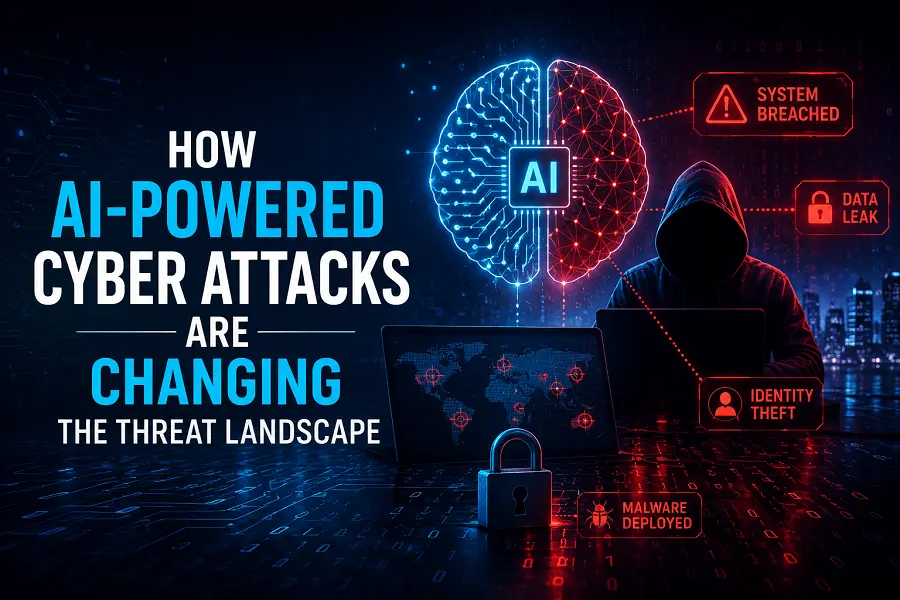
Artificial intelligence has evolved past basic generative text and simple pattern recognition. Current systems utilize autonomous AI agents capable of executing multi-step tasks, evaluating environment changes, and modifying their behavior without human prompts. This technological leap empowers both threat actors and defensive teams, transforming security into an algorithmic race of speed and adaptability.
On the offensive side, malicious actors deploy intelligent agents to conduct continuous, automated reconnaissance on public cloud instances and application programming interfaces (APIs). These agents can identify misconfigurations, test custom exploits, and move laterally through networks faster than traditional security teams can track.
To counter these automated campaigns, organizations are transitioning to autonomous Security Operations Centers (SOCs). These systems provide critical advantages:
-
Intelligent Alert Triaging: Machine learning engines automatically analyze thousands of daily telemetry logs, filtering out false positives to prevent analyst burnout.
-
Instant Incident Isolation: When a verified breach pattern is identified, defensive AI agents immediately quarantine compromised endpoints or revoke active session tokens.
-
Predictive Threat Hunting: Systems continuously simulate attack paths based on live system changes, patching logical weaknesses before exploitation occurs.
Continuous Exposure Management Over Traditional Vulnerability Scanning
Static vulnerability scanning at set calendar intervals cannot keep pace with dynamic cloud environments and shifting attack surfaces. Modern enterprises deploy highly interconnected software ecosystems featuring third-party vendor integrations, open-source dependencies, and temporary cloud workspaces. This complexity has made continuous threat exposure management a standard operational practice.
Rather than relying purely on software patch cycles, active defense requires comprehensive visibility into all internet-facing assets. Security frameworks must prioritize risks based on exploitability and business impact rather than arbitrary severity scores.
-
Inventory Discovery: Automated tools map out hidden digital assets, identifying forgotten subdomains, unmonitored shadow IT platforms, and expired security certificates.
-
API Inspection: Security systems analyze data transmission pathways to prevent unauthorized data exposure through unauthenticated or poorly coded backend connections.
-
Supply Chain Auditing: Teams utilize dynamic Software Bills of Materials (SBOMs) to track code vulnerabilities across external software suppliers and partner networks.
Identity Deception and the Zero-Trust Authentication Shift
As network perimeters dissolve due to remote operations and hybrid cloud storage, identity has become the primary battleground for data protection. Threat actors increasingly focus on credential abuse and sophisticated social engineering rather than breaking through structural firewalls. The widespread availability of hyper-realistic deepfake technology has further complicated identity verification, allowing attackers to spoof voice and video communications during live verification procedures.
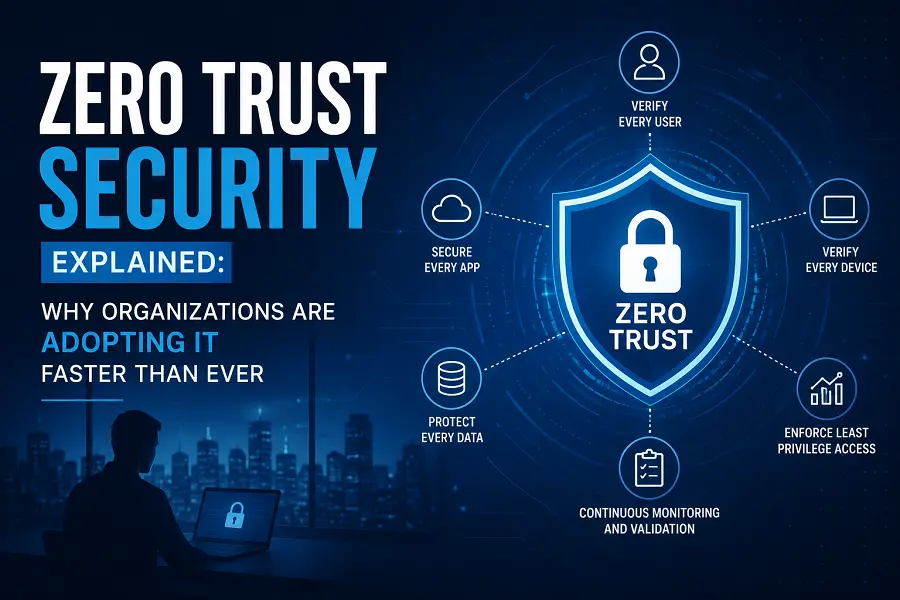
Consequently, modern access architecture operates on a strict zero-trust model: never trust, always verify. Access permissions are decoupled from network locations, meaning an internal user faces the exact same verification hurdles as an external request.
Authentication mechanisms have shifted toward continuous, risk-based evaluation. Instead of relying on static passwords or basic multi-factor text codes, security platforms analyze real-time context. This includes evaluating device health metrics, geographic anomalies, and behavioral biometric patterns to establish ongoing trust scores. If a user behavior deviates sharply from established baselines, access privileges are automatically restricted until out-of-band verification is completed.
Conclusion
Digital resilience requires a structural shift from passive prevention to active operational endurance. As autonomous threat systems and identity-spoofing tools grow more accessible, safety depends on deploying adaptive, intelligent architecture. By anchoring corporate defenses in autonomous monitoring, continuous exposure visibility, and strict zero-trust validation, enterprises can effectively outpace emerging risk vectors and safeguard their critical digital infrastructure.
FAQs
What is agentic AI in cybersecurity?
Agentic AI refers to artificial intelligence systems that can autonomously make decisions, adapt to changing environments, and execute complex, multi-step actions without constant human intervention. In security, it is used both to launch automated attacks and to orchestrate real-time, predictive defenses.
Why are legacy VPNs being replaced?
Traditional VPNs are prone to credential theft and software vulnerabilities. Once an attacker compromises a VPN account, they gain broad access to the internal network. Modern frameworks replace them with Zero-Trust Network Access, which restricts users only to the specific applications required for their role.
How does deepfake technology impact corporate security?
Deepfakes allow malicious actors to mimic the voices or faces of company executives and trusted vendors. This makes high-level phishing and social engineering campaigns highly convincing, often tricking employees into authorizing fraudulent financial transactions or revealing sensitive access credentials.
What is continuous threat exposure management?
It is a proactive security framework that continuously monitors, evaluates, and validates an organization’s entire digital attack surface. Unlike older scanning methods that only look for missing software updates, it uncovers misconfigured cloud settings, vulnerable APIs, and third-party vendor risks in real time.
How do organizations protect against supply chain cyberattacks?
Protection involves maintaining total visibility over software dependencies using real-time Software Bills of Materials. Organizations continuously monitor partner integrations, strictly limit third-party access permissions through least-privilege policies, and audit the security posture of external vendors.





Leave a Reply