


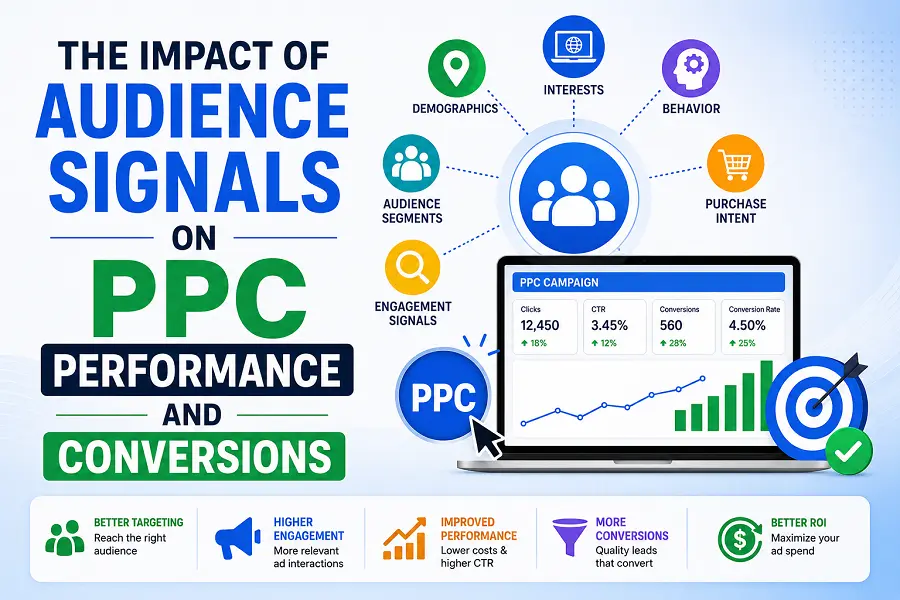
Modern paid advertising relies heavily on automated machine learning models. Instead of manually guessing which demographics or keywords will yield the highest return, advertisers now provide platform algorithms with directional data inputs known as audience signals. These signals act as an initial roadmap, allowing bidding engines to identify high-converting consumers with unprecedented speed and precision.
Understanding how to leverage these data pointers dictates the efficiency of modern pay-per-click management. When deployed correctly, audience signals dramatically shorten the learning phase of a campaign, stabilize daily ad spend, and unlock scalable conversion volumes.
Accelerating the Machine Learning Phase
When launching a new advertising asset, the bidding system naturally enters an exploratory state to determine who is most likely to engage with the offer. Without guardrails, this exploratory period can consume significant portions of the ad budget on low-intent traffic. Providing structured audience signals eliminates this initial guesswork.
-
Algorithmic Fast-Tracking: Introducing high-intent user data helps the platform bypass blind testing, directly targeting profiles that mirror verified buyers.
-
Reduced CPA Volatility: By narrowing the initial discovery scope, the cost per acquisition stays predictable rather than spiking during the campaign’s infancy.
-
Efficiency in Seasonal Testing: Short-term promotional pushes benefit from condensed ramp-up periods, ensuring ads gain visibility while the offer remains relevant.
-
Predictive Intent Matching: Machine learning layers these inputs with real-time behaviors, such as immediate search histories and contextual browsing habits, to spot active buyers.
Categorizing Inputs for Maximum Algorithmic Impact
Not all data points hold equal weight within automated advertising frameworks. To train an algorithm effectively, marketers must categorize their audience signals by depth of intent and origin. The closer a signal is to a confirmed transaction, the more influential it becomes in steering automated systems like Google’s Performance Max or Meta’s Advantage+ suites.
-
First-Party Customer Lists: Uploading secure, hashed data of existing purchasers provides the highest quality foundation for lookalike and lookalike-adjacent expansion.
-
Bottom-Funnel Intent Actions: Grouping users who have abandoned shopping carts or spent extended time on pricing pages signals immediate buying readiness.
-
Custom Intent Search Queries: Aggregating high-performing competitor terms and transactional keywords directs the system toward active researchers.
-
Granular Life Events and Demographics: Layering specific milestones, such as recent business launches or geographic relocations, adds critical contextual relevance.
Creative Alignment with Audience Data Ingestion
The function of an audience signal is to guide the delivery system, but the ad creative remains the mechanism that finalizes the conversion. When the machine learning model identifies a pocket of users based on specific signal criteria, the presented ad copy must directly address that group’s distinct pain points.
If a campaign utilizes an audience signal composed of past corporate buyers, the visual assets and messaging should highlight bulk pricing, scalability, and enterprise-grade security. Conversely, if the signal points toward individual consumers, the messaging must pivot toward immediate personal utility, social proof, and seamless checkout experiences. This strict alignment ensures that the traffic won by the algorithm is never wasted by a generic message.
Conclusion
Audience signals have fundamentally changed PPC from a game of manual keyword bidding to a discipline of strategic data provisioning. Feeding ad networks clean, high-intent user profiles allows automation to handle the operational heavy lifting while driving superior conversion volume.
FAQs
What exactly is an audience signal in modern PPC?
An audience signal is a compilation of data points—such as customer lists, website visitor history, or specific search behaviors—provided to an ad platform to suggest who is most likely to convert, helping the algorithm find new customers faster.
How do audience signals differ from traditional audience targeting?
Traditional targeting acts as a rigid barrier, showing ads exclusively to the selected groups. Audience signals serve as a flexible recommendation engine; the system starts with your suggestions but can expand beyond them if it identifies better conversion opportunities elsewhere.
Can a campaign still perform well without adding audience signals?
Yes, but the system will require significantly more time and ad budget to discover your ideal customer profile through trial and error. This path typically results in a prolonged learning phase and higher initial acquisition costs.
How often should customer list signals be updated within an ad account?
Customer data lists should ideally be updated via automated CRM integrations in real time, or manually at least once a week. Outdated lists prevent the algorithm from identifying fresh behavioral trends among your most recent buyers.
Do audience signals negatively restrict a campaign’s overall reach?
No. Because they function as hints rather than strict parameters, the algorithm retains the freedom to pursue conversions outside your designated signals if the real-time behavioral data indicates a strong probability of a sale.





Leave a Reply