


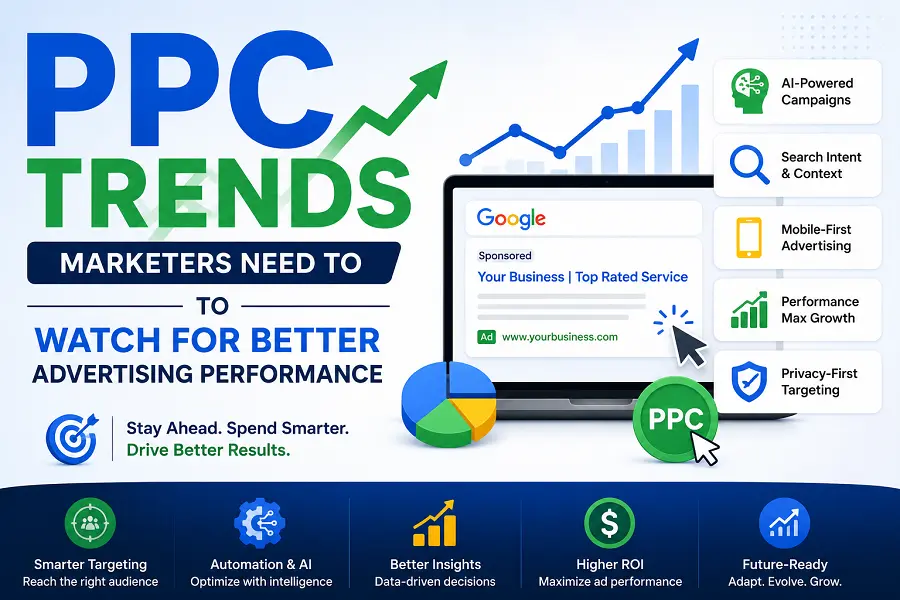
The digital advertising ecosystem is undergoing a profound transformation. Paid search and social channels are moving away from manual configurations, shifting toward algorithmic setups that prioritize user experience and data integrity. Advertisers who rely on outdated strategies risk watching their acquisition costs climb while visibility declines. Staying ahead requires a deep understanding of where ad platforms are directing their technical updates.
Achieving optimal performance demands a pivot toward sophisticated data management and creative agility. The following insights detail the essential developments shaping the pay-per-click market and offer actionable ways to maximize return on ad spend.
AI-Driven Campaign Orchestration Over Manual Management
Artificial intelligence has shifted from a novel feature to the baseline operating system of paid advertising. Automation handles bidding, budget allocation, and search query matching with minimal human intervention. Instead of micromanaging individual keywords, successful campaigns now focus on steering automated systems like Performance Max and Advantage+ with precise business goals.
-
Algorithmic Oversight: Automation requires strict guardrails rather than a hands-off approach to prevent budget drift into low-intent search terms.
-
The Rise of AI Agents: Marketing assets must now be structured to convince both human buyers and conversational AI tools acting as decision-making proxies.
-
Value-Based Bidding: Systems optimize toward actual revenue outcomes by feeding clean conversion values into machine-learning frameworks rather than focusing solely on click volume.
-
Asset Variety: Providing a diverse matrix of high-quality text, image, and video components allows platform algorithms to assemble optimal combinations for distinct user profiles.
The Shift to First-Party Data and Privacy-Safe Tracking
Traditional tracking mechanisms continue to degrade under evolving privacy frameworks and user consent standards. Relying on platform-side anonymous tracking introduces severe attribution gaps that weaken smart bidding models. The most resilient advertising operations rely on deep, securely hashed customer data repositories to power their audience matching.
-
Implement Server-Side Tagging: Moving from browser-based pixels to server-to-server tracking protects measurement accuracy against ad blockers and browser restrictions.
-
Deploy Enhanced Conversions: Securely transmitting hashed first-party identifiers like emails back to search platforms closes cross-device attribution gaps.
-
Build Deep CRM Integrations: Syncing offline sales milestones back to the ad account ensures the bidding engine prioritizes high-value leads over casual form submissions.
-
Lower Conversion Signal Thresholds: Capitalizing on relaxed platform requirements allows smaller, curated customer lists of even 100 users to train smart bidding models efficiently.
Creative Assets as the Primary Targeting Lever
With ad platforms adopting broad keyword matching combined with behavioral signals, traditional keyword filtering is no longer the sole method for reaching an audience. The visual and textual creative elements now do the heavy lifting of sorting the market. The specific hooks, messaging angles, and aesthetics used in ad copy determine exactly which consumer segments engage.
Unrefined, authentic vertical videos and structured user-generated content outpace overly engineered, corporate-style video productions. Advertisers must develop systematic testing structures that evaluate explicit psychological angles, such as problem-agitation-solution frameworks, rather than randomly testing unrelated elements. High-performing creative combinations must then be rapidly scaled and updated before creative fatigue sets in and performance drops.
Conclusion
Maximizing advertising performance no longer depends on tricking an algorithm or finding hidden keywords. Success belongs to marketers who pair rapid technological automation with human strategic direction, clean first-party data inputs, and high-impact creative assets.
FAQs
How do AI Overviews impact paid click-through rates?
AI Overviews occupy prominent real estate on informational search queries, frequently shifting traditional text ads lower on the results page. Marketers can counteract this by targeting high-intent, bottom-funnel commercial searches where conversational answers are less likely to displace paid space.
Why is broad match performing better than it did previously?
Broad match now operates in tandem with smart bidding systems, analyzing real-time user signals, search history, and landing page content rather than relying strictly on the spelling of the keyword. This enables deep intent discovery that phrase or exact match types often miss.
What constitutes a healthy landing page experience for automated bidding?
Automated bidding engines evaluate landing pages for mobile responsiveness, single clear calls-to-action, and load speeds under 2.5 seconds. A strict contextual match between the ad creative and the landing page copy is necessary to maintain a strong quality score.
Should small businesses with low conversion volumes use automated bidding?
Automated bidding strategies require steady data streams to prevent budget volatility. Accounts generating fewer than 100 monthly conversions should consider micro-conversion tracking, such as video views or button clicks, to give the machine learning system sufficient data points.
How does short-form vertical video impact traditional text search performance?
Discovery campaigns on visual platforms build top-of-funnel brand awareness. When users encounter authentic short-form vertical video ads, it directly triggers an increase in high-intent, branded search volumes on traditional search engines.





Leave a Reply