


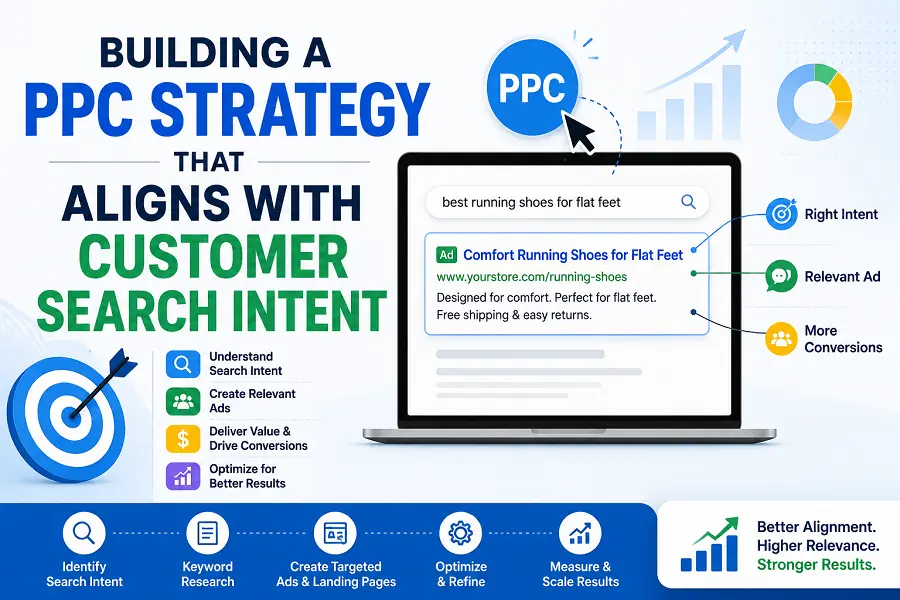
An advertising budget yields its highest return when the destination page satisfies the exact motivation behind a user’s search query. Many paid campaigns falter because they treat all keyword traffic equally, directing broad informational queries to aggressive sales pages. Crafting a high-performing pay-per-click framework requires a precise understanding of the consumer’s psychological state at the moment they enter a search phrase.
By mapping paid assets to the distinct stages of the purchasing journey, marketers reduce bounce rates and increase quality scores. This intentional alignment turns search traffic into predictable revenue by giving users the exact depth of information they seek.
Deconstructing Search Intent Categories for Paid Search
Every keyword entered into a search engine carries an underlying objective. To prevent wasted ad spend, campaigns must categorize keywords into separate ad groups based on explicit behavioral goals. This classification ensures that both the ad messaging and the bidding thresholds match the likelihood of an immediate transaction.
-
Informational Queries: Consumers seek answers, guides, or troubleshooting advice. Bidding here requires low-cost, educational offers like whitepapers to capture early-stage leads.
-
Navigational Queries: Users look for a specific brand or web portal. Paid ads protect branded real estate from being intercepted by competitors.
-
Commercial Investigation: Prospects compare features, read reviews, or seek top-ten lists. Ads must highlight unique differentiators, case studies, or competitive advantages.
-
Transactional Queries: Buyers use action-oriented words like “purchase,” “discount,” or “overnight shipping.” These high-intent terms justify aggressive, top-of-page bidding.
Engineering Landing Pages for Specific Funnel Stages
Matching search intent extends far beyond writing relevant ad copy. The post-click experience must seamlessly fulfill the promise made in the ad banner. When the structure of a landing page contradicts the user’s intent stage, conversion rates collapse, and ad networks penalize the account with higher acquisition costs.
-
Deploy Explainer Assets for Research Queries: When targeting broad industry terms, use a clean layout focused on video demonstrations or interactive tools rather than direct checkout forms.
-
Utilize Multi-Step Forms for Complex Decisions: Commercial research traffic converts better when guided through an assessment or configuration tool that reduces friction.
-
Streamline Transactional Gateways: For bottom-funnel keywords, eliminate navigation menus, present single-click payment options, and feature bold social proof immediately above the fold.
-
Implement Dynamic Content Insertion: Adjust the main headlines of the landing page automatically to echo the exact search phrases that triggered the ad click.
Negative Keywords as Intent Filters
Refining an intent-based strategy relies heavily on filtering out the search queries you do not want to buy. Automated match types often interpret broad terms loosely, blending high-intent traffic with casual, non-commercial searches.
Regularly auditing search term reports allows marketers to build robust negative keyword lists that act as an intent filter. Adding terms like “free,” “history,” “career,” or “DIY” ensures that your capital is never spent on users who have zero intention of initiating a commercial relationship. This proactive exclusion sharpens the focus of automated bidding algorithms, forcing them to find users within your exact target profile.
Conclusion
Sustained PPC profitability requires moving past basic volume metrics to embrace intent-driven campaign architecture. Delivering tailored copy and tailored landing experiences to match a consumer’s exact stage of inquiry maximizes conversion velocity while driving down overall platform costs.
FAQs
How does search intent affect a campaign’s Quality Score?
Ad networks calculate Quality Scores based on ad relevance and landing page experience. When your page content accurately fulfills the search intent behind the keyword, your bounce rates drop and your Quality Score rises, lowering your cost-per-click.
Should I bid on informational keywords using a transactional landing page?
No. Forcing a user to buy a product when they are merely looking for an educational explanation leads to high bounce rates and wasted ad spend. Informational traffic should be driven to resources that capture emails for nurturing.
How do I identify the intent of a keyword before bidding on it?
Analyze the organic search results page for that term. If the top results consist of blog posts and definitions, the intent is informational. If the results feature product grids and product pages, the intent is transactional.
Can broad match keywords work in an intent-focused PPC strategy?
Yes, provided you pair broad match with smart bidding and deep audience signals. The automated system uses contextual clues from the user’s recent browsing behavior to determine intent before serving the ad.
Why do transactional keywords carry a much higher cost-per-click?
Because these terms are closest to generating revenue, competition among advertisers is intense. The higher cost reflects the immediate commercial value and elevated conversion probability of that traffic.





Leave a Reply