



The relationship between search queries and digital publishing has fundamentally evolved. Ranking high on search engine results pages no longer relies on tracking keyword density or matching exact phrases. True search visibility depends entirely on parsing the underlying human motivation behind every typed or spoken query.
Google’s refined ranking systems, combined with generative AI search models, look past basic text strings to analyze psychological context. Content that merely summarizes readily available facts is losing traction. Modern content strategy requires a precise alignment with real-world user motivations to demonstrate genuine helpfulness.
Deciphering the Layers of Audience Motivation
To align with modern search evaluation standards, creators must move beyond the basic classification of informational and transactional queries. Audiences demand immediate clarity, requiring a granular exploration of specific sub-intents.
-
Specific Micro-Intents: Searchers frequently seek exact, highly situational resolutions rather than broad overviews. A user exploring business software might need a tool configured specifically for a distributed ten-person team, changing the required depth of your answer.
-
The Informational Pivot point: When seeking information, audiences do not want introductory throat-clearing. Providing direct answers within the first two paragraphs satisfies the reader quickly and signals value to automated summary engines.
-
Commercial Verification: Before taking a transactional step, individuals look for transparent comparisons, practical challenges, and independent validation.
-
Conversational Long-Tail Queries: Natural language processing enables users to ask intricate questions. Content structures must mimic natural conversation to address these compound phrasing patterns.
Actionable Strategy for Intent-Driven Optimization
Building authoritative, useful content means abandoning automated templates and low-effort summaries. A structured approach ensures your pages fulfill user needs while maintaining competitive viability.
-
Analyze SERP Layout Clues: Examine live search results to understand what formats are currently favored. If video carousels or interactive lists dominate the first page, textual explanations alone will not satisfy the audience.
-
Inject First-Hand Proof: Differentiate your insights by including unique data, real-world case studies, and direct technical observations. Demonstrating real-world involvement protects your content against being categorized as low-value, scaled text.
-
Map the Entire Topic Architecture: Avoid writing isolated articles. Create comprehensive topic hubs that seamlessly connect basic educational overviews with advanced diagnostic tools.
-
Refine Visual Scannability: Ensure your layout features short paragraphs, active verbs, and clear typographic contrast. Readers must be able to extract actionable steps within seconds of landing on the page.
Integrating E-E-A-T and Search Quality Standards
Search quality evaluators prioritize trust above all other performance signals. Satisfying intent means proving that the individual behind the screen can rely on the information provided, particularly in niches that influence personal well-being, financial security, or societal trust.
True helpfulness is achieved when a page reduces the user’s need to hit the back button to seek alternative options. By validating your brand’s expertise through clear author credentials, transparent correction policies, and original analysis, you construct an authoritative framework that fulfills user expectations and aligns with modern search algorithms.
Conclusion
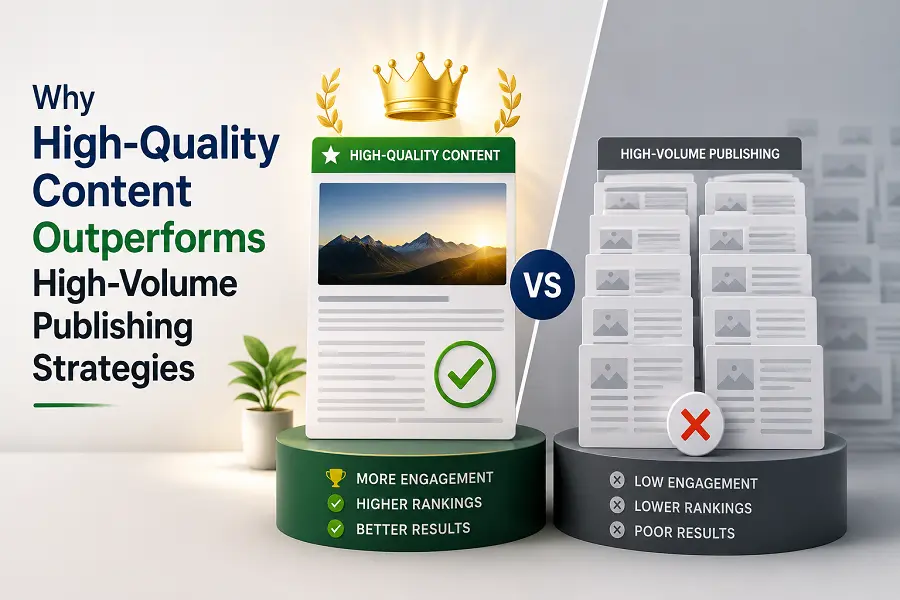
The shift toward user intent forces digital publishers to put human needs ahead of algorithmic manipulation. Success is no longer measured by the volume of content published, but by the depth of utility provided on each page. Authors who combine deep subject knowledge with an understanding of consumer psychology will continue to earn visibility across traditional search results and generative summary platforms alike.
FAQs
What is the difference between search intent and user intent?
Search intent represents the immediate goal of a user when entering a query into a search engine, such as finding a specific website or buying a product. User intent encompasses the broader context, covering the underlying problem, the user’s current situation, and what they hope to achieve after finding the information.
How do search engines detect if a page satisfies user intent?
Algorithms look at direct engagement indicators and user behavior signals. If a visitor immediately returns to the search results to click another link, it signals that the original page lacked the depth, accuracy, or structure required to solve their problem.
Why are keywords losing their primary importance in modern SEO?
Advanced search systems now interpret context, synonyms, and conversational meaning rather than just counting exact word matches. Content that focuses solely on keyword repetition often misses the nuanced questions users are actually trying to answer.
How can I optimize my content for AI overviews and generative snippets?
Structure your information with concise, direct answers early in the text, using descriptive headings. Incorporating unique statistics, professional consensus, and highly structured data increases the likelihood of your content being extracted and cited by generative engines.
Does long-form content always rank better for user intent?
No, word count is not a universal metric for quality. If a user has a quick informational or transactional goal, a concise, tightly focused page will outperform a lengthy, repetitive article filled with unnecessary introductory text.






Leave a Reply