


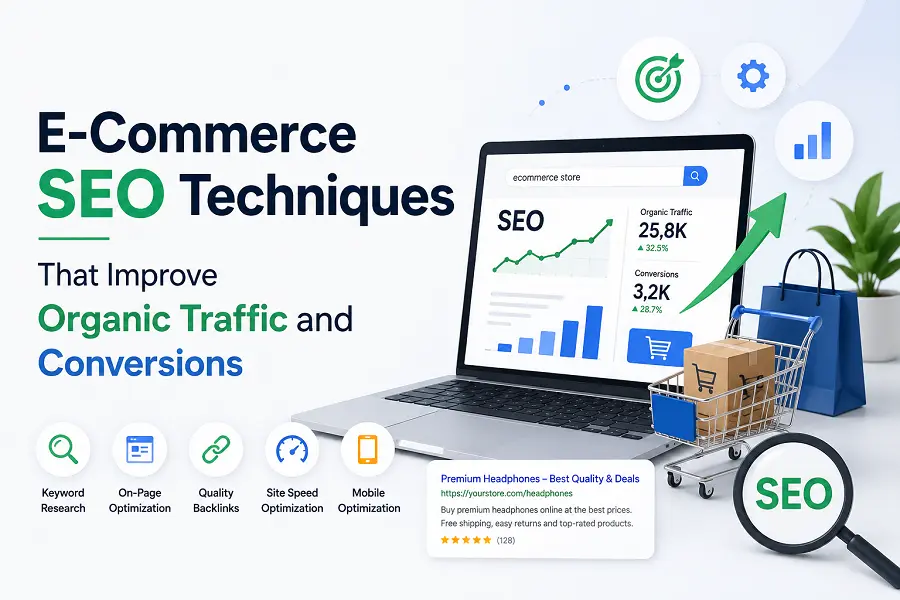
Driving visibility to an online store requires looking beyond simple keyword placement. True search engine optimization for retail platforms involves creating a seamless, intuitive user journey that satisfies search engine algorithms and human buyers simultaneously. When you align your technical infrastructure with deep commercial search intent, your storefront naturally secures higher rankings and lower cart abandonment rates.
Implementing a sophisticated optimization framework shifts your site from passive indexing to active customer acquisition.
Optimizing Commercial Architecture and Internal Link Distribution
A confusing website layout forces search engine crawlers to waste their crawl budget while driving potential buyers to exit prematurely. A clean, mathematically sound site architecture guarantees that both bots and users can reach any product on your storefront within three clicks from the homepage.
-
Flat URL Hierarchies: Build transparent, descriptive directory pathways that indicate the exact relationship between parent categories, sub-categories, and individual items.
-
Contextual Breadcrumb Trails: Implement clickable navigational helpers at the top of product listings to reinforce topical authority and ease user backtracking.
-
Strategic Cross-Linking: Pass internal link equity dynamically by inserting automated recommendations for highly complementary or alternative products directly onto your main landing pages.
-
Indexation Management: Use robots directives intentionally to hide low-value filter pages, search query results, and duplicate sorting variations from search indexes.
Mastering High-Intent Product Page Optimization
Product pages are the primary conversion engines of your e-commerce platform. Standard, manufacturer-supplied specifications fail to rank because they lack original value and fail to address the specific anxieties a consumer faces before inputting their payment information.
-
Inject Unique Informational Value: Write original copy that details exact sizing, structural durability, usage instructions, and practical real-world benefits instead of copying wholesale warehouse data.
-
Deploy Structured Product Schema: Embed complete JSON-LD microdata into your backend templates to feed search engines real-time pricing updates, current inventory status, and aggregate review scores.
-
Execute Image Optimization Pipelines: Compress product photos into next-generation web formats, while utilizing descriptive, keyword-conscious alternative text for accessibility and image search visibility.
-
Prioritize Core Web Vitals: Reduce script execution times, eliminate layout shifts during image loading, and leverage browser caching to ensure instant page responses on mobile devices.
Leveraging Informational Content to Capture Top-of-Funnel Buyers
Many consumers search for answers long before they select a specific product to purchase. Designing a robust content hub around informational keywords allows your brand to capture prospective buyers during the initial educational phase of their shopping loop.
By writing comprehensive buyers’ guides, comparison journals, and diagnostic troubleshooting articles, you build early brand equity and establish deep topical authority. This non-promotional content answers the direct questions users ask, making it highly eligible to appear in prominent Featured Snippets and generative search summaries. When these informational resources link smoothly down into your commercial collection pages, you create a natural, self-sustaining pipeline that converts casual searchers into transactional customers.
Conclusion
Maximizing e-commerce revenue through organic search is an ongoing balance of technical precision and exceptional user experience. By refining your category structures, maximizing individual product page data clarity, and addressing early-stage research inquiries, you build an authoritative digital footprint. Sustainable search rankings always follow storefronts that treat user satisfaction as their primary metric.
Frequently Asked Questions
How does site architecture directly impact e-commerce sales?
A logical, flat architecture helps search engines crawl and rank your pages quickly, while ensuring users find products with minimal clicks, lowering abandonment.
What is product schema markup and why is it necessary?
It is a code script that communicates specific retail details to search bots. This allows your listings to display rich snippets like star ratings and prices directly on search results pages.
Why should I avoid using manufacturer product descriptions?
Manufacturer descriptions are distributed to hundreds of websites simultaneously. Using them creates massive duplicate content issues that suppress your organic search visibility.
How do image alt tags improve e-commerce rankings?
Alt tags describe your product images to search crawlers and visually impaired users, allowing your inventory to rank effectively within vertical image search engines.
What are informational keywords in e-commerce SEO?
These are search terms used by consumers looking for answers, guides, or comparisons rather than immediate products, serving as an entry point for your brand.







Leave a Reply