


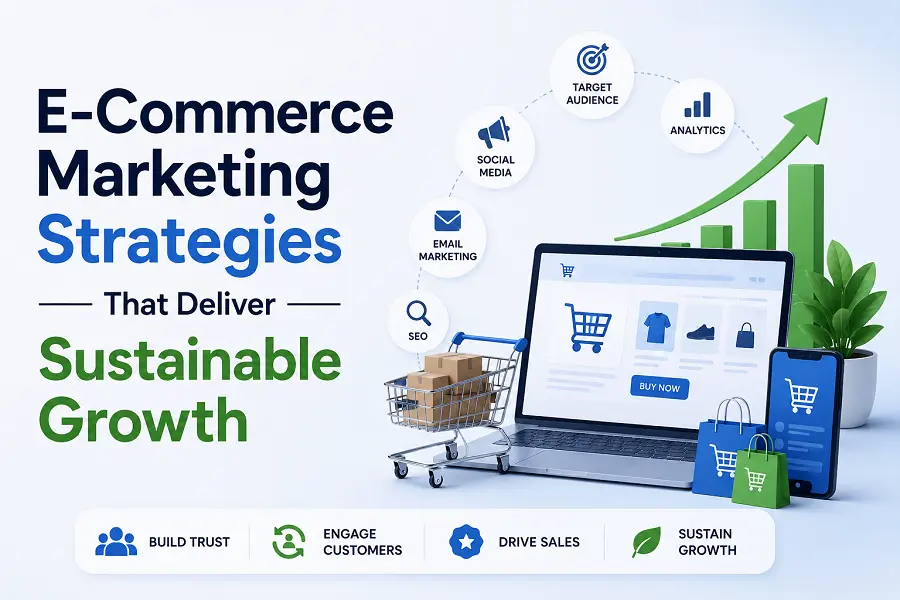
Relying solely on short-term paid advertising campaigns creates a volatile business model. When ad rates spike or tracking algorithms change, profit margins instantly collapse. Building a resilient e-commerce brand requires a shift away from erratic transactional acquisition toward sustainable, compounding marketing frameworks.
By diversifying your promotional channels, you stabilize customer acquisition costs and build a predictable pipeline of recurring revenue.
Mastering Retention-First Lifecycle Marketing
Acquiring a new customer costs significantly more than retaining an existing one. High-growth brands treat the first purchase as the beginning of a long-term relationship rather than the final goal. Transitioning to a retention-first mindset maximizes customer lifetime value and buffers your business against rising marketplace competition.
-
Behavioral Trigger Flows: Deploy automated messaging paths based on real-time user actions, such as cart abandonment, product browsing, or post-purchase milestones.
-
Predictive Replenishment Reminders: Calculate the average consumption rate of consumable goods to automatically message buyers right before they run out.
-
Tiered VIP Loyalty Frameworks: Reward high-value shoppers with early access to product launches, exclusive content, and points that convert into store credit.
-
Hyper-Segmented Win-Back Campaigns: Identify lapsed buyers who have not completed a transaction in several months and incentivize them with tailored re-engagement offers.
Optimizing Contextual Search and Organic Discovery
Paid search captures immediate demand, but organic optimization builds long-term equity. Modern e-commerce SEO focuses on capturing users at different stages of the buying funnel by creating helpful, non-promotional resources that answer their core questions.
-
Structure Collection Hierarchies Clearly: Organize your storefront navigation into logical parent and child categories to help search engine crawlers map your site architecture.
-
Incorporate Long-Tail Informational Phrases: Produce comprehensive buyers’ guides and comparison articles that address the pre-purchase concerns of your target demographic.
-
Implement Schema Markup Completely: Add structured data to your product templates to display real-time pricing, stock availability, and star ratings directly on search engine results pages.
-
Enhance Core Web Vitals: Systematically compress image files, eliminate render-blocking scripts, and utilize content delivery networks to achieve rapid mobile load speeds.
Cultivating User-Generated Content and Community Advocacy
Consumers naturally trust the unbiased opinions of their peers over corporate advertising claims. Encouraging your existing customer base to create authentic visual content gives you a constant stream of high-converting marketing assets that can be utilized across all social platforms.
Rather than waiting passively for reviews, implement automated post-purchase systems that incentivize visual feedback. Prompt customers to upload photos or short video clips of their purchases in exchange for entry into community contests or future discounts. This organic material provides powerful social proof that addresses the skepticism of new store visitors. By embedding these authentic customer assets directly onto your product landing pages, you naturally lower bounce rates and boost checkout conversion rates.
Conclusion
Sustainable e-commerce growth is never built on a single marketing channel. Real stability comes from balancing foundational search visibility, highly automated customer retention systems, and community-driven social proof. By focusing on compounding channels that deliver value long after the initial budget is spent, your brand secures a permanent competitive advantage.
Frequently Asked Questions
What is the most effective way to lower customer acquisition costs?
Prioritizing organic search optimization and building a robust email retention funnel allows you to generate consistent revenue without relying entirely on paid ad campaigns.
How soon should post-purchase emails be sent to customers?
An immediate order confirmation is mandatory. Follow up with shipping tracking within 24 hours, and wait two to three weeks before sending a request for a product review.
Why is product schema important for online stores?
Schema markup allows search engines to read your product data accurately, enabling rich snippets like star ratings and prices to appear directly in organic search results.
How do behavioral triggers differ from standard newsletters?
Standard newsletters are broadcast to your entire list simultaneously, whereas behavioral triggers send automated messages to specific individuals based on their unique actions on your website.
What metrics indicate healthy e-commerce retention?
Monitor your repeat purchase rate, customer lifetime value, and the average time elapsed between a customer’s first and second transaction to gauge retention health.








Leave a Reply