



Few business assets are as simultaneously powerful and underestimated as online reviews. They influence purchase decisions at scale, shape search visibility, and function as the most credible form of social proof available to any business — because they come from customers rather than from the business itself.
The data behind review behavior in 2026 tells a story that should concern every business leader who isn’t actively managing their review presence, and should inform every consumer who thinks reviews are less reliable than they once were.
How Deeply Reviews Influence Purchase Decisions
The influence of online reviews on consumer behavior has not diminished as the internet has matured — it has deepened. Buyers have become more reliant on peer feedback, not less, as the volume of available products and services has expanded and the cost of making a bad purchase decision has become more visible through shared consumer experiences.
The behavioral data is unambiguous on several key points:
- The overwhelming majority of consumers read online reviews before making a purchase decision, with the percentage consistently above ninety percent across most product and service categories
- Star ratings function as a filter before content — most consumers apply a minimum star threshold and will not engage with businesses falling below it, regardless of other positive signals
- The recency of reviews matters enormously; a business with a strong average rating but reviews concentrated several years ago is treated with measurably more skepticism than one with a similar average and recent review activity
- Review volume compounds credibility — a business with four hundred reviews rated 4.3 stars typically outperforms a business with twelve reviews rated 4.8 stars in both consumer trust and conversion rate
- Negative reviews are read more carefully than positive ones; a single detailed negative review on an otherwise positive profile receives disproportionate consumer attention and retention
The consumer psychology driving these behaviors is well-established: people weight loss avoidance more heavily than equivalent gain, which makes warnings from other buyers more cognitively salient than endorsements.
The Specific Review Behaviors That Determine Business Outcomes
Understanding that reviews matter is less useful than understanding precisely which review dynamics produce which business outcomes. The data reveals patterns specific enough to guide concrete operational decisions.
Star rating thresholds function as conversion cliffs rather than gradients. The data consistently shows:
- Below 3.5 stars — consumer trust collapses at this threshold; most buyers eliminate options below this level before consideration begins
- 3.5 to 3.9 stars — the consideration zone where buyers engage but with active skepticism; conversion rates are substantially lower than higher-rated alternatives
- 4.0 to 4.4 stars — the competitive zone where most actively managed businesses operate; differentiation happens through volume, recency, and response quality
- 4.5 to 4.9 stars — the trust zone associated with strong conversion rates; consumers in this band give substantial benefit of the doubt to minor concerns
- 5.0 stars with low volume — paradoxically treated with suspicion by sophisticated consumers who interpret a perfect score with few reviews as potentially inauthentic
Review response behavior by businesses has measurable impact on consumer decisions. Businesses that respond to reviews — both positive and negative — consistently earn higher trust scores from prospective customers than businesses that don’t engage with their review presence at all. The response to a negative review is particularly consequential: a professional, empathetic response to criticism regularly converts the impression of the exchange from damaging to trust-building.
What Review Data Reveals About Consumer Authenticity Expectations
Consumers have become significantly more sophisticated about review authenticity over the past several years. The proliferation of fake reviews — both positive reviews purchased by businesses and negative reviews generated by competitors — has produced a counter-response in consumer behavior: heightened scrutiny of review content, not just aggregate scores.
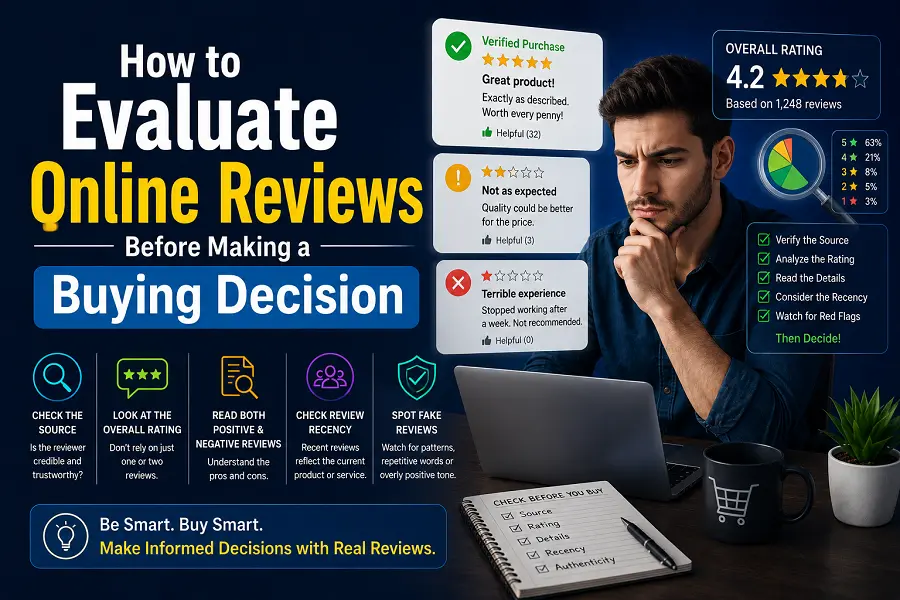
The signals consumers use to evaluate review authenticity include:
- Specificity of detail — reviews that describe specific products, interactions, staff members, or experiences are rated as more credible than generic positive or negative statements
- Language naturalness — reviews that read as genuine personal expression are trusted more than those that sound promotional or formulaic
- Reviewer profile completeness — reviews from accounts with review histories across multiple businesses are treated as more credible than reviews from accounts with single or no prior review activity
- Temporal clustering — a sudden spike of reviews in a short period triggers authenticity skepticism regardless of the content
The business implication is clear: authentic, specific reviews from real customers are worth significantly more than review volume produced through incentivization schemes that attract generic positive content. Encouraging detailed, genuine feedback from satisfied customers produces review assets that actually influence consumer decisions — while incentivized generic reviews increasingly fail to move the needle because savvy consumers discount them.
The Relationship Between Reviews and Local Search Visibility
Online reviews are not merely consumer signals — they are search ranking signals that directly affect how prominently a business appears in local search results. The connection between review activity and local SEO performance is one of the most direct and actionable relationships in digital marketing.
The review factors that influence local search visibility most significantly are:
- Review velocity — consistent new review activity signals to search algorithms that a business is active and currently serving customers; sporadic reviews or long gaps between them are treated as negative signals
- Rating trajectory — a business whose rating is improving over time is treated more favorably than one whose rating is declining, even if the current scores are equivalent
- Keyword presence in reviews — when customers naturally mention specific services, locations, or product types in reviews, those keywords contribute to the business’s relevance for related search queries
- Review platform diversity — businesses with reviews distributed across multiple platforms signal broader legitimacy than those concentrated on a single source
- Review response consistency — regular, substantive responses to reviews signal active business management that correlates with positive local ranking treatment
For businesses depending on local search traffic for customer acquisition, review management is not a reputation function — it is a core marketing function with direct, measurable impact on visibility and therefore revenue.
What Businesses Are Getting Wrong About Review Management
The gap between how most businesses approach reviews and what the data suggests they should do is significant enough to represent a meaningful competitive opportunity for those willing to close it.
The most common mistakes businesses make with reviews reveal themselves clearly in the data:
Treating reviews as a passive outcome rather than an active strategy is the most costly error. Businesses that systematically request reviews from satisfied customers — through post-purchase communication, service follow-up, or direct invitation — accumulate review volume at rates that businesses relying on organic unsolicited reviews cannot match.
Responding selectively — engaging with positive reviews and ignoring negative ones — produces worse outcomes than consistent response across all review sentiment. Prospective customers pay more attention to how businesses handle criticism than how they acknowledge praise.
Concentrating review efforts on a single platform creates fragility. A business whose reviews live almost entirely on one platform is exposed to that platform’s policy changes, algorithm updates, and the consumer perception that its review profile may not be representative.
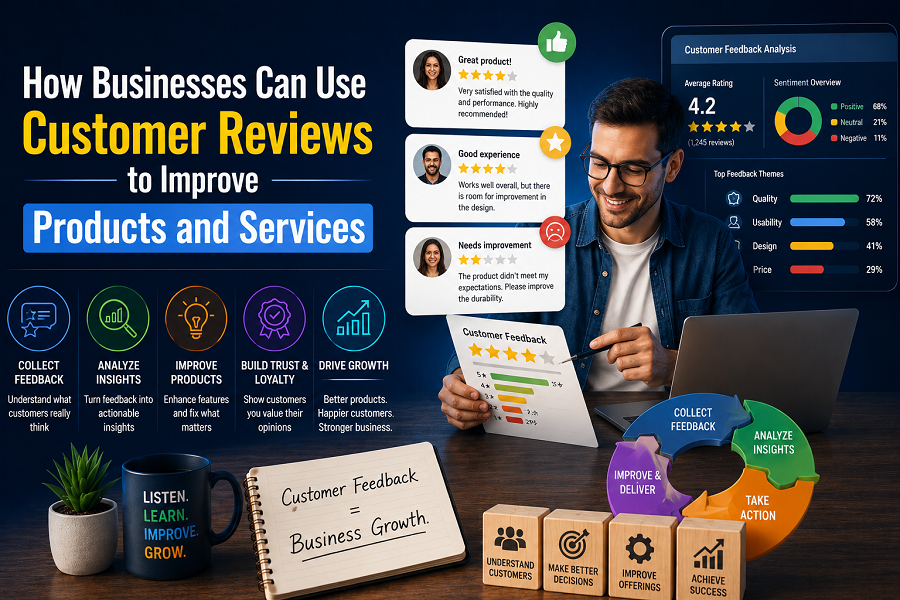
Failing to learn from negative review patterns is a strategic waste. Repeated negative reviews citing the same issue represent customer research that most businesses never operationalize — the feedback is received, perhaps responded to, and then ignored rather than translated into operational change.
Conclusion
The review data available in 2026 makes one thing unmistakably clear: online reviews are not a soft reputation metric — they are a hard business performance driver. They influence whether consumers discover a business in search, whether they consider it after discovery, and whether they convert after consideration.
Businesses that manage their review presence actively — generating consistent authentic reviews, responding professionally across all sentiment, distributing presence across platforms, and acting on the operational intelligence reviews provide — hold a compounding advantage over those that treat reviews as something that happens to them rather than something they actively shape.
FAQs
1. What percentage of consumers read reviews before making a purchase in 2026?
The vast majority of consumers — consistently above ninety percent across most product and service categories — read online reviews before purchase decisions. This figure has remained stable or increased as review platforms have become more embedded in the standard research process consumers follow before spending money.
2. How many reviews does a business need to build consumer trust?
Volume and recency together determine trust more than any specific number. A business with consistent recent review activity across several hundred reviews occupies a stronger trust position than one with more reviews concentrated in the past. The threshold for basic credibility is typically reached around twenty to fifty reviews, but competitive trust-building requires ongoing accumulation rather than a one-time target.
3. Do businesses need to respond to positive reviews as well as negative ones?
Yes — response consistency across all sentiment performs better than selective engagement. Responding only to negative reviews while ignoring positive ones signals that the business treats review management as damage control rather than genuine customer engagement. Consistent responses to positive reviews reinforce the relationship signals that prospective customers evaluate.
4. How do online reviews affect local search rankings?
Review velocity, rating trajectory, keyword presence in review content, platform diversity, and response consistency all contribute to local search visibility. Review management is effectively a local SEO function with direct impact on how prominently a business appears in location-based search results — making it a marketing investment as much as a reputation management activity.
5. What is the most effective way for businesses to increase authentic review volume?
Systematic post-interaction review requests — delivered through email follow-up, SMS, or direct conversation at the right moment after a positive customer experience — generate review volume at rates that passive approaches cannot match. The key is timing requests when customer satisfaction is highest and making the review process as frictionless as possible, without incentivizing specific sentiment that would compromise authenticity.





Leave a Reply