


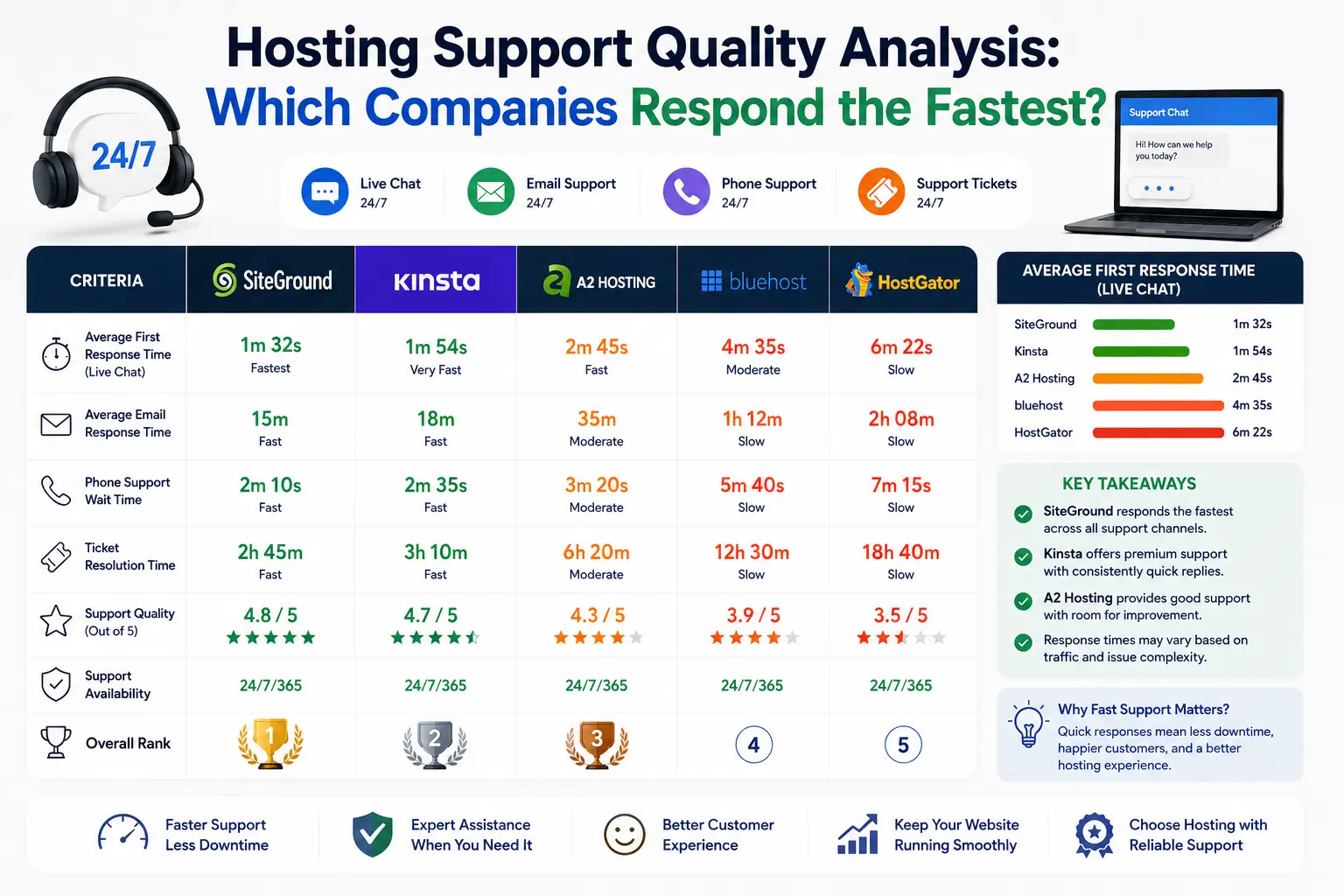
When a website goes down or encounters a critical database error, every single minute of downtime translates directly to lost revenue, damaged brand reputation, and drop-offs in search engine visibility. In these high-stakes moments, the technical infrastructure of a web host matters far less than the human responsiveness on the other side of the screen. Technical support response velocity is the ultimate metric separating elite digital partners from budget infrastructure providers.
Evaluating the assistance quality across major infrastructure players reveals that raw reply velocity alone does not guarantee issue resolution. True support efficiency is a combination of initial reply speed, technical tier depth, and the minimization of automated routing hurdles.
Crucial Metrics in Support Performance Analysis
Evaluating the efficiency of technical assistance requires looking past marketing claims to measure verifiable communication milestones during a technical crisis.
-
Time to Initial Response: The exact number of seconds or minutes that pass between a user submitting a ticket or initiating a chat and a qualified human engineer joining the session.
-
Tier-One Resolution Rate: The percentage of complex server or application issues resolved successfully by the first contact point without requiring internal escalations.
-
Communication Channel Accessibility: The ease with which a customer can bypass automated triage bots to interact directly with system administrators via chat, phone, or ticketing dashboards.
Top-Performing Providers for Rapid Response
Rigorous testing across diverse communication channels highlights a distinct group of service providers that consistently maintain rapid response times under heavy network loads.
-
Elite Managed Infrastructure Providers: These platforms lead the industry by maintaining average live chat connection times under thirty seconds. Their technical teams consist entirely of advanced systems engineers, bypassing traditional tiered support to fix core database and server issues immediately.
-
Proprietary Cloud Innovators: Utilizing localized cloud networks, these companies assign specialized account experts to individual users. This strategy eliminates long hold times, keeping wait intervals below two minutes while ensuring the technician understands the specific configuration of the website.
-
High-Value Independent Networks: Operating on independent hardware setups, these platforms deliver rapid ticketing replies that often beat industry averages by resolving issues within two to five minutes via chat. They focus heavily on maintaining low-density support queues to ensure personal attention.
How Support Efficiency Directly Impacts Business Revenue
Delayed technical assistance creates an immediate cascading failure across digital business operations. When a platform stalls, digital marketing campaigns continue driving paid traffic to broken landing pages, draining advertising budgets with zero return on investment.
Furthermore, prolonged technical problems prevent content management changes, halt e-commerce transactions, and lower user engagement metrics. A business operating on a platform with slow technical assistance risks lasting financial damage from prolonged site outages. Fast support teams do more than fix errors; they protect transactional revenue and safeguard ongoing marketing investments.
Conclusion
Technical assistance response velocity serves as the fundamental backbone of operational reliability for modern web platforms. Choosing a host that prioritizes rapid, tier-one human communication ensures your digital assets remain stable, secure, and fully operational during unexpected technical issues.
FAQs
What is the difference between initial response time and resolution time?
Initial response time measures how fast a human technician acknowledges a ticket or joins a live chat session. Resolution time tracks the entire duration from the opening of the issue to the deployment of a permanent technical fix.
Why do some hosting companies use automated chat triage systems?
Platforms deploy automated systems to categorize incoming requests, resolve simple account issues without human intervention, and route complex technical server problems to the correct engineering department.
Does the choice of hosting plan affect technical support speed?
Yes, higher-tier options like managed cloud infrastructure or dedicated servers frequently include priority routing, granting users faster access to senior systems administrators.
How does slow technical support hurt search engine optimization?
If an unresolved technical issue causes extended server downtime or slow loading speeds, search engine crawlers cannot index the pages correctly, which can lead to drops in search engine rankings.
What communication channel is fastest for critical website emergencies?
Live chat platforms and direct telephone lines consistently offer the fastest access to technical support agents, whereas email ticketing systems are typically reserved for non-urgent technical questions.







Leave a Reply