


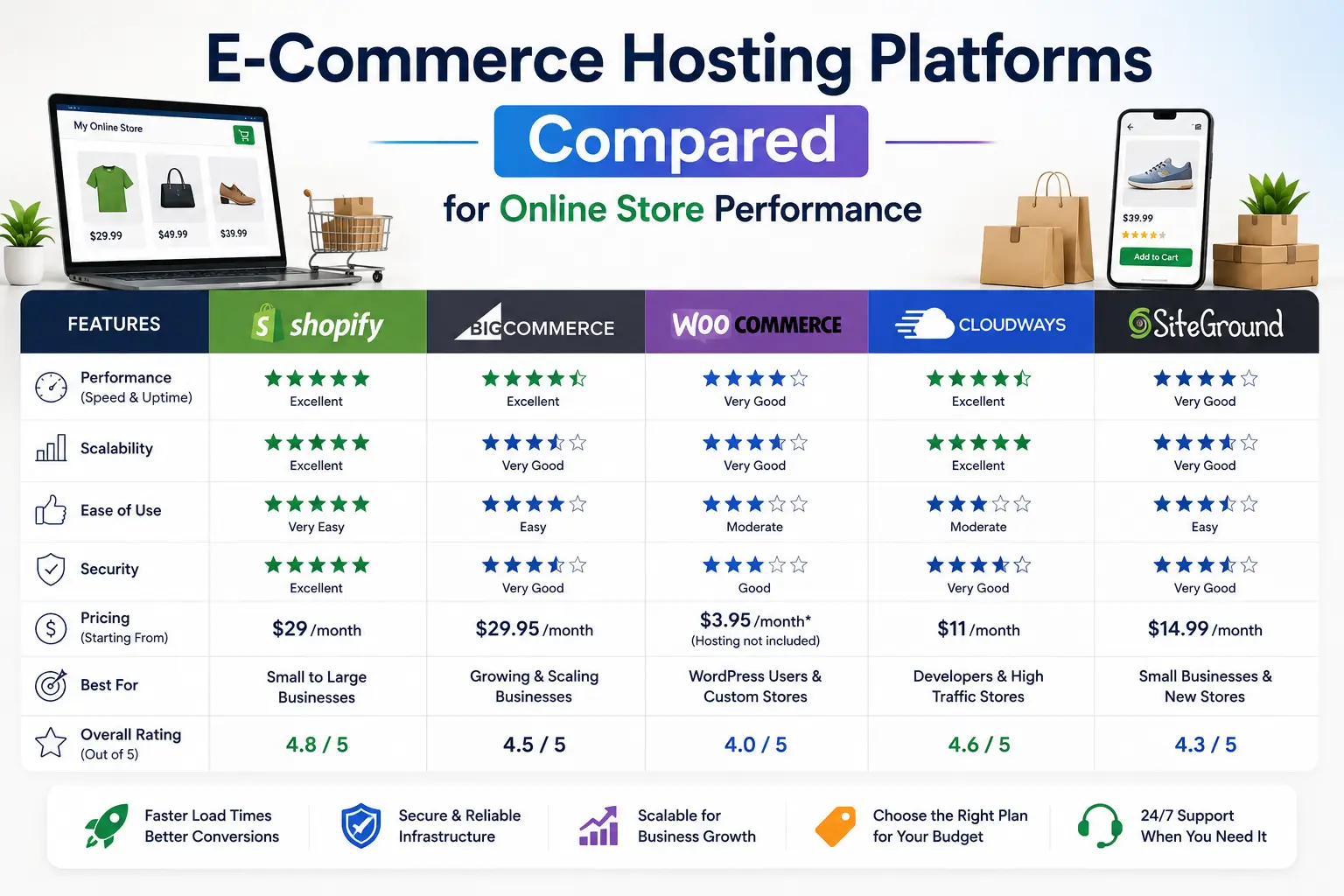
Choosing the right hosting infrastructure directly impacts your digital storefront’s conversion rates, search visibility, and bottom-line revenue. When a webpage load time stretches past two seconds, the probability of a user bouncing spikes dramatically. This comparison evaluates how different hosting architectures handle databases, caching, and sudden traffic surges to keep your checkout process seamless.
Performance Metrics That Drive Retail Conversions
To evaluate how hosting impacts an online store, focus on server-side response variables rather than basic uptime statistics. The underlying infrastructure must process concurrent database queries without bottlenecking during seasonal sales events.
-
Time to First Byte (TTFB): Measures the responsiveness of a web server before it starts rendering page elements. Low TTFB ensures the browser receives data immediately.
-
Fully Rendered Page Time: The duration required for product images, scripts, and third-party payment gateways to become completely interactive.
-
Concurrent Session Capacity: The volume of simultaneous checkout actions a server architecture can process before experiencing latency.
-
Dynamic Database Processing: The speed at which a server retrieves inventory levels, customer profiles, and pricing variations in real time.
Evaluating Top Hosting Architectures for Scale
Different e-commerce platforms require specific server environments to maximize efficiency. Matching your content management software with the appropriate hardware stack prevents performance degradation.
-
Managed WordPress and WooCommerce Hosting: These environments utilize object caching and server-level optimization specifically tailored for database-heavy environments. By storing frequent database queries in the server memory, they bypass repetitive execution cycles and deliver product pages instantly.
-
Cloud-Based Enterprise Solutions: Utilizing isolated virtual instances allows resources like RAM and CPU to scale automatically during unexpected traffic spikes. This infrastructure eliminates the risk of shared resources slowing down your payment processing funnel.
-
Dedicated Hardware Environments: For high-volume catalogs containing tens of thousands of stock-keeping units (SKUs), standalone servers provide complete root control. This setup allows for custom server configurations, advanced firewall deployments, and unshared processing power.
-
Headless Architecture Hosting: Separating the frontend user interface from the backend database allows businesses to host their customer-facing store on global edge networks. The presentation layer loads instantly via content delivery networks, while APIs handle transaction processing in the background.
Infrastructure Features That Prevent Cart Abandonment
True e-commerce speed relies heavily on advanced server-level configurations. Standard shared hosting environments often fail because they lack specialized caching layers and modern network protocols.
Look for hosts that implement server-level caching protocols like Redis or Memcached. These tools store pre-rendered database elements, ensuring the server does not have to rebuild the shopping cart page every time a user clicks. Additionally, look for platforms utilizing the latest HTTP protocols and solid-state drive (SSD) storage arrays. These hardware components speed up read-and-write times, which directly accelerates product searches and filtering requests.
Conclusion
Maximizing online store performance requires moving away from entry-level shared servers toward dedicated, cloud-managed, or specialized e-commerce hosting frameworks. Prioritizing low server response times, robust database caching, and isolated resources protects your user experience. Investing in premium infrastructure reduces cart abandonment and secures a competitive advantage in search engine rankings.
Frequently Asked Questions
How does hosting speed influence mobile shopping behavior?
Mobile devices often rely on slower cellular networks, making server responsiveness critical. Fast hosting ensures that heavy product scripts and images load efficiently, preventing mobile users from abandoning their sessions due to visual lag.
What is the role of an object cache in online retail?
An object cache stores the results of complex database queries in the server’s temporary memory. When the next customer views the same product, the host serves the data instantly without querying the main database again.
Can a Content Delivery Network replace high-quality hosting?
No. A Content Delivery Network (CDN) caches static assets like images and style sheets closer to the user. However, dynamic actions like adding items to a cart, authenticating profiles, and checking out require direct processing from the primary host server.
Why do standard shared hosting plans cause checkout delays?
Shared hosting forces multiple websites to compete for the same server resources. If another site on the server experiences a traffic spike, your store loses processing power, leading to slow load times and failed transactions during payment steps.
How often should an enterprise store run performance load tests?
Load testing should occur before major seasonal shopping events, marketing campaigns, or significant catalog expansions. This practice identifies the exact point where server infrastructure requires manual or automated resource scaling.







Leave a Reply