


My uncle has type 2 diabetes, and about four years ago, he started complaining about a burning feeling in his feet at night. He’d shake his legs under the blanket like that would help. It didn’t. A podiatrist eventually told him what a lot of diabetics eventually hear: peripheral neuropathy. And one of the very first things she asked him wasn’t about his diet or his blood sugar log — it was, “What shoes are you wearing right now?”
That question stuck with me. Because if you’re dealing with numbness, tingling, or that weird pins-and-needles sensation in your feet, your shoes aren’t just an accessory. They’re basically medical equipment at that point, whether you think of them that way or not.
So let’s get into it — what actually makes a shoe good for neuropathy, and which ones are worth your money.
The Short Answer First
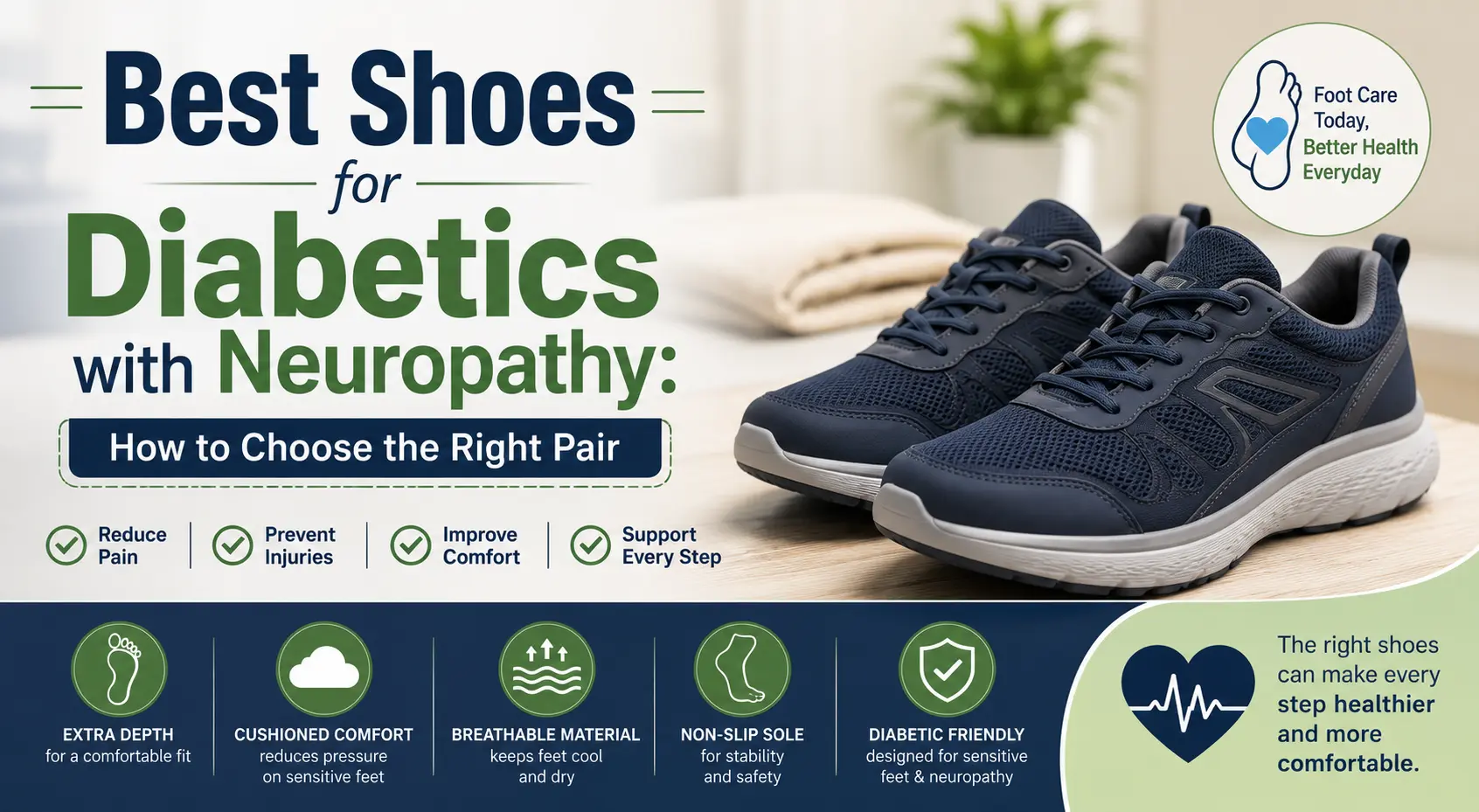
If you’re in a hurry, here’s the quick version: the best shoes for neuropathy have a wide, deep toe box, no interior seams pressing on your skin, a firm but cushioned sole, removable insoles (so you can swap in orthotics if needed), and a way to adjust the fit without laces digging into your foot — think velcro straps or stretchy laces.
Brands that consistently show up on podiatrist recommendation lists include Orthofeet, New Balance (the 990 and 928 lines), Propet, Dr. Comfort, and Skechers’ wide-fit walking styles. We’ll go deeper on all of these below, but if you just needed a starting point, that’s it.
Now, the “why” matters just as much as the “what,” so stick around.
Why Regular Shoes Are a Bad Idea When You Have Neuropathy
Here’s the thing nobody explains well: neuropathy doesn’t just mean your feet feel weird. It means they’ve lost part of their early-warning system. A healthy person feels a pebble in their shoe immediately and takes it out. Someone with neuropathy might not feel it at all — and that pebble can rub for hours, creating a blister, then a sore, then (in worse cases) an ulcer that’s slow to heal because diabetes also affects circulation.
That’s why podiatrists get almost obsessive about shoe fit for diabetic patients. It’s not about style. It’s about preventing damage you literally cannot feel happening.
Regular sneakers usually have a few problems for this:
- Narrow toe boxes that squeeze the smallest toes
- Interior seams that rub against the skin
- Stiff soles with no shock absorption
- Little to no room for a custom insole
None of these are “wrong” for a person with healthy sensation. They’re just risky for someone whose feet can’t send a pain signal in time.
What to Actually Look For in Neuropathy Shoes
1. A Wide and Deep Toe Box
This is non-negotiable. Your toes need room to sit flat and spread naturally — no crowding, no overlap. A lot of “wide” shoes are wide across the ball of the foot but still pinch at the toes. Try the shoe on and wiggle your toes inside. If you can’t move them freely, it’s not wide enough, no matter what the label says.
2. Seamless or Minimal-Seam Interior
Look inside the shoe (literally, run your finger around it) before buying. Any raised stitching, tags, or seams near the toes or heel are potential friction points. Brands like Orthofeet specifically design seam-free interiors for this reason.
3. Cushioned, Shock-Absorbing Sole
Neuropathy often reduces your natural sense of how hard you’re stepping, which means more impact travels up through the foot and joints. A thick, cushioned midsole (memory foam or gel) softens that blow.
4. Removable Insoles
Most diabetics with neuropathy eventually get custom orthotics from a podiatrist. If the shoe’s insole isn’t removable, you can’t fit them in — full stop. Always check this before buying, even if you don’t use orthotics yet. You might need them later.
5. Adjustable, Non-Restrictive Closures
Laces that need tying tightly can cut off circulation in feet that already have poor blood flow. Velcro straps, adjustable closures, or stretch-lace systems let you get a snug fit without pressure points.
6. Breathable Material
Diabetics are more prone to fungal infections and skin issues in general. Breathable mesh or leather uppers reduce moisture buildup, which matters more than people realize.
Best Shoes for Neuropathy: Brand-by-Brand Breakdown
I’m not going to pretend every shoe on this list is perfect for every foot — feet are different, and what works for my uncle might not work for you. But these brands consistently earn trust from podiatrists and diabetic patients alike.
Orthofeet — Probably the most recommended name in this space. Their shoes are built specifically around diabetic and neuropathy needs: seam-free lining, extra depth, orthotic insoles included standard. A bit pricier, but arguably purpose-built rather than adapted.
New Balance 928v3 / 990 series — Not marketed specifically for neuropathy, but the wide-width options (up to 6E) and cushioned soles make them a favorite among podiatrists as a “normal-looking” shoe that still checks the medical boxes. Good if you don’t want shoes that look overtly orthopedic.
Dr. Comfort — Medicare-approved diabetic shoe brand in the US, which tells you something about how seriously they’re taken clinically. Deep toe boxes, extra depth for inserts, several styles that don’t scream “medical shoe.”
Propet — Known for their walking shoes with a rocker-bottom sole, which reduces pressure on the ball of the foot with each step. Popular pick among older adults specifically.
Skechers (Wide Fit / GOwalk lines) — More affordable, widely available, and decent cushioning, though not purpose-built for neuropathy the way the above brands are. A reasonable budget option if you’re just starting to manage symptoms and don’t yet need medical-grade features.
Best Shoes for Neuropathy in Feet: Women vs. Men — Does It Matter?
Functionally, no — the same principles apply whether you’re shopping for the best shoes for neuropathy women or the best men’s shoes for neuropathy. Wide toe box, seamless interior, cushioned sole, adjustable closure. That checklist doesn’t change based on gender.
What does change is fit and sizing. Women’s neuropathy shoes tend to run in narrower base widths even within “wide” sizing, so if you have a genuinely wide foot, it’s worth trying men’s styles in a smaller size — a lot of women with wider feet actually do this, and it’s a completely normal workaround, not a compromise.
For walking specifically, the best walking shoes for neuropathy — for either gender — usually have a slightly firmer sole than a casual sneaker, because walking puts repeated, rhythmic pressure on the same points of the foot. Softer isn’t always better here; you want cushioning with structure underneath it.
A Quick Story: Trial and Error Is Normal
When my uncle first got diagnosed, he bought a pair of “diabetic shoes” online without trying them on — he figured any shoe labeled that way would work. It didn’t. They were technically wide, but the toe box was shallow, and his big toe still rubbed against the top of the shoe. He returned them.
What worked, eventually, was going to a shoe store that specifically fits diabetic patients and trying on four or five pairs. That’s the honest truth here: labels help you narrow things down, but they don’t replace an actual fitting, especially the first time. If you can, get measured in-store even if you plan to buy online afterward.
A Few Things These Shoes Won’t Fix
I want to be upfront about something: no shoe reverses nerve damage. Good footwear reduces the risk of injury and manages discomfort — it doesn’t treat the underlying neuropathy. If your symptoms are getting worse, changing, or you’re noticing sores that aren’t healing, that’s a conversation for your doctor or podiatrist, not something to shop your way out of. Shoes are one part of foot care, alongside daily foot checks, proper sock choices (seamless, moisture-wicking), and blood sugar management.
Quick Checklist Before You Buy
- Wide and deep toe box — toes should move freely
- No interior seams near the toes or heel
- Removable insole for orthotic compatibility
- Cushioned sole with good shock absorption
- Adjustable closure — velcro or stretch laces, not tight traditional laces
- Breathable upper material
- Try them on in person if this is your first pair
Frequently Asked Questions
1. What are the best shoes for neuropathy?
Shoes with a wide, deep toe box, seam-free interior, cushioned sole, and removable insoles work best. Orthofeet, Dr. Comfort, and New Balance wide-width styles are commonly recommended.
2. What are the best shoes for foot neuropathy specifically, versus general foot pain?
Neuropathy-specific shoes focus more on eliminating pressure points and friction (since you may not feel them) rather than just cushioning for comfort. General foot pain shoes may not prioritize seam-free interiors the way neuropathy shoes do.
3. What are the best shoes for men with neuropathy?
New Balance’s wide-width lines, Dr. Comfort, and Orthofeet all offer strong men’s options with deep toe boxes and adjustable closures.
4. Are diabetic shoes the same as neuropathy shoes?
Mostly, yes — there’s heavy overlap because neuropathy is such a common diabetes complication. Diabetic shoes usually meet or exceed the features needed for neuropathy anyway.
5. Can I wear regular sneakers if I have mild neuropathy?
If your case is genuinely mild and your doctor hasn’t flagged concerns, some people get away with wide, well-cushioned regular sneakers. It’s still worth checking the seams and toe box space.
6. What’s the best walking shoes for neuropathy if I walk daily for exercise?
Look for a firmer, more structured sole than a casual shoe — something with a rocker-bottom design if possible, since that reduces repetitive pressure on the same spot with every step.
7. Do I need custom orthotics with neuropathy shoes?
Not always, but many people eventually do. That’s why removable insoles matter — you want the option even if you don’t need it on day one.
8. How often should I replace neuropathy shoes?
Generally every 6–12 months with regular wear, or sooner if the cushioning feels flattened or the interior shows wear. Worn-out shoes lose the protective qualities you bought them for.
9. What are the best shoes for neuropathy women who also need arch support?
Brands like Orthofeet and Propet offer built-in arch support in their women’s lines, and most also accommodate custom orthotic inserts if you need something more specific.
10. Why do my feet still hurt even in “good” neuropathy shoes?
Fit issues are the most common cause — even a well-reviewed shoe can be wrong for your specific foot shape. It’s also worth ruling out worsening neuropathy or an unrelated foot issue with a doctor.
11. Are expensive neuropathy shoes actually worth it?
For moderate to severe neuropathy, usually yes — the seam-free construction and orthotic compatibility genuinely matter. For mild symptoms, a well-fitted budget option like Skechers’ wide-fit line can work fine.
12. What socks should I pair with neuropathy shoes?
Seamless, moisture-wicking diabetic socks without tight elastic bands. Regular socks with seams can cause the same friction issues you’re trying to avoid with the shoes.
13. Can I get neuropathy shoes covered by insurance?
In the US, Medicare and many insurance plans cover diabetic shoes (including several Dr. Comfort and similar styles) if you meet certain criteria — worth asking your doctor about a prescription.
14. What are the best shoes for neuropathy in feet with swelling issues?
Look for adjustable closures (velcro over laces) so you can loosen the fit on swollen days, and avoid anything with a snug, fixed lacing system.
15. Is it normal to need a different shoe size after developing neuropathy?
Yes, actually — foot shape can change over time with diabetes-related swelling or structural shifts, so it’s worth getting remeasured rather than assuming your old size still fits.










Leave a Reply