


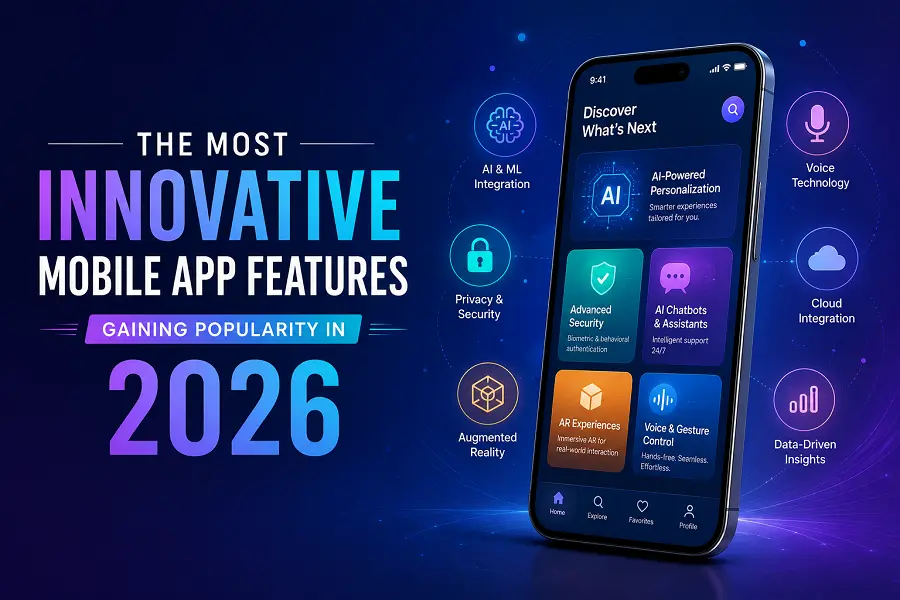
User expectations for mobile apps have shifted dramatically. People no longer settle for apps that simply function — they want experiences that feel intuitive, fast, and genuinely useful within seconds of opening. The apps gaining traction right now share one thing: they solve problems before users even articulate them.
These are the features driving downloads, retention, and revenue in 2026.
On-Device AI Is Making Apps Smarter Without the Cloud
The biggest leap in mobile experience isn’t happening in data centers — it’s happening directly on the device. On-device AI inference allows apps to run machine learning models locally, without sending data to a remote server.
This unlocks capabilities that weren’t practical before:
- Real-time language translation working fully offline
- Instant photo editing with AI enhancement, no upload required
- Predictive text and autocomplete tuned to individual writing habits
- Health monitoring that analyzes biometric data privately on-device
Privacy is a major driver here. Users are increasingly uncomfortable with personal data leaving their phones. Apps that process everything locally gain a trust advantage that’s hard to replicate with server-side alternatives.
Speed is the other factor. Removing the round-trip to a cloud server eliminates latency that users notice — especially in voice, camera, and health applications where delays break the experience.
Contextual Awareness Is Replacing Static Interfaces
Apps that look and behave the same regardless of context are falling behind. The new standard is contextual adaptation — interfaces that shift based on time, location, behavior, and device state.
Here’s how leading apps are implementing this:
- Time-aware content — morning news summaries replaced by evening wind-down content without manual switching
- Location-triggered features — a grocery app surfacing store maps and deals only when near that retailer
- Usage-pattern shortcuts — frequently used features floating to the surface based on what day or time it is
- Battery and connectivity modes — automatically reducing data-heavy features when the device signals constraints
- Ambient display integration — key information shown on lock screens or widgets based on what the user likely needs next
This isn’t simple personalization. It requires apps to build behavioral models and respond to real-world signals — making every session feel like the app has been paying attention.
Voice and Multimodal Input Are Becoming Primary, Not Secondary
Voice features used to be an afterthought — tucked in a corner for accessibility. In 2026, multimodal input is a primary design decision, not an add-on.
The shift is driven by two forces. First, AI voice models have become accurate enough that dictating, searching, and commanding via speech is genuinely faster than typing for many tasks. Second, spatial and wearable computing have introduced new form factors where touch isn’t always available.
Apps integrating voice well are combining it with other inputs rather than treating it in isolation. A user might speak a query, point the camera at a product, and receive a visual response — all in one fluid interaction.
Camera-as-input is following a similar trajectory. Visual search, augmented overlays, and real-time object recognition are moving from novelty features to core functionality in retail, navigation, and education apps.
Micro-Subscription Models Are Replacing One-Size Pricing
The freemium model dominated mobile monetization for years. A new approach is gaining ground: micro-subscriptions that let users pay only for specific features or time windows rather than a full plan.
This shift reflects a more sophisticated understanding of user behavior. Someone who needs a premium feature occasionally doesn’t want to commit to a monthly fee — but they will pay a small amount for 24-hour or single-use access.
Apps implementing flexible access tiers are seeing higher conversion rates from free users than traditional upgrade flows. The psychological barrier of a smaller, specific commitment is lower than committing to an ongoing subscription for features the user may rarely touch.
Conclusion
The most successful mobile apps in 2026 share a clear philosophy: reduce friction, anticipate needs, and respect the user’s time and privacy. On-device AI removes the cloud dependency that slows and exposes data. Contextual interfaces eliminate the effort of navigation. Multimodal input matches how people naturally interact. Flexible pricing removes the commitment barrier.
Developers and product teams who build around these principles aren’t just following trends — they’re building apps that become genuinely difficult to delete.
FAQs
1. What makes on-device AI different from cloud-based AI in mobile apps?
On-device AI runs machine learning models directly on the phone rather than sending data to a remote server. This means faster responses, offline functionality, and stronger privacy — since personal data never leaves the device.
2. What does contextual awareness mean in mobile app design?
It means the app adapts its interface and content based on real-world signals like time of day, location, battery level, and past behavior — rather than presenting the same static layout to every user in every situation.
3. Why is multimodal input growing in popularity for apps?
Improved AI accuracy has made voice reliable enough for everyday use, and new form factors like wearables make touch impractical. Combining voice, camera, and touch gives users faster, more natural ways to interact with apps.
4. What is a micro-subscription model in mobile apps?
A micro-subscription allows users to pay for individual features or short access windows — like a 24-hour premium pass — rather than committing to a full monthly plan. It lowers the conversion barrier for occasional users who don’t need continuous access.
5. Which mobile app trends matter most for user retention in 2026?
Contextual personalization and on-device AI have the strongest impact on retention. When an app consistently surfaces the right content or feature at the right moment, users return out of habit rather than deliberate choice — which is the highest form of engagement.






Leave a Reply