


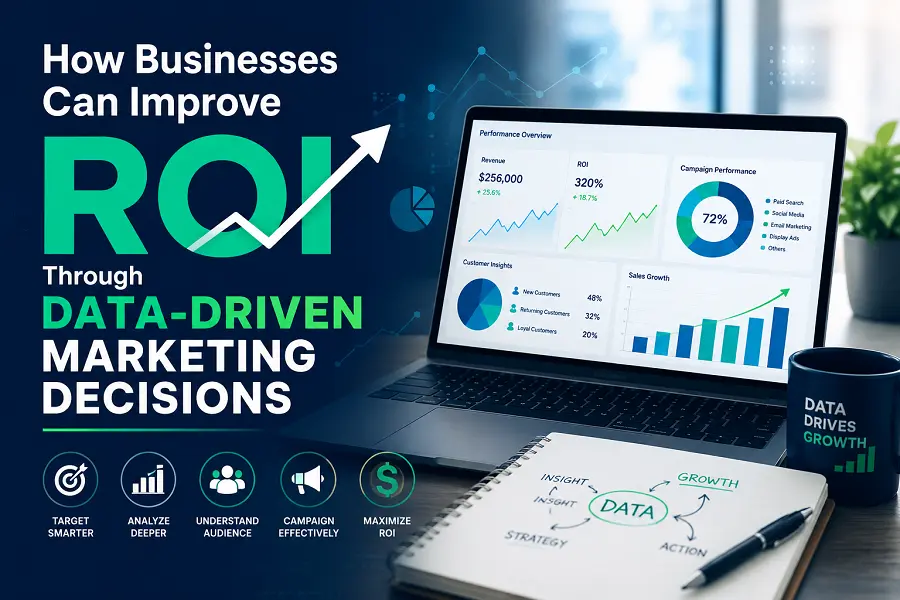
Sustained business growth requires moving away from speculative budgeting and toward precise analytics. Relying on intuition frequently results in fragmented campaigns, wasted capital, and poor customer acquisition rates. Transitioning to an objective, data-driven framework allows organizations to isolate high-performing acquisition channels, optimize conversion paths, and achieve a measurable lift in return on investment (ROI).
Streamlining Resource Allocation Across Direct Channels
Inefficient spending remains a primary obstacle to profitability. By establishing unified tracking parameters, businesses gain direct visibility into the exact financial performance of every live campaign. This transparency allows management to systematically remove funding from underperforming segments and reinforce channels that demonstrate a lower cost per acquisition (CPA).
-
Eliminating redundant media spend: Continuous tracking identifies specific geographic regions, ad placements, and demographics that drain financial resources without generating tangible conversions.
-
Enhancing real-time bid adjustments: Programmatic data feeds allow automated platforms to adjust bidding strategies based on live interaction metrics, saving budget during low-engagement windows.
-
Isolating micro-conversion drivers: Granular analytics reveal the secondary actions—such as whitepaper downloads or webinar registrations—that reliably predict eventual revenue generation.
-
Optimizing cross-channel continuity: Evaluating performance data across search, social, and email ensures messaging is unified, preventing different platforms from competing for the same audience segment.
Restructuring the Customer Journey with Predictive Analytics
Modern data analytics goes far beyond reporting past events; it anticipates future consumer actions. Predictive modeling helps companies construct detailed behavioral maps that guide shoppers through the sales funnel with minimal friction. This proactive approach ensures marketing assets deploy at the exact moment a prospect is most likely to buy.
-
Calculating accurate lifetime value: Organizations use historical purchasing data to identify high-value cohorts, allowing acquisition budgets to prioritize long-term buyers over one-time transactors.
-
Mitigating customer retention risks: Predictive signals flag drop-offs in customer platform usage, allowing automated systems to deliver tailored retention offers before a subscriber cancels.
-
Automating dynamic personalization: Analytics engines alter website layouts, featured products, and pricing matrices instantly based on an individual visitor’s browsing history and inferred intent.
-
Refining product recommendations: Evaluating collective customer purchase histories allows businesses to suggest cross-selling and up-selling opportunities that align with individual user needs.
Selecting the Right Attribution Model for Complete Visibility
Achieving a high return on investment requires an accurate understanding of which touchpoint actually caused a sale. Relying exclusively on legacy single-touch measurement tools creates an inaccurate picture of campaign performance. Implementing sophisticated multi-touch attribution structures allows businesses to credit every influential step in a consumer’s journey correctly.
Linear, time-decay, and position-based modeling systems offer the nuanced insight necessary to map multi-device interactions accurately. This clarity prevents the common error of over-funding final checkout touchpoints while starving the early-stage discovery campaigns that introduced the brand to the consumer.
Furthermore, integrating advanced measurement models ensures that content marketing, search engine optimization, and brand awareness efforts are evaluated based on their true contribution to the entire sales cycle. When every asset is accurately assessed, executive teams can confidently fund long-term growth initiatives rather than chasing short-term conversion spikes.
Conclusion
Improving marketing ROI is not a matter of increasing overall spend, but of maximizing data utility. Businesses that invest in robust tracking infrastructures, lean on predictive analytics, and deploy realistic attribution models build a self-correcting growth engine. In a highly competitive commercial landscape, data-driven precision remains the ultimate operational advantage.
Frequently Asked Questions
What is the most critical metric for calculating marketing ROI accurately?
While total revenue is important, Customer Lifetime Value (CLV) paired with the Cost Per Acquisition (CPA) provides the clearest view of long-term profitability. A healthy business model typically maintains a CLV that is at least three times greater than the capital required to acquire that specific customer.
How does multi-touch attribution protect a company’s marketing budget?
Multi-touch attribution gives credit to every channel a customer interacted with before purchasing, rather than just the final click. This prevents businesses from accidentally turning off early-stage awareness campaigns that are critical for feeding the top of the sales funnel.
Why does predictive modeling improve conversion rates?
Predictive modeling analyzes historical consumer patterns to determine when a user is closest to making a purchase decision. By understanding these behavioral triggers, brands can deliver specific marketing messages at the precise moment they will be most effective.
Can small businesses implement data-driven marketing without large budgets?
Yes, because most foundational analytics platforms, email service providers, and social advertising networks offer comprehensive, built-in data tracking tools for free. Smaller brands can improve ROI simply by monitoring these existing data points and adjusting their tactics accordingly.
How often should a business review its marketing performance data?
High-level campaign metrics, ad spend velocity, and conversion anomalies should be reviewed weekly to prevent budget waste. Deeper strategic assessments, such as customer lifetime value modeling and multi-touch attribution audits, are typically conducted on a monthly or quarterly basis.








Leave a Reply