


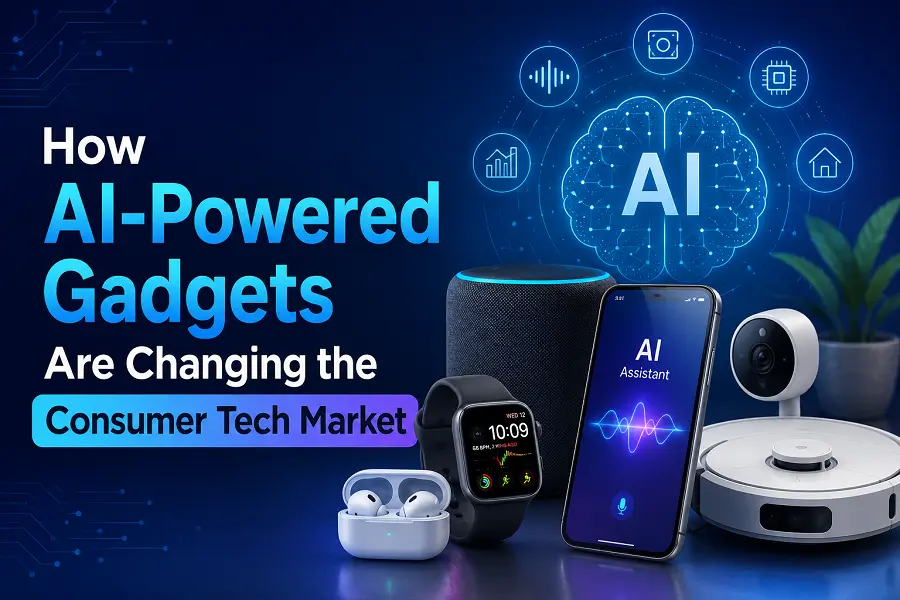
The consumer electronics landscape is undergoing a massive shift. Devices are evolving from passive tools that wait for a command into proactive, context-aware companions. This transformation is driven by the integration of artificial intelligence directly into everyday hardware, altering how people interact with technology at home, at work, and on the move.
The Rise of Ambient and On-Device Processing
For years, smart devices functioned as conduits to remote cloud servers, which often introduced processing lag and raised data privacy concerns. The current generation of electronics remedies this by utilizing dedicated Neural Processing Units (NPUs) built directly into local microchips. This structural change keeps sensitive user details secure on the physical device while delivering instantaneous computing power.
-
Enhanced Data Privacy: Localized computing ensures that voice recordings, facial metrics, and biometric schedules remain on the physical hardware rather than being transmitted across the internet.
-
Zero-Latency Performance: Processing data on-device eliminates the delay caused by round-trip cloud communication, enabling real-time responses.
-
Offline Functionality: Advanced features, such as deep-level language translation or complex image processing, run smoothly even without an active internet connection.
-
Optimized Energy Consumption: Local NPUs are specifically engineered to handle machine learning algorithms using a fraction of the power required by traditional main processors, preserving battery life.
Redefining Wearables and Spatial Computing
Wearable technology has moved far beyond basic step counters and notification mirrors. Micro-sensors paired with predictive algorithms allow modern health trackers and smart rings to monitor biological signs continuously. Instead of merely recording historical data, these systems analyze patterns to offer preventive advice, noting irregularities before they become noticeable physical symptoms.
At the same time, spatial computing is transitioning into mainstream daily wear. Modern augmented reality glasses package microscopic displays into frames that match traditional streetwear.
-
Hands-Free Contextual Overlays: Navigation instructions and translations display directly onto the real-world environment, removing the need to look down at a smartphone.
-
Invisible Workstations: Portable glasses allow users to project multiple virtual monitors into any environment, creating functional digital workspaces on airplanes or in small spaces.
-
Environment Scanning: Integrated low-power sensors read QR codes, identify physical objects, and display immediate text explanations or reviews on the fly.
-
Biometric Feedback Loops: Real-time analysis of heart rate variability and stress levels allows systems to suggest environmental tweaks, like adjusting room lighting or audio settings, to aid recovery.
From Home Automation to Active Anticipation
The classic smart home setup often felt like tedious work, requiring users to manage competing communication protocols, separate smartphone apps, and rigid scheduling rules. Universal smart home standards have resolved these fragmentation issues, allowing diverse home appliances to communicate fluidly. The emphasis has shifted away from manual control toward automated orchestration.
Smart thermostats, security cameras, and lighting setups now look at environmental variables, seasonal adjustments, and daily movement patterns to manage households autonomously. For instance, a home can modify its energy footprint by adjusting climate zones based on occupancy predictions, lowering overall utility waste. Security systems differentiate between standard household members, expected visitors, and unknown movement, reducing false alarms while maximizing home safety.
Conclusion
AI-powered gadgets are completely changing the consumer tech market by turning standard consumer products into helpful digital partners. By prioritizing localized processing, intuitive spatial design, and predictive automation, the technology industry is building an ecosystem where hardware actively adapts to human needs, making daily tasks simpler, faster, and more secure.
Frequently Asked Questions
What is the difference between traditional smart gadgets and AI-powered gadgets?
Traditional smart gadgets rely on direct user inputs, cloud connections, and set rules to perform tasks. AI-powered gadgets use local processors to learn user habits, analyze environmental context, and make smart, proactive adjustments without needing constant human guidance.
Do AI-powered gadgets work when they are completely offline?
Yes, many modern AI gadgets are designed with onboard hardware like NPUs that handle complex calculations locally. This allows features like language translation, voice recognition, and data analysis to run without an active internet connection.
How do modern AI electronics protect personal user privacy?
By moving away from cloud-dependent computing, these devices process personal information, biometrics, and daily schedules directly on the physical chip. Keeping data localized reduces exposure to online data breaches and unauthorized tracking.
Will AI integration drastically reduce the battery life of small wearables?
No, modern microchips contain highly efficient cores designed specifically for machine learning workflows. These specialized processing units execute complex tasks using significantly less power than general processors, keeping battery life steady.
How does the universal Matter standard help AI smart homes function?
The Matter standard provides a single language that lets gadgets from different manufacturers communicate smoothly. This reliable connectivity gives household AI engines a complete view of all home devices, allowing them to coordinate systems efficiently.






Leave a Reply