


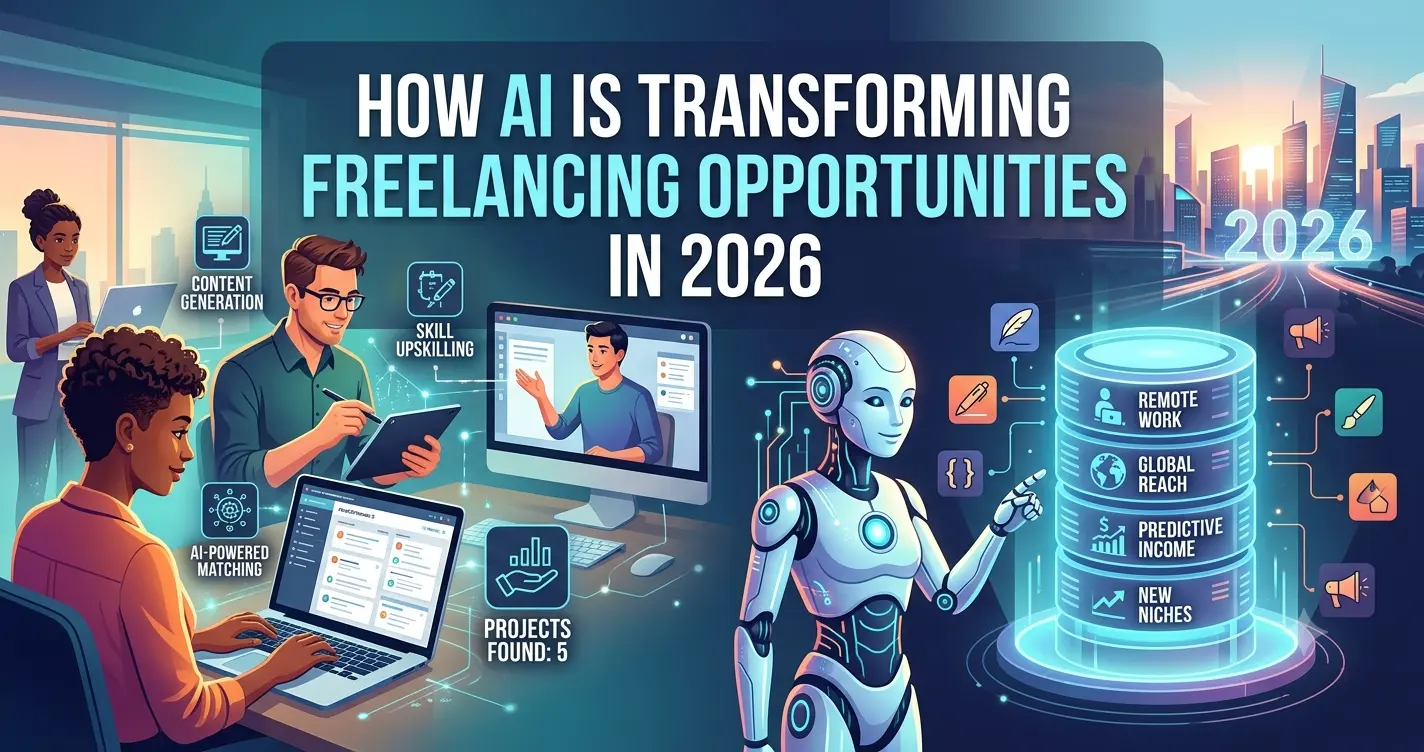
The freelance economy is undergoing a massive shift. Artificial intelligence has moved past basic text generation and simple automation into advanced, collaborative workflows. Independent professionals who adapt to these changes are expanding their service offerings, scaling their output, and securing higher-value contracts. Instead of replacing human talent, intelligent systems are serving as force multipliers for specialized freelancers.
The Rise of the AI-Augmented Freelancer
Success in the modern freelance market requires a shift from execution to strategy. Clients no longer pay top dollar for raw production that software can handle in seconds. Instead, they seek experts who can direct intelligent tools, ensure quality, and inject authentic human perspective into the final deliverable.
-
Advanced Prompt Engineering: Freelancers are designing specialized inputs to extract precise, high-quality technical outputs for clients.
-
Hyper-Personalized Content Architecture: Creators use data-driven insights to build tailored brand strategies that resonate with niche audiences.
-
AI-Driven Project Scoping: Consultants utilize predictive analytics to estimate project timelines, resource allocation, and budget requirements accurately.
-
Workflow Synthesis: Technical specialists integrate disparate software platforms to build custom, automated operating systems for small businesses.
High-Demand Freelance Roles Emerging This Year
New technology inevitably creates new skill gaps. The current market prioritizes professionals who can bridge the gap between complex software systems and practical business outcomes.
-
AI Integration Specialist: Businesses need contract developers to connect proprietary data with large language models via custom APIs.
-
Synthetic Media Editor: Video and audio freelancers are pivoting to refine, correct, and polish deep-learning video generations for commercial use.
-
Algorithmic Auditor: Digital marketers and compliance experts review automated campaigns to ensure they align with platform guidelines and avoid bias.
-
Cognitive Workflow Designer: Operations consultants analyze corporate bottlenecks and implement automated agents to streamline daily tasks.
Navigating Pricing and Client Expectations
The billable hour is quickly becoming obsolete. Because automated tools compress execution times, pricing based on time penalizes efficiency. Savvy freelancers are restructuring their business models around value-based pricing and fixed-rate deliverables.
When pitching to modern clients, emphasize your oversight, strategic thinking, and data security measures. Clients want to know that their proprietary information remains protected and that the final output is legally compliant, original, and ready for commercial use. Positioning yourself as a risk manager and strategic partner ensures long-term retention and premium rates.
Conclusion
The evolution of technology has not diminished the freelance market; it has elevated it. By embracing automation for repetitive tasks, independent professionals can focus on creative problem-solving, high-level strategy, and authentic human connection. The future belongs to those who view intelligent software not as competition, but as a core component of their freelance toolkit.
FAQs
How do I protect my freelance business from being replaced by automation?
Focus on high-level strategy, deep industry expertise, and relationship-building. Shift your services from basic execution to complex problem-solving and implementation oversight.
Should I disclose my use of automated tools to my clients?
Yes, transparency builds trust. Position these tools as a standard part of your tech stack that allows you to deliver faster results, deeper insights, and higher quality control.
Which freelance industries are seeing the highest growth right now?
Data architecture, custom software integration, synthetic media post-production, and specialized legal compliance for digital assets are experiencing rapid expansion.
How does value-based pricing work for freelancers using technology?
Instead of charging by the hour, quote a flat fee based on the financial impact, efficiency gains, or overall value the project delivers to the client’s business.
Will standard copywriters and graphic designers survive this market shift?
Yes, but their roles must evolve. Purely transactional creators will struggle, while those who act as creative directors and strategic editors will thrive.






Leave a Reply