


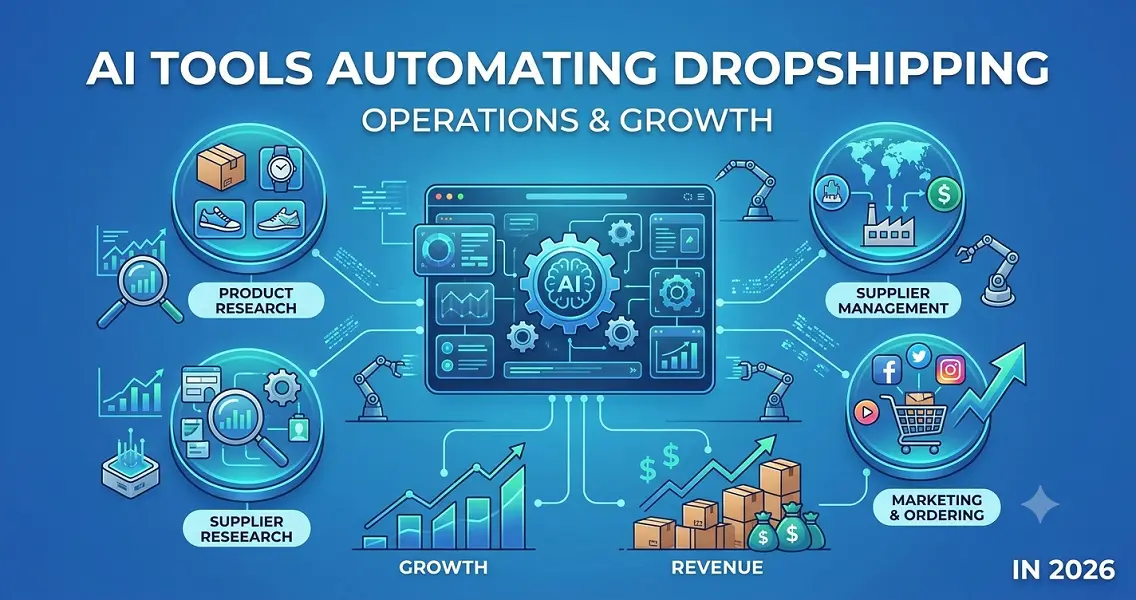
The main appeal of dropshipping has always been its low barrier to entry, but manual management can quickly stall expansion. Fulfilling orders, tracking stock levels, writing product descriptions, and fielding customer inquiries across different time zones often leaves entrepreneurs exhausted. Fortunately, the integration of artificial intelligence into e-commerce operations has turned what used to be labor-intensive tasks into hands-off, automated systems.
By offloading routine administrative workflows to machine learning tools, store owners can dedicate their energy entirely to brand strategy and market expansion.
Intelligent Trend Sourcing and Predictive Analytics
Finding a profitable product traditionally required hours of manual research across social media platforms and marketplace listings. Modern AI product discovery engines eliminate this guesswork by evaluating massive datasets to pinpoint items gaining organic momentum before they saturate the market.
-
Live Trend Detection: Machine learning algorithms track viral engagement metrics on social media platforms to flag breakout products in real time.
-
Competitor Sales Tracking: Predictive software monitors rival storefronts to reveal daily order volumes, revenue shifts, and ad spend allocations.
-
Demand Forecasting: Analytical tools evaluate seasonal search trends and historical purchasing patterns, ensuring you offer the right products at the perfect moment.
-
Supplier Risk Assessment: Sourcing platforms use internal performance metrics to evaluate global suppliers based on communication speeds and historical transit reliability.
Full-Stack Inventory and Order Fulfillment Automation
Manually placing customer orders with suppliers introduces costly human errors and processing delays. Full-stack automation platforms act as an invisible operational backbone, connecting backend supplier catalogs directly to your customer-facing checkout pipeline.
-
Instant Inventory Synchronization: Automated software monitors supplier stock levels continuously, instantly modifying your store listings to prevent backorders on depleted items.
-
Hands-Off Order Forwarding: The moment a customer completes a purchase, the system forwards the shipping details to the designated manufacturer, processing payments and initiating fulfillment instantly.
-
Dynamic Margin Safeguards: Pricing engines evaluate changes in supplier costs or currency fluctuations in real time, automatically shifting your consumer prices upward to defend your target profit margins.
-
Automated Transit Management: Tracking numbers are extracted from the supplier as soon as a package ships and are sent to the customer without requiring manual copy-pasting.
Dynamic Visual Creation and Conversion Copywriting
An e-commerce store with generic manufacturer text and uninspired supplier photos fails to inspire buyer confidence. Generative AI tools allow lean teams to produce premium, conversion-oriented marketing assets at scale without paying premium agency fees.
Multimodal AI models can transform a low-quality smartphone photo from a supplier into a studio-grade product asset. By stripping away generic backgrounds and placing the item into high-end contextual settings, these platforms create cohesive visual branding across an entire storefront. Simultaneously, advanced language models eliminate the chore of writing individual catalog listings. By feeding raw technical specifications into an AI copywriter, you can instantly output search-optimized product descriptions tailored to the emotional triggers of your exact target demographic.
Conclusion
Automating a dropshipping business with artificial intelligence shifts the business model from a precarious side hustle to an engineered asset. Relying on intelligent data sourcing, hands-off order routing, and rapid content generation allows online storefronts to scale without a matching increase in overhead or headcount. The ultimate winners in e-commerce are no longer the biggest spenders, but the most automated operators.
Frequently Asked Questions
Can AI completely handle dropshipping customer service?
Yes. Modern AI chatbots resolve a high percentage of baseline customer inquiries regarding shipping updates and return policies without human intervention, escalating only complex tickets to the store owner.
How do dynamic pricing engines protect profit margins?
They monitor backend manufacturer costs and instantly adjust retail prices according to predefined rules, ensuring that unexpected supplier price increases do not wipe out your profitability.
Do AI product sourcing tools eliminate the risk of product failure?
While they do not entirely eliminate risk, they greatly reduce it by basing your product selection on hard data, historical sales trends, and real-time social media engagement metrics rather than personal intuition.
How does generative AI improve product photography for dropshipping?
It removes generic, watermarked warehouse backdrops from supplier photos and replaces them with realistic environments or puts apparel items onto AI-generated lifestyle models.
Will using automated order fulfillment slow down shipping times?
No, it accelerates shipping times. Automating the transfer of customer data to your suppliers removes human data-entry bottlenecks, allowing orders to enter the shipping pipeline faster.





Leave a Reply