


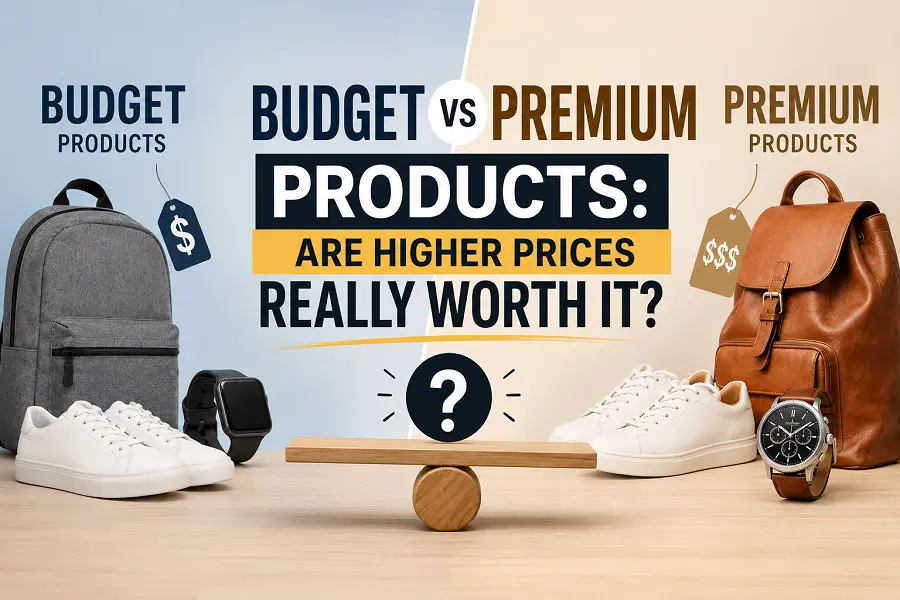
Every day, consumers face a familiar dilemma: do you buy the budget-friendly item or invest in the premium option? Price tags heavily influence our shopping habits, but a higher cost does not always guarantee superior quality. Conversely, saving money upfront can sometimes lead to hidden expenses down the road.
Understanding when to splurge and when to save requires looking past clever marketing and analyzing the true value of what you buy.
The Psychology of Price and the Diminishing Returns Rule
Price plays a significant role in how we perceive quality. Many people subconsciously assume that an expensive item automatically performs better. While premium products often use superior materials or advanced technology, the relationship between price and performance is rarely linear.
This gap is driven by a concept known as the law of diminishing returns.
-
The Value Baseline: Upgrading from a rock-bottom budget item to a mid-tier alternative usually provides a massive leap in usability, durability, and features.
-
The Premium Plateau: Moving from a mid-tier product to a luxury tier often results in minor, incremental improvements despite a massive jump in cost.
-
The Status Markup: A significant portion of luxury pricing covers brand prestige, marketing budgets, and exclusive packaging rather than functional upgrades.
-
Manufacturing Limits: High-end items often feature specialized components that cost significantly more to produce but offer only slight performance boosts for everyday users.
Smart Spending: When to Splurge and When to Save
Deciding whether to allocate your budget toward a high-end purchase or a cheaper alternative depends entirely on how the product will be used. Certain categories justify a higher upfront cost due to safety, longevity, or daily reliance, while others offer excellent value at lower price points.
-
Daily Infrastructure (Splurge): Items you use for hours every day, such as mattresses, work boots, or computer chairs, directly impact your physical health. Investing in ergonomic, durable designs saves money on healthcare and replacements.
-
Safety and Technology (Splurge): Products like car tires, child safety seats, and core tech hardware rely on rigorous testing and high-grade materials. Cheaper alternatives in these categories can compromise safety or performance.
-
Consumables and Basics (Save): Generic groceries, basic cleaning supplies, and simple storage containers often feature identical chemical structures or manufacturing standards as their name-brand counterparts.
-
Fast-Trend Items (Save): Seasonal clothing, novelty gadgets, or tools you only intend to use once or twice a year rarely justify a premium price tag.
How to Calculate the True Cost of Ownership
To determine if an item is worth its price, look beyond the register receipt and calculate the total cost over time. A cheap tool that breaks after three uses is far more expensive than a premium tool that lasts a decade.
Consider the “Cost Per Use” formula. If a pair of premium $200 boots lasts for five years of daily wear, the daily cost is pennies. If a $40 budget pair falls apart after three months, you will spend more money constantly replacing them over that same five-year window.
Furthermore, premium products often retain resale value, come with lifetime warranties, or offer cheaper repair networks. Budget products are frequently designed as disposable goods; once they malfunction, your only option is to throw them away and buy a replacement.
Conclusion
A higher price tag is only worth it if the added cost translates directly into better durability, safety, or significant time savings for your specific lifestyle. Budget products are ideal for short-term needs and simple utilities. However, when an item directly affects your health, livelihood, or daily comfort, investing in premium quality is usually the most economical choice in the long run.
Frequently Asked Questions
Do premium brands use the same factories as budget brands?
Yes, many third-party manufacturers produce goods for both luxury labels and generic store brands on the same assembly lines. The primary differences usually lie in the specific ingredient grades, quality control tolerances, and final packaging.
How can I spot a budget product that offers premium quality?
Look for items that focus heavily on functional materials rather than flashy marketing. Reading independent user reviews, checking for long-term warranty offers, and examining the sturdiness of seams, joints, or hinges can reveal hidden value.
Why do some cheap products feel identical to expensive ones?
Modern manufacturing allows companies to mimic the visual and tactile feel of high-end materials using synthetic alternatives. While a budget item may look premium on the shelf, its internal components or structural integrity may wear down much faster.
Is “Cost Per Use” a reliable metric for all purchases?
It is highly accurate for items with high usage frequencies like appliances, vehicles, and apparel. It is less relevant for emergency items, like fire extinguishers or medical kits, where the value lies in reliability during a single critical moment.
Does a lifetime warranty justify a premium price?
Generally, yes. A company offering a lifetime warranty is expressing high confidence in their product’s build. This coverage transforms the purchase into a one-time investment, eliminating future replacement costs.






Leave a Reply