


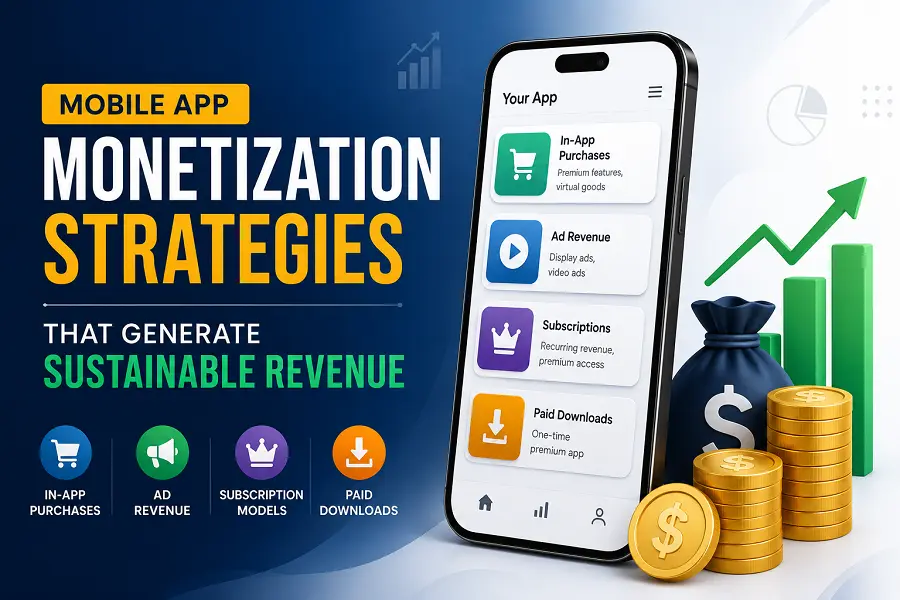
Building an app that users love is only half the challenge. Converting that love into consistent, predictable revenue is where most apps fall short. Millions of apps sit in stores generating nearly nothing — not because they lack users, but because their monetization approach works against the experience rather than alongside it.
The strategies gaining traction now are built on a simple premise: revenue that lasts comes from value delivered, not value extracted.
Subscription Tiers That Match How Users Actually Engage
Flat-rate subscriptions made sense when apps had one audience with similar needs. That era is over. Apps generating strong recurring revenue in 2026 are building tiered subscription architectures that map directly to distinct user segments.
The key is designing tiers around usage patterns, not just feature counts:
- Casual tier — core functionality with reasonable limits, priced for users who engage weekly
- Power tier — expanded capacity and automation features for daily users who depend on the app professionally
- Team or organizational tier — collaboration tools, admin controls, and priority support for multi-user accounts
What separates sustainable tiers from arbitrary paywalls is transparency. Users need to understand exactly what they’re paying for and feel the difference immediately after upgrading. Ambiguous value propositions kill conversion — clarity drives it.
Annual billing incentives also matter enormously. Offering a meaningful discount for yearly commitment doesn’t just reduce churn; it funds development cycles and creates a predictable revenue floor that monthly-only billing never delivers.
In-App Purchases Designed Around Genuine Value, Not Friction
The worst version of in-app purchases (IAP) is artificial scarcity — locking progress or content behind payments that users experience as punishment. The best version is optional enhancement that genuinely improves an experience users already enjoy.
Here’s how high-performing apps structure IAP effectively:
- Consumables that accelerate, not gatekeep — let users move faster or do more, without blocking those who choose not to pay
- Cosmetic and identity purchases — avatars, themes, and personalization options that carry no gameplay or functional advantage
- One-time unlocks — permanent access to a specific feature or content set, priced as a fair exchange rather than a rental
- Creator or content marketplaces — user-generated content available for purchase, with revenue shared back to creators
- Bundled value packs — grouped items at a discount that increase average transaction size without pressuring the user
The rule that separates sustainable IAP from predatory design is simple: a user who never spends should still have a complete, enjoyable experience. Purchases should feel like an upgrade, never a necessity.
Licensing and B2B Revenue Opens a Second Revenue Stream
Consumer-facing apps often overlook a significant opportunity sitting right inside their existing product: enterprise and B2B licensing.
When an app solves a real problem for individuals, there’s usually a version of that same problem that businesses face at scale. A productivity app used by thousands of individuals likely has dozens of companies whose entire teams would benefit from a managed version with admin controls, usage analytics, and centralized billing.
B2B monetization works differently from consumer monetization in several important ways. Contracts replace monthly billing. Sales conversations replace self-serve checkout. Pricing reflects organizational value rather than individual willingness to pay. The result is significantly higher lifetime value per account — often ten to fifty times what the same user would generate as a consumer subscriber.
Apps that have successfully made this transition typically start by noticing patterns: which users are inviting colleagues, which accounts show team usage behavior, which companies reach out asking about volume pricing. Those signals indicate B2B demand that’s already present, waiting for a formal offering.
Data and Insights Products Create Revenue Without New Users
Apps sitting on behavioral or transactional data have a monetization layer most never activate: anonymized insights products sold to businesses, researchers, or partners who need aggregated trend data.
This requires strict ethical and legal handling — user consent must be explicit, data must be properly anonymized, and compliance with regional privacy regulations is non-negotiable. When done correctly, however, this approach generates revenue from existing infrastructure with minimal additional development.
Fitness apps selling aggregate activity trend data to health insurers, retail apps selling foot traffic patterns to brands, and financial apps surfacing spending category trends to financial institutions are all examples of this model operating at scale.
Conclusion
Sustainable app revenue doesn’t come from squeezing users — it comes from building monetization structures that users willingly participate in because the value exchange feels fair. Tiered subscriptions match price to behavior. Well-designed IAP enhances without gatekeeping. B2B licensing unlocks higher-value contracts. Data products create revenue from existing assets.
The apps with the strongest long-term revenue profiles share one characteristic: their users don’t resent paying. That relationship, once built, is remarkably durable.
FAQs
1. What is the most sustainable mobile app monetization model?
Tiered subscriptions consistently outperform other models for long-term sustainability. They create predictable recurring revenue, reduce dependence on one-time purchases, and allow pricing to scale with the value different user segments actually receive.
2. How do in-app purchases differ from subscription monetization?
In-app purchases are typically one-time or consumable transactions — users pay for specific items, features, or content. Subscriptions charge on a recurring basis for continued access. Many successful apps combine both, using subscriptions for core access and IAP for optional enhancements.
3. When should an app consider B2B or enterprise licensing?
Watch for organic signals: team usage patterns, colleague invitations, or inbound requests about volume pricing. When these appear, it indicates enterprise demand already exists and formalizing a B2B offering simply captures revenue that’s currently being missed.
4. Is selling user data an ethical monetization strategy?
Only when done with full transparency, explicit user consent, proper anonymization, and strict regulatory compliance. Selling individual or identifiable data is both legally risky and a trust-destroying practice. Aggregated, anonymized trend insights are a fundamentally different proposition.
5. How can a free app convert more users to paid tiers?
Focus on the moment users experience genuine value — not before it. The upgrade prompt that converts best appears immediately after a user completes something meaningful using the app. Timing the ask to follow a positive experience dramatically outperforms generic prompts based on session count or time elapsed.






Leave a Reply