


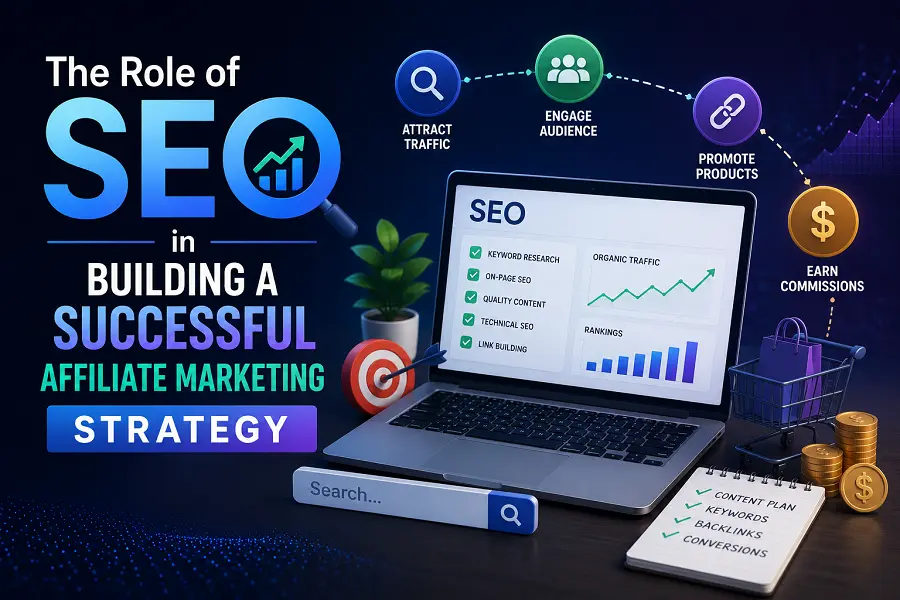
A resilient affiliate marketing strategy requires moving away from thin, promotional product lists toward value-driven content networks. Relying entirely on flashy social media campaigns or paid acquisition creates temporary spikes rather than predictable income. True commercial longevity belongs to affiliate models anchored in search engine optimization (SEO). Aligning your promotional framework with modern search mechanics builds a sustainable, high-converting asset that captures users precisely when they are ready to purchase.
1. Establishing Organic Credibility and Information Gain
Search systems prioritize content that demonstrates hands-on experience, clear expertise, authoritativeness, and trustworthiness (E-E-A-T). For affiliate marketers, this means moving beyond rewritten manufacturer product descriptions to provide unique insights that offer distinct information gain.
-
First-Hand Evaluation Proof: Integrating original product testing photography, step-by-step workflow screenshots, and customized data charts provides verifiable evidence that you have thoroughly utilized the item.
-
Balanced Critique Architectures: Discussing specific operational flaws, product limitations, and ideal user profiles alongside advantages establishes immediate consumer trust and improves conversion metrics.
-
Hyper-Specific Topical Mapping: Concentrating on a tight vertical niche allows you to answer long-tail queries more thoroughly than generalist product aggregator sites.
-
Owned Audience On-Ramps: Using high-ranking informational content to capture newsletter sign-ups protects your business from shifting traffic patterns while establishing a direct line to your audience.
2. Optimizing the Affiliate Funnel for High-Intent Search Queries
A successful search-driven affiliate strategy depends on mapping content directly to the user’s exact stage in the buyer journey. Capturing traffic at the point of decision requires structured formatting that answers specific, high-intent comparisons.
-
Direct Contrast Layouts (Versus Content): Designing balanced head-to-head reviews between major market competitors satisfies users evaluating specific feature sets, pricing matrices, and performance trade-offs.
-
Granular Persona Segmentation (Best-Of Listicles): Organizing comprehensive roundups into distinct categories—such as highlighting the top choice for small business budgets versus enterprise needs—helps readers find immediate answers.
-
Alternative Optimization Matrices: Targeting users looking to migrate from an incumbent software or product by offering detailed analysis of newer, more efficient alternatives.
-
Deep-Dive Workflow Tutorials: Creating comprehensive guides that demonstrate how a product solves a specific professional bottleneck addresses informational intent while naturally embedding contextually relevant referral pathways.
3. Structural Link Hygiene and Modern Technical Compliance
The backend architecture of an affiliate platform impacts search performance just as much as on-page editorial depth. Neglecting proper link attributes, technical site speed, or transparency disclosures can systematically limit your overall search visibility.
To satisfy search guidelines, all outbound commercial links must utilize correct HTML attributes, specifically rel="sponsored" or rel="nofollow". This clear separation tells automated search crawlers where commercial partnerships exist, protecting the editorial integrity of your domain. Furthermore, placing clear, plain-language affiliate disclosures above the fold builds consumer trust and satisfies regulatory transparency standards. Combining clean code with high-performance web hosting ensures that your content remains accessible, compliant, and easy for search engines to index.
Conclusion
Integrating comprehensive SEO into your affiliate marketing blueprint turns an ephemeral promotion into a long-term revenue-generating asset. By focusing on deep information gain, structuring your content for high-intent search queries, and maintaining pristine technical compliance, you insulate your platform from intense competition. The future of digital affiliate commerce belongs to operators who treat their platforms as authoritative media hubs, delivering genuine utility to users before recommending a purchase.
FAQs
How does the concept of Information Gain apply to affiliate product reviews?
Information Gain refers to the unique, original value a piece of content offers compared to what is already available online. In affiliate marketing, you achieve this by sharing proprietary test data, personal use results, and unique analytical perspectives that automated scrapers or generic overviews cannot replicate.
Why should affiliate sites use the sponsored link attribute instead of regular links?
Using rel="sponsored" or rel="nofollow" explicitly signals to search engine crawlers that a financial relationship is tied to the destination link. This transparency prevents your site from being penalized for participating in unnatural link schemes, preserving your organic ranking safety.
What is the risk of targeting broad, high-volume keywords in a new affiliate strategy?
Broad keywords are highly saturated and heavily defended by massive media corporations with deep backlink profiles. New affiliate platforms find far greater success targeting long-tail, hyper-specific queries where user intent is high and competition is significantly lower.
How does site speed affect conversion rates on an affiliate platform?
Slow loading times frustrate mobile and desktop users, causing them to abandon your site before interacting with your content or clicking your referral tracking links. Optimizing technical site speed directly reduces bounce rates and improves your overall digital conversion efficiency.
Can an affiliate marketing business survive solely on organic search traffic?
While organic search traffic provides a highly profitable foundation, relying exclusively on one traffic source leaves your business vulnerable to algorithm updates. The most resilient affiliate strategies use high organic rankings to fuel secondary owned channels, such as automated email newsletters and private community platforms.





Leave a Reply