


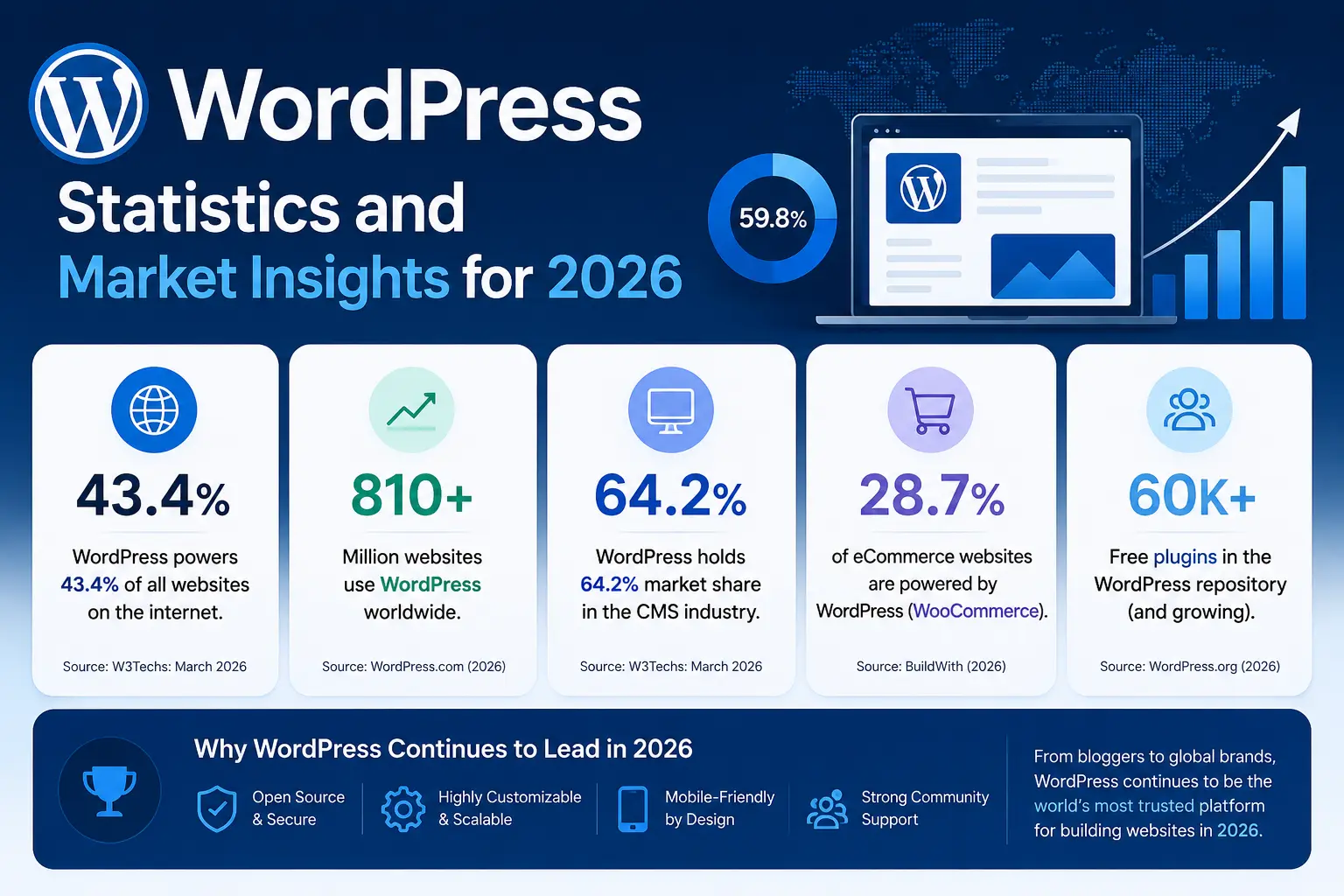
The content management system landscape continues to experience significant transformation as technical compliance, automated hosting frameworks, and generative data systems redefine the open web. Rather than falling behind newer SaaS alternatives, WordPress maintains a foundational foothold across the global internet infrastructure. For digital stakeholders, understanding the structural and economic indicators of this ecosystem reveals where corporate development and user attention are concentrating.
Analyzing modern platform usage goes beyond measuring simple download numbers. True evaluation requires analyzing core software distribution, theme and block framework adoption, and security engineering milestones that protect global web properties.
Market Share Stability and Dominance Metrics
WordPress holds an unassailable lead over competing content management engines, operating effectively as a category of one. While proprietary software platforms capture specific e-commerce niches, the open-source architecture of WordPress serves as the baseline operating platform for both small independent media channels and expansive corporate portfolios.
-
Global Web Saturation: The platform powers roughly 41.9% to 43.5% of all active websites globally, capturing over 59% of the identifiable content management system marketplace.
-
Enterprise Adoption Scaling: Among the top one hundred thousand highest-traffic websites, the software commands an authoritative share of more than 51%, proving its capability to handle massive simultaneous traffic concurrency.
-
E-Commerce Economic Value: The natively integrated WooCommerce subsystem handles between 30% and 38% of all digital retail storefronts globally, facilitating billions in annual transaction processing without platform fee inflation.
-
International Footprint Expansion: Active deployments span more than 178 sovereign nations, with localized interface translations covering over 200 distinct regional languages and dialects.
Technical Performance, Page Builders, and Infrastructure Consolidation
The underlying technical footprint of active installations is consolidating around modernized rendering pipelines. Older page-building extensions that historically introduced code bloat are gradually relinquishing market share to leaner, native block-based development architectures. This optimization shift directly addresses search algorithm expectations regarding core browser interactivity.
-
Core Version Standardization: Over 92% of reporting installations have migrated to modern major software releases, substantially narrowing the fragmentation gap that previously plagued the plugin ecosystem.
-
The Gutenberg Transition: Native block editor adoption has risen steadily, with block-based Full Site Editing themes now running on more than 28% of active domains.
-
Page Builder Market Realignment: While third-party drag-and-drop engines like Elementor remain prominent, their overall usage density has adjusted downward as site architects prioritize lightweight, native blocks.
-
Server Runtime Progress: Modern server execution environments are steadily adopting newer runtime versions, with over 47% of active sites successfully running on optimized infrastructure.
Security Vectors and Operational Integrity
Operating nearly half of the accessible web inherently attracts consistent, automated exploitation attempts from malicious networks. Security analysis reveals that vulnerabilities rarely stem from the fundamental core engine software. Instead, the operational security overhead for site administrators sits squarely within the third-party extension ecosystem.
Vulnerability databases indicate that approximately 97% of documented platform compromises trace back to outdated or poorly managed plugins and themes, while core software architectural flaws account for a mere 3%. Automated monitoring networks block millions of malicious credential-stuffing and code-injection attempts every single minute. This continuous threat landscape forces an increased adoption of edge-based firewalls, server-side malware scanning, and mandatory multi-factor authentication protocols among corporate site administrators.
Conclusion
The metrics confirm that WordPress remains the dominant framework of the modern web ecosystem. Success on the platform involves shedding heavy legacy extension dependencies and embracing native block styling alongside modern, edge-cached server architecture.
FAQs
What exact percentage of the internet runs on WordPress?
WordPress powers between 41.9% and 43.5% of all functional websites globally, which translates to roughly 60% of the market share among websites utilizing an identifiable content management system.
Why is there a shift toward native block themes?
Native block themes integrate directly with the core software architecture, eliminating heavy external CSS and JavaScript files. This clean code structure maximizes browser rendering speeds and drastically lowers mobile page layout latency.
How safe is the core WordPress software from remote hacking?
The core system is exceptionally secure, accounting for only 3% of known platform vulnerabilities. The vast majority of security compromises occur due to unpatched third-party plugins, weak administrative passwords, or outdated server environments.
Is WooCommerce a viable alternative to dedicated SaaS retail platforms?
Yes. WooCommerce offers complete data ownership, requires zero platform transaction fees, and powers over 30% of global e-commerce stores, making it highly cost-effective for expanding commercial operations.
How often do active WordPress installations receive major feature updates?
The global open-source community ships multiple major core architectural updates annually, introducing thousands of enhancements, accessibility adjustments, and technical optimizations designed to streamline server resource usage.





Leave a Reply