


Most families go through the same conversation. A parent is finding the stairs harder. Someone says, “Let’s get a stairlift. It’s cheaper.” Someone else says, “Why not just put in a lift?” Then the internet gets involved, and suddenly there are twenty tabs open and nobody is any closer to a decision.
Both options solve the same basic problem: getting someone safely from one floor to another. They suit different people, different homes and different budgets, though. Here’s how to decide without second-guessing yourself.
The basic difference
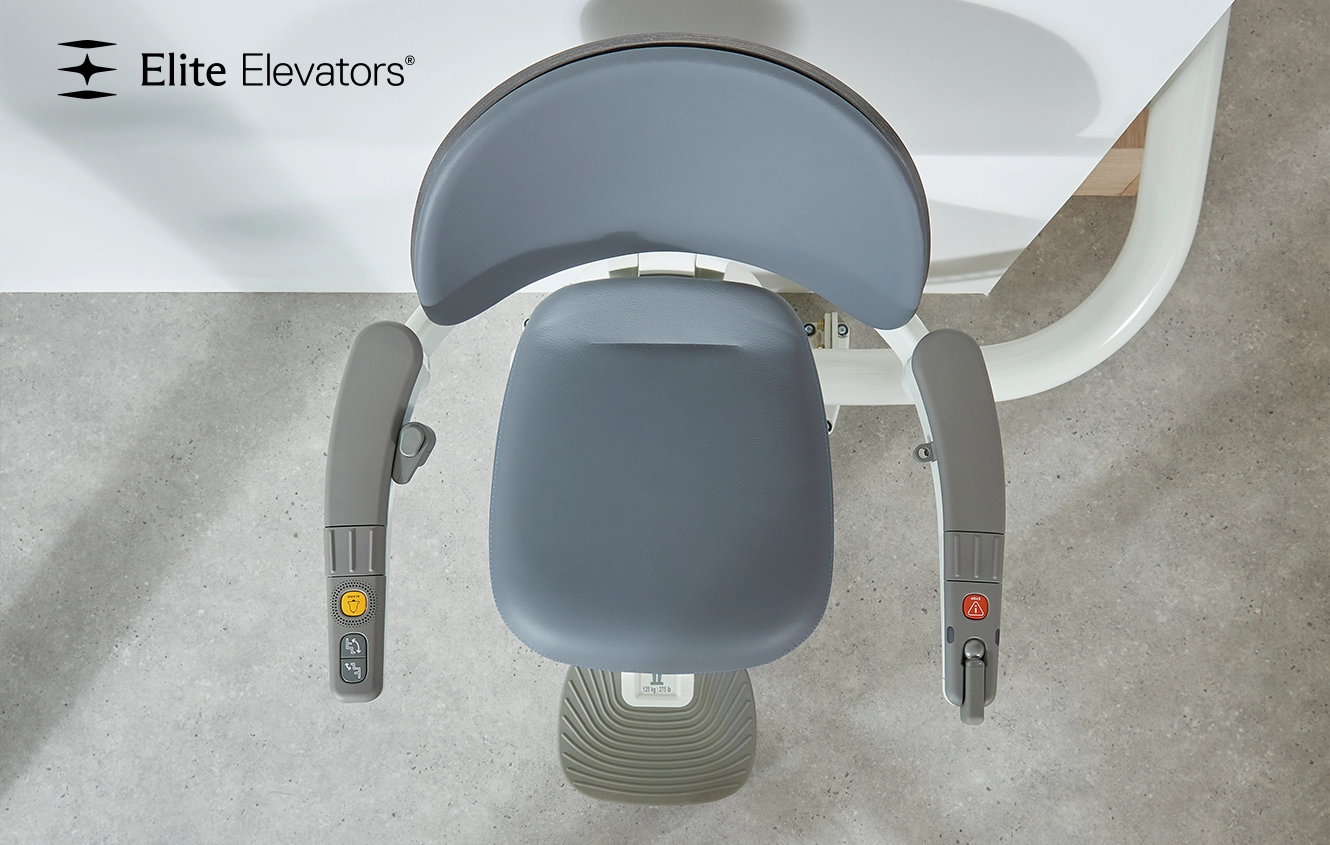
A stairlift is a chair that runs along a rail on your existing staircase. The person sits, rides up, and steps off at the top.
A home lift (or home elevator) is a small cabin that moves vertically between floors, either through a shaft or, in the case of newer vacuum lifts, inside a self-supporting tube. The person walks in, stands or sits, and walks out on the next floor.
That difference sounds small, but it changes almost everything about daily use.
Question 1: Who is going to use it, and how?
This is the most important question, so start here.
A stairlift suits someone who:
- Can walk short distances on their own
- Can sit down and stand up safely
- Mostly needs help because of tired knees, breathlessness or poor balance on stairs
A home lift suits someone who:
- Uses a wheelchair or walker
- Needs a caregiver to travel with them
- Has difficulty transferring from one seat to another
- Is likely to need more support in the coming years
Here’s something a lot of families don’t think about until later. With a stairlift, the user has to get from their walker or wheelchair onto the chair, ride up, then get off onto another walker or wheelchair waiting at the top. That’s two transfers per trip. For a frail person, each transfer is a moment where a fall can happen.
With a home lift, they simply wheel or walk in and out.
Question 2: What does your staircase look like?
If your staircase is straight, a stairlift is simple, quick to fit and relatively affordable.
If your staircase is curved, L-shaped, U-shaped or has a landing halfway, which describes most villa and duplex staircases in India, you’ll need a custom curved rail. Curved stairlifts commonly cost ₹8 lakh to ₹15 lakh. At that point, you’re already close to the price of a compact home lift.
Question 3: What’s the real budget?
Here’s a rough comparison for a G+1 home in India in 2026:
| Straight stairlift | Curved stairlift | Compact home lift | |
| Approximate price | ₹1.5–5 lakh | ₹8–15 lakh | ₹11–22 lakh |
| Construction needed | None | None | Minimal to significant, depending on type |
| Wheelchair-friendly | No | No | Yes (larger models) |
| Carries a caregiver too | No | No | Yes (2–3 person models) |
| Takes up stair space | Yes | Yes | No |
| Adds to home value | Rarely | Rarely | Often |
If you have a straight staircase and the user is fairly mobile, a stairlift is hard to beat on cost. If you have a curved staircase, compare the two options carefully, because the gap is much smaller than most people assume.
Question 4: How long will you live in this house?
If you’re planning to move in two or three years, a stairlift might be the sensible, temporary answer. Straight stairlifts can sometimes even be removed and reused.
If this is the family home, the one you expect to live in for the next fifteen or twenty years, then think about what your parents will need not just today but five or ten years from now. And think about yourself too. Many people who install a lift “for Amma” end up very grateful for it themselves in their sixties.
Question 5: How much construction can you tolerate?
This used to be the strongest argument for stairlifts. Traditional hydraulic and traction lifts need a pit, a shaft and often a machine room, which means weeks of dust and noise in a home where an elderly person is living.
That has changed somewhat. Pneumatic or vacuum home lifts need no pit, no machine room and very little civil work. They can usually be installed in a few days, often beside the staircase or in a corner of a room. Companies such as Nibav Lifts have focused on this kind of compact, construction-light lift specifically for existing Indian homes, which has made the home lift option practical for many families who earlier assumed it wasn’t possible.
Question 6: Who else uses the staircase?
A stairlift lives on the stairs. When it’s folded and parked, it still takes some width. In a narrow staircase, children running down, someone carrying laundry or groceries, or a visitor unfamiliar with the house may find it awkward. A home lift sits separately and leaves your staircase free.
Three common scenarios
Scenario 1: Your 72-year-old mother has arthritis in both knees but walks fine on level ground. Your house has a straight staircase. A straight stairlift is likely the best value.
Scenario 2: Your father had a stroke last year and now uses a wheelchair. A home lift is almost certainly the better choice. A stairlift would mean difficult transfers twice every trip.
Scenario 3: Both parents are in their late sixties, still fairly active, and your villa has a U-shaped staircase. Get quotes for both. A curved stairlift and a compact home lift may cost about the same, and the lift will serve them much longer.
Final thoughts
There’s no single correct answer, only the one that fits your family. A stairlift is an excellent, affordable solution for the right person and the right staircase. A home lift costs more, but it covers far more situations, including the ones you might not want to think about yet.
Before you decide, sit with your parents and ask them what they find hardest about the stairs. Get a home assessment, measure the staircase, and compare all-in costs rather than headline prices. Above all, choose the option that lets them keep moving around their home with confidence, without having to wait for someone to help.
The price ranges are indicative 2026 figures for India. Stairlift prices vary widely by brand and staircase shape, so check current quotes before you publish.
Sources:













Leave a Reply