


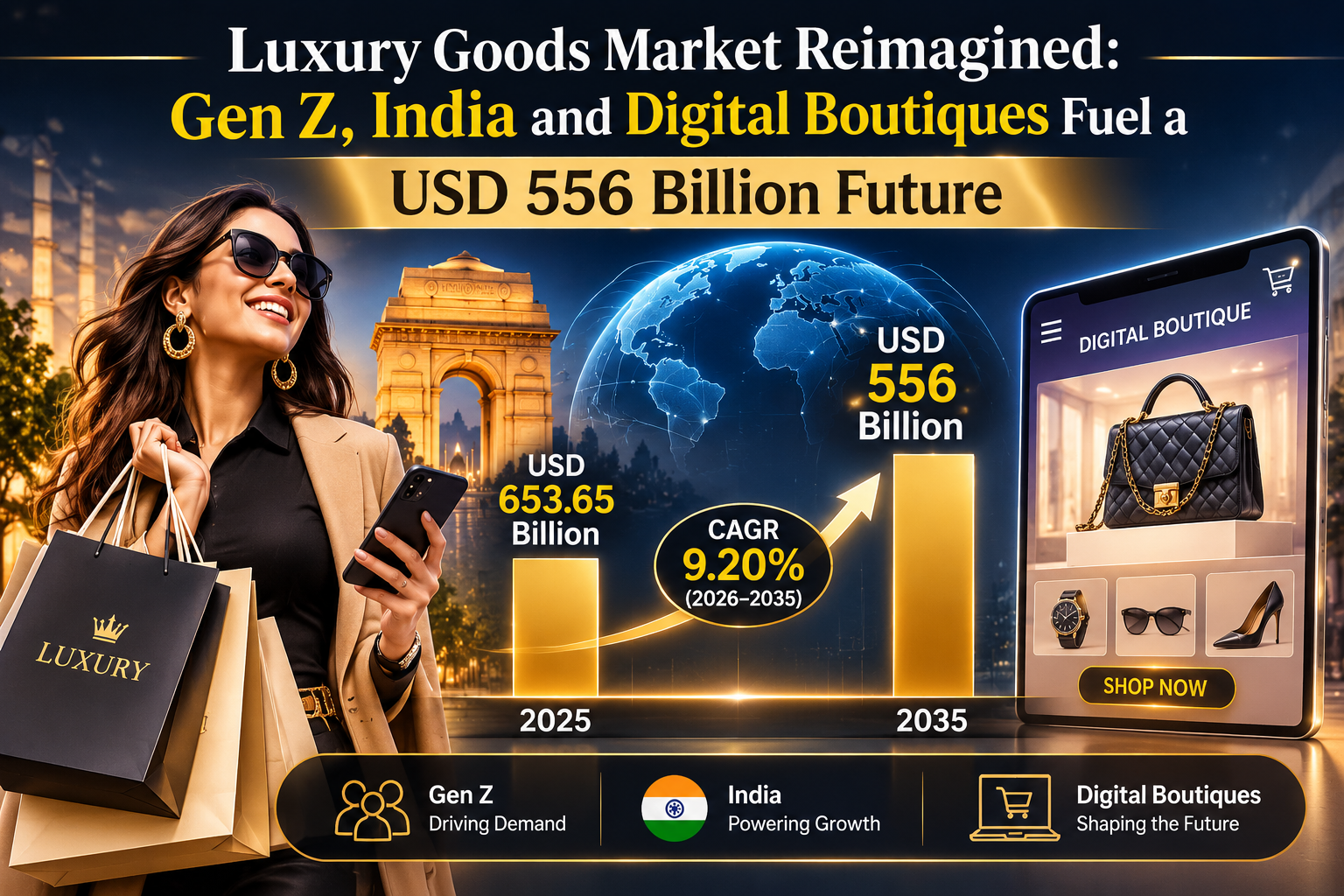
Luxury is no longer just about status. Today’s buyers want craftsmanship, stories and values they can believe in. Younger shoppers research brands online, then visit boutiques for the full experience. As a result, heritage houses are blending tradition with technology. This article explains the size, drivers, trends, segments and key players shaping the sector through 2035.
The global luxury goods market reached a value of USD 361.42 billion in 2025. Moreover, it should grow to USD 555.93 billion by 2035, at a CAGR of 4.40% during 2026-2035. A rising number of high-net-worth individuals, digital commerce and strong demand from millennials and Gen Z drive this growth. In fact, brands also enter fast-growing regions such as India and Southeast Asia.
Luxury Goods Market Snapshot
- Market size in 2025: USD 361.42 billion
- Forecast for 2035: USD 555.93 billion
- CAGR (2026-2035):40%
- Fastest-growing region: Asia Pacific (about 5.4% CAGR)
- Largest product group: watches and jewellery (about USD 165 billion in 2026)
- Largest end user: women (about 55% of revenue)
- Fastest-growing channel: online (over 15% of revenue in 2026)
Key Growth Drivers
More High-Net-Worth Buyers
A growing number of wealthy individuals widens the buyer base. Therefore, luxury houses see steady demand for jewellery, watches and leather goods across regions.
Digital and Omnichannel Experiences
About 60% of luxury purchases now involve online influence. Consequently, Chanel, Louis Vuitton and Hermès invest in e-boutiques, virtual try-on and AI personalisation. Stores still matter, but digital tools extend the brand experience.
Aspirational Millennials and Gen Z
Younger consumers favor authenticity, limited editions and sustainability. Meanwhile, resale platforms such as StockX and Vestiaire Collective keep secondary demand strong.
Key Trends and Recent Developments
India Emerges as the Next Growth Engine
Louis Vuitton, Dior, Cartier and Chanel stepped up their India plans in 2025 and 2026. They opened flagship boutiques in Delhi, Mumbai and Bengaluru. In addition, India’s affluent, brand-conscious youth position the country as the next major demand engine after China.
Sustainability Becomes a Selling Point
EU rules and digital product passports push brands to document sourcing and carbon footprints. For example, Hermès launched a leather goods line using recycled materials in June 2025.
Watches and Jewellery as Investments
Rolex, Patek Philippe and Cartier pieces now work as investment-grade assets. Likewise, auction platforms keep secondary prices high.
Recent Moves
- In April 2026, Kering announced a strategic partnership and a minority stake in ICCF.
- Prada acquired a boutique jewellery brand in May 2025 to enter high jewellery.
- Rolex launched new GMT-Master II and Oyster Perpetual models in April 2025.
Market Segmentation
By Product Type
The luxury goods market spans watches and jewellery, perfumes and cosmetics, clothing, and bags and purses. Watches and jewellery lead, because they combine lifestyle appeal with investment value. Bags from Chanel, Hermès and Louis Vuitton remain the most recognisable status symbols. Meanwhile, perfumes and cosmetics give aspirational buyers an affordable entry point.
By End User
Women generate about 55% of revenue, thanks to wider participation across handbags, jewellery, apparel and fragrance. However, men’s luxury grows quickly. Watch collecting, leather goods and premium grooming attract more male buyers.
By Distribution Channel
Offline boutiques, department stores and airport retail still dominate, as shoppers value personal styling and touch. Online, in contrast, grows fastest and should exceed 15% of revenue in 2026. Brands now add virtual consultations and digital gifting.
By Region
Europe holds about 52% of revenue in 2025, because LVMH, Kering, Hermès, Richemont, Chanel and Prada all base themselves there. France alone accounts for about 20% of the global total. Asia Pacific grows fastest, at about 5.4% CAGR, and Chinese consumers make up roughly 22% to 24% of global luxury purchases. North America leads in spending per person, while the Middle East benefits from Gulf wealth and luxury tourism.
Competitive Landscape
The industry is highly concentrated at the group level. LVMH, Kering and Richemont control a large share of revenue, while independents such as Chanel, Hermès and Rolex compete through scarcity and brand control. Key players include:
- Chanel Limited: a private Paris house known for its flap bag and No. 5 fragrance
- Kering SA: owner of Gucci, Saint Laurent and Bottega Veneta
- Rolex SA: the most recognised luxury watch brand
- Hermès International S.A.: maker of the Birkin and Kelly bags
Other notable companies include Giorgio Armani, Ralph Lauren, Prada, Valentino, Tiffany & Co., Cartier, Burberry, L’Oréal, Shiseido and LVMH.
Key Challenges
- Moderate overall growth, so share shifts matter more
- Pressure to defend brand exclusivity as digital reach expands
- Rising rules on sustainability and supply chain reporting
Conclusion
With 4.40% annual growth ahead, the luxury goods market offers strong potential in Asia Pacific, digital boutiques and sustainable craftsmanship. Therefore, brands should balance exclusivity with accessible online experiences. Expert Market Research offers detailed forecasts, segment data and competitor profiles to support these decisions.
Frequently Asked Questions
- What was the industry value in 2025? It reached approximately USD 361.42 billion in 2025.
- What is the growth forecast? It should reach USD 555.93 billion by 2035, growing at a CAGR of 4.40% from 2026.
- Which product group leads? Watches and jewellery lead by revenue, supported by investment demand and strong brand heritage.
- Which region is growing fastest? Asia Pacific grows fastest, at about 5.4% CAGR. Meanwhile, Europe holds the largest revenue share.
- Who are the key players? Key players include LVMH, Kering, Chanel, Hermès, Rolex, Richemont, Prada and Cartier.







Leave a Reply