


Summary
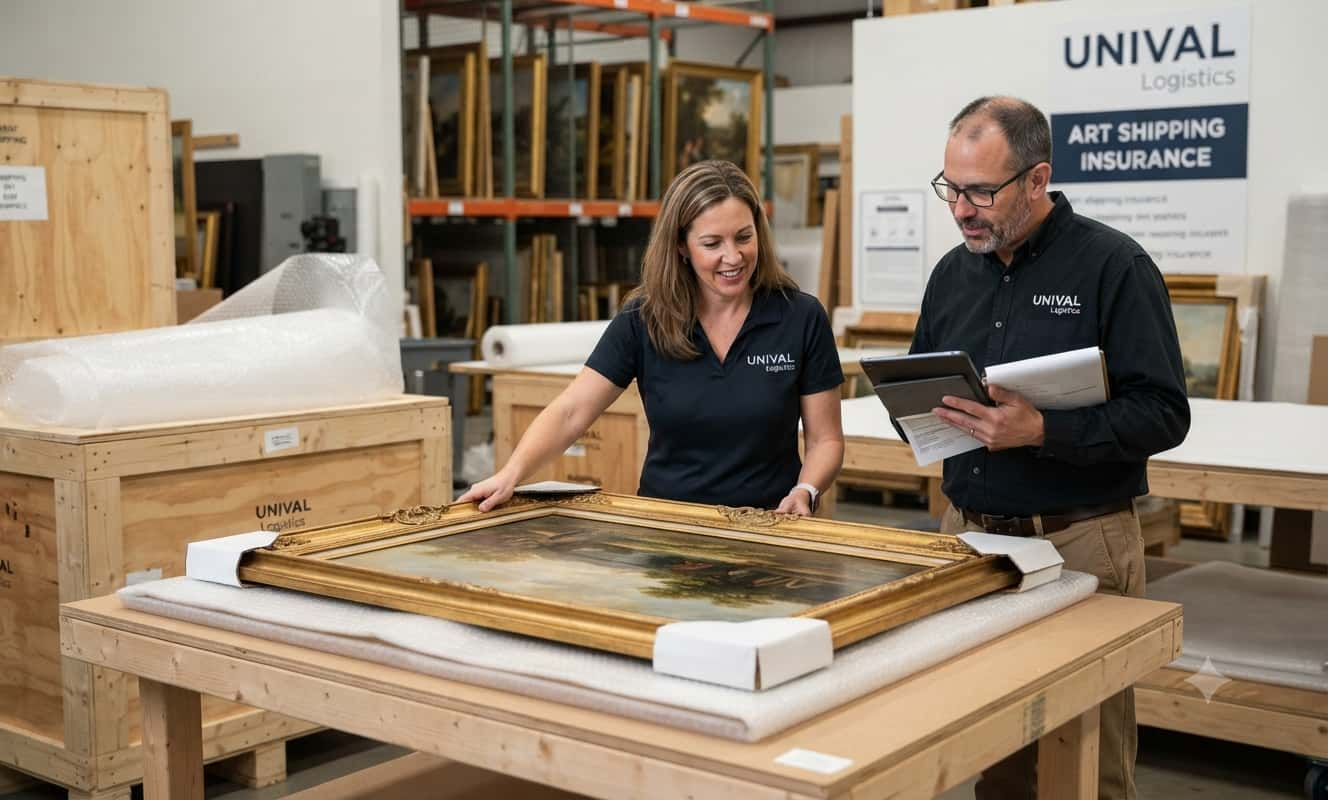
Artwork requires specialized protection because its value may depend on the artist, age, condition, rarity, provenance and market demand. Declared value and all-risk insurance are two different approaches to managing financial exposure during transportation. Declared value may establish a carrier’s liability limit under specific service terms, while an all-risk policy may provide broader protection against accidental physical loss or damage, subject to its wording and exclusions. Neither option should be assumed to cover every situation. This guide explains the differences, important policy conditions, documentation requirements, packing considerations and cost factors. UNIVAL Logistics helps businesses and art professionals plan transportation requirements for valuable shipments across the United States.
Overview
Art shipments can include paintings, sculptures, framed works, photographs, antiques, collectible pieces and gallery consignments. Each item may have different handling requirements and insurance considerations. A framed painting may need corner protection and a suitable crate, while a sculpture may require a custom support structure and controlled loading. Insurance should reflect the artwork’s value, condition, route and transportation arrangements. Businesses arranging art shipping insurance should review policy wording before collection and confirm that the specific artwork is eligible for coverage. UNIVAL Logistics supports practical transportation planning for valuable shipments in Los Angeles, New York, Miami, Chicago, Dallas, Houston, Philadelphia, Atlanta, Las Vegas, San Francisco, Boston, Newark and Northern New Jersey.
Key Takeaways
- Declared value and insurance are not interchangeable.
- Carrier declared value may establish a liability limit rather than provide broad insurance.
- All-risk coverage may protect against a wider range of accidental physical loss or damage, subject to exclusions.
- Confirm that the policy accepts the artwork, route, packaging and transportation method.
- Record the artwork’s value, condition, provenance and identifying details before shipping.
- Use suitable packaging and documented handling procedures.
- Review deductibles, limits, claim deadlines and exclusions before dispatch.
Quick Answer: Declared value generally sets a carrier’s potential liability limit, while all-risk coverage may protect artwork against a broader range of accidental physical loss or damage. Review the policy wording, exclusions, valuation method and shipping conditions before choosing either option.
Why Artwork Needs Specialized Shipping Protection
Artwork is not ordinary cargo. A painting may have a fragile surface, an antique frame or delicate glazing. A sculpture may contain fragile projections, unusual materials or a complex internal structure. Even when an item appears sturdy, vibration, impact, moisture and poor handling can cause damage.
The financial consequences can also be difficult to measure. A damaged artwork may require specialist restoration, conservation assessment or frame repair. Some pieces may lose market value even after restoration. Unique or historically significant works may be impossible to replace.
A standard parcel service may not provide the handling procedures or financial protection needed for these shipments. Businesses should therefore assess the artwork’s condition, value, packaging requirements and insurance arrangements before booking transportation.
What Is Declared Value in Art Shipping?
Declared value is an amount provided to a carrier when arranging a shipment. Depending on the carrier’s terms, it may establish the maximum amount the carrier could be liable for if a qualifying loss occurs. It does not automatically mean that the shipment has comprehensive insurance.
How Declared Value Works
A shipper provides the value of the artwork and selects an eligible service. The carrier may use that amount to calculate an additional charge or determine its potential liability, subject to its contract and applicable rules.
However, the carrier’s terms remain important. A declared amount may not override exclusions for artwork, antiques, fragile items or other restricted goods. Some services may also apply maximum limits, packaging requirements or special documentation rules.
For example, declaring a painting’s value does not necessarily guarantee payment of that amount if the carrier excludes fine art or the damage falls outside its liability conditions. The shipper must confirm whether the carrier accepts the item and what compensation is actually available.
Advantages of Declared Value
Declared value can be useful when the carrier accepts the artwork and the applicable service provides a suitable liability arrangement. It may offer a straightforward way to identify the shipment’s stated value and establish a potential compensation limit under the carrier’s terms.
It can also be simpler to arrange than a separate specialist insurance policy for eligible, lower-risk shipments. However, convenience should not replace a careful review of the carrier’s conditions.
Limitations of Declared Value
Declared value may offer less protection than an artwork owner expects. Important limitations can include restricted item eligibility, maximum compensation amounts, exclusions, proof requirements and conditions relating to packaging.
It may also be based on the carrier’s legal liability rather than simply reimbursing the artwork’s full market value. If the carrier is not responsible under the applicable terms, the declared amount may not produce a payment.
What Is All-Risk Art Insurance?
All-risk insurance is generally designed to cover accidental physical loss or damage to insured property, except where the policy specifically excludes an event or circumstance. The term does not mean that every possible loss is covered.
For artwork, an appropriate policy may cover eligible physical damage or loss during a defined transportation period. The actual protection depends on the insurer’s wording, agreed value, exclusions, deductibles and security conditions.
What May Be Covered?
Depending on the policy, covered events may include accidental physical damage during handling or transit, theft, loss or other specified incidents. Some policies may also address damage during loading, unloading or temporary storage when those activities fall within the insured period.
The shipper should confirm that the policy covers the complete journey. A policy that protects an artwork only while it is moving between two locations may not automatically cover collection, storage, installation or return transportation.
What May Be Excluded?
Even broad policies contain exclusions and conditions. Common areas to review include:
- Inherent vice: Damage caused by the artwork’s own characteristics, deterioration or natural condition may be excluded.
- Gradual deterioration: Fading, discoloration, corrosion, mold or other gradual changes may not qualify as accidental transit damage.
- Inadequate packaging: Damage resulting from insufficient or unsuitable packing may be excluded.
- Pre-existing damage: Existing cracks, scratches, instability or other defects may not be covered as a new loss.
- Restoration and handling risks: Certain conservation, repair, installation or specialist handling activities may require separate approval.
- Unexplained disappearance: Some policies require evidence of a covered event and may restrict claims where the cause of loss cannot be established.
- War and other excluded events: Certain extraordinary risks may be excluded or require separate cover.
Always read the exclusions and conditions in the actual policy. The label “all-risk” should never be treated as proof of unlimited protection.
Declared Value vs. All-Risk Coverage: Which Is Different?
Financial Protection
Declared value generally establishes a potential carrier liability limit under the selected service. It does not necessarily provide direct insurance for the full value of the artwork.
All-risk coverage may offer broader protection for accidental physical loss or damage, subject to the policy terms. The insurer assesses the claim according to the insured value, covered event, exclusions and other conditions.
Coverage Conditions
Carrier declared value depends on the carrier’s contract, service restrictions and liability rules. Artwork may be excluded or accepted only under specific conditions.
All-risk insurance depends on the insurer’s policy wording. The artwork, value, route, packing method and transport provider may need to be approved before coverage begins.
Claims Process
A carrier liability claim may require evidence that the carrier was responsible under its service terms. The carrier may also apply specific limits and documentation requirements.
An insurance claim is assessed under the policy. The insurer may request proof of value, condition reports, photographs, shipping records, professional assessments and evidence of the incident.
Which Option Should Art Owners Choose?
The right arrangement depends on the artwork’s value, fragility, route, carrier acceptance and financial exposure. For valuable or irreplaceable pieces, a specialist policy may be more appropriate than relying only on a carrier’s declared value option.
Before deciding, compare the actual coverage rather than the names of the services. Ask what events are covered, how the insured value is calculated, which exclusions apply and what evidence is needed for a claim. UNIVAL Logistics can help customers review transportation requirements and consider suitable arrangements for valuable artwork.
How to Choose Suitable Art Shipping Insurance
1. Establish an Accurate Artwork Valuation
The insured value should be supported by reliable records. Depending on the artwork, useful evidence may include a purchase invoice, gallery invoice, auction documentation, independent appraisal or recent valuation.
For older, rare or unique works, a professional valuation may be appropriate. Market value, replacement value and agreed value are not necessarily identical. Ask the insurer which valuation method applies and how a claim would be calculated.
If a shipment contains several pieces, list each item separately where practical. Avoid using one general value for a collection without providing a supporting inventory.
2. Record the Artwork’s Condition
Prepare a condition report before packing. Record existing scratches, cracks, frame damage, surface issues, repairs and other visible characteristics. Take clear photographs from multiple angles and include close-ups of vulnerable areas.
For high-value pieces, consider a report prepared by a qualified conservator or art professional. This can help distinguish existing conditions from damage that may occur during transportation.
3. Confirm Policy Eligibility
Provide the insurer with a clear description of the artwork, its value, dimensions, materials and destination. Explain the planned transport method and any special handling requirements.
Ask for written confirmation that the specific items are accepted. Confirm whether the policy covers collection, loading, transit, transfers, temporary storage and final delivery. If the shipment includes multiple locations or stages, make sure each relevant stage is addressed.
4. Review the Deductible and Coverage Limit
A policy may have an overall limit, a per-item limit and a deductible. Check that the maximum payable amount is sufficient for the artwork’s declared or agreed value.
A low premium may come with a high deductible or restrictive conditions. Compare the financial protection provided rather than choosing solely on the initial price.
5. Check the Claims Requirements
Ask the insurer which documents must be supplied after a loss. Confirm notification deadlines, inspection requirements and whether the insurer must approve restoration work before it begins.
Knowing these requirements in advance can help prevent delays and avoidable claim disputes.
Packing and Handling: Supporting the Insurance Arrangement
Insurance does not prevent damage. Appropriate packing and handling remain essential to protecting artwork during transit.
Choose Packaging for the Artwork
Different materials require different protection. Paintings may need surface protection, corner guards, rigid supports and suitable crates. Works on paper may require protective folders, moisture control and flat packing. Sculptures may need custom supports that distribute weight without placing pressure on fragile sections.
Use materials that are suitable for the artwork’s surface and condition. Avoid placing adhesive materials directly against painted, varnished or delicate surfaces. For fragile or high-value works, consult a qualified art handler or professional packer.
Control Environmental and Handling Risks
Temperature, humidity and vibration can affect sensitive artwork. Some pieces require specific environmental conditions, especially during long journeys or when moving between different climates.
Confirm whether climate-controlled transport, specialized crates, shock protection or additional monitoring is necessary. Make sure the transport provider understands any positioning and handling instructions.
Document the Packing Process
Photograph the artwork before packing, during preparation and after it has been secured. Record the package count, crate condition, seals and identifying labels. Keep the packing documentation with the insurance and shipment records.
For valuable pieces, the condition of the crate at collection and delivery can also be important. Record visible damage or signs of tampering as soon as they are noticed.
What to Do if Artwork Is Damaged or Lost
If an artwork arrives damaged or goes missing, notify the carrier and insurer promptly. Follow the notification deadlines and reporting procedures in the applicable terms.
Take photographs of the packaging, crate, labels and visible damage. Preserve all packing materials and avoid discarding evidence that may help establish how the incident occurred.
Arrange a professional condition assessment when necessary. A conservator or qualified art specialist may be able to explain the type and extent of damage and recommend suitable restoration work.
Do not begin major repairs or restoration before checking the insurer’s requirements. Some policies require inspection, written approval or an independent assessment before work proceeds.
Prepare a claim file with the artwork inventory, valuation evidence, condition report, photographs, shipping documents, delivery confirmation and any specialist reports. Keep records of all communications and follow the insurer’s instructions.
Common Mistakes When Insuring Artwork
One common mistake is assuming that declared value guarantees full reimbursement. It may only set a liability limit under carrier terms, and the carrier may exclude the artwork altogether. Confirm acceptance and compensation conditions before dispatch.
Another mistake is purchasing a policy without checking its valuation basis. A policy based on a specific market or replacement value may produce a different settlement from what the owner expects. Confirm how the insurer will assess a loss.
Incomplete condition records can also create problems. Without photographs or a condition report, it may be difficult to establish whether damage existed before collection. Record the artwork’s condition before it enters the packing process.
Finally, do not assume that all-risk means unrestricted protection. Exclusions, deductibles, security requirements and packaging conditions still apply. Read the policy and ask questions before the shipment leaves.
Understanding the Cost of Art Shipping Insurance
The cost of insuring and transporting artwork depends on its value, size, materials, fragility, route, packing requirements and coverage conditions. There is no universal rate for every painting, sculpture or collectible. Request a quotation based on the actual shipment details.
Common cost components include:
- Insurance premium: The charge for the requested coverage, influenced by artwork value, type, route, transport method and risk conditions.
- Professional packing: Materials and labor for protective wrapping, corner guards, custom supports and suitable containers.
- Custom crating: Specialized crate design and construction for fragile, oversized or high-value pieces.
- Transportation: Charges based on distance, dimensions, weight, service level and handling requirements.
- Specialist handling: Costs for art handlers, careful loading, installation support or other approved services.
- Environmental protection: Additional charges for climate-controlled transport, humidity control or monitoring where required.
- Valuation and condition reporting: Potential fees for appraisals, conservation assessments, photography or professional documentation.
Ask whether the quotation includes insurance, packing, collection, delivery and any required specialist handling. Confirm whether the insurance premium is based on the declared value, agreed value or another valuation method. UNIVAL Logistics can help customers review their transportation needs and discuss practical, cost-conscious arrangements.
Important Disclaimer
All cost information should be treated as a baseline estimate of possible cost categories, not a guaranteed quotation. Actual prices are subject to market fluctuations, supplier changes, artwork specifications, insurer requirements and variable logistics fees. Insurance premiums, deductibles, limits and exclusions vary by shipment and policy. Contact UNIVAL Logistics for the latest and most accurate prices and to discuss the requirements of your artwork shipment.
How UNIVAL Logistics Supports Valuable Artwork Transportation
Choosing a transportation provider for artwork requires attention to handling, communication, packaging and insurance requirements. UNIVAL Logistics helps businesses and art professionals consider these factors before arranging the movement of valuable goods.
A practical plan begins with an accurate inventory, artwork valuation, condition records and a clear description of the destination. Packaging and handling requirements can then be reviewed alongside carrier acceptance and insurance conditions.
Cost should be considered together with service quality and protection. A low initial shipping price may not provide suitable value if the service does not accommodate the artwork or the insurance arrangement leaves significant gaps. A cost-effective solution should balance competitive pricing, dependable communication and appropriate transportation procedures.
UNIVAL Logistics focuses on practical logistics planning and reliable service for valuable shipments. By reviewing requirements before collection, customers can make informed decisions about packaging, handling and transportation arrangements.
Final Thoughts
Declared value and all-risk coverage serve different purposes. Declared value may establish a carrier’s potential liability limit, while all-risk insurance may offer broader protection against accidental physical loss or damage, subject to policy exclusions and conditions.
Art owners, galleries and businesses should establish accurate valuations, document the artwork’s condition, confirm carrier acceptance and review insurance wording before dispatch. Suitable packaging and clear handling records are also essential parts of a responsible shipping plan.
The best protection comes from combining appropriate insurance with careful transportation preparation. UNIVAL Logistics can help customers review shipment requirements and consider dependable arrangements for valuable artwork.
Frequently Asked Questions
1. What is the difference between declared value and all-risk art insurance?
Declared value generally establishes a potential carrier liability limit under the carrier’s service terms. All-risk insurance may cover a wider range of accidental physical loss or damage, subject to the policy’s exclusions, limits and conditions.
2. Does declared value guarantee reimbursement for damaged artwork?
No. Compensation depends on the carrier’s terms, the circumstances of the incident and whether the artwork is eligible for coverage. Declared value does not automatically override exclusions or guarantee payment of the full stated amount.
3. Does all-risk insurance cover every type of artwork damage?
No. All-risk policies still contain exclusions. Gradual deterioration, inherent vice, pre-existing damage and inadequate packaging may be excluded. Review the actual policy wording before arranging transportation.
4. How is the value of artwork determined for insurance?
The insurer may consider purchase invoices, professional appraisals, auction records, replacement value or an agreed valuation method. Confirm which method applies and keep supporting documents.
5. Is professional packing required for insured artwork?
It may be required by the insurer, carrier or nature of the artwork. High-value or fragile pieces may need custom crates, protective supports and specialist handling. Confirm the requirements before collection.
6. Does art shipping insurance cover loading and unloading?
It depends on the policy. Some policies include these activities, while others restrict coverage to a defined transit period. Confirm the start and end of coverage and whether temporary storage or transfers are included.
7. What documents are needed to make an artwork insurance claim?
Common documents include proof of value, an inventory, condition reports, photographs, packing records, shipping documents, delivery confirmation and specialist damage assessments. The insurer may request additional evidence.
8. Can I insure several artworks in one shipment?
Often, yes, subject to the policy’s eligibility rules and limits. Provide an itemized inventory with individual values and confirm whether per-item or per-package limits apply.
9. What should I do if artwork arrives damaged?
Photograph the packaging and damage, notify the carrier and insurer promptly, preserve the packing materials and follow the claim procedure. Check with the insurer before arranging restoration or disposing of damaged materials.
10. Can UNIVAL Logistics help arrange transportation for valuable artwork?
UNIVAL Logistics can help customers review shipment details and discuss suitable transportation requirements for valuable artwork. Provide information about the artwork, value, dimensions, destination and handling needs before collection so the arrangements can be assessed.









Leave a Reply