

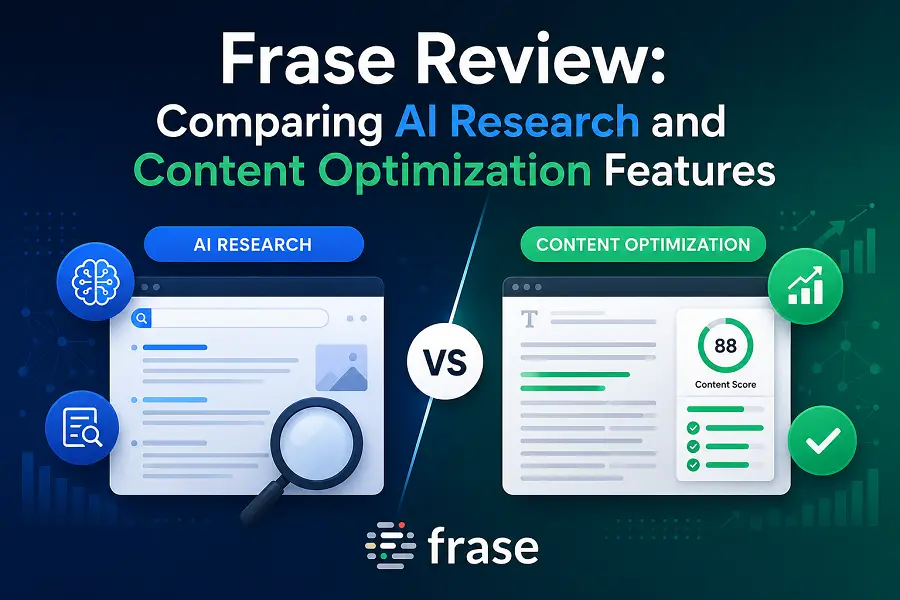
Creating search-optimized content requires a delicate balance between automated efficiency and genuine human value. Platforms that assist in this process must do more than just stuff keywords; they need to streamline discovery and improve drafting quality. This review examines Frase, evaluating how its automated research capabilities compare to its real-time text optimization tools to help publishers satisfy both readers and search engine benchmarks.
Deep-Dive SERP Analysis and Automated Research
The initial phase of writing demands a clear understanding of the existing search engine results pages (SERPs). Automated analysis speeds up this phase by aggregating competitor data into a single interface. Instead of opening dozens of browser tabs, writers receive immediate insights into how top-ranking pages approach a topic.
-
Competitor Structure Scans: The platform maps out the exact heading hierarchies used by ranking sites, revealing common structural patterns.
-
Data-Driven Benchmarks: Users receive immediate averages for word counts, header usage, image frequency, and link depth across page-one results.
-
User Intent Extraction: By sourcing queries directly from public forums and search engine question boxes, the software identifies exactly what information readers are looking for.
-
Information Gap Discovery: The system highlights subtopics that competitors have overlooked, providing a clear path to adding unique perspective.
Real-Time Editing and Content Optimization Features
Once research is complete, the focus shifts to writing and refining the draft. The editing interface acts as a live evaluation system, measuring text depth against competitive benchmarks as the author types. This ensures the technical parameters of search visibility are met without sacrificing the natural flow of the prose.
-
Dynamic Content Scoring: A centralized numerical grade updates continuously, indicating how thoroughly the draft covers necessary subject matter relative to the competition.
-
Topic Coverage Tracking: The editor suggests relevant semantic terms and tracking metrics, indicating whether specific concepts are underrepresented or overused.
-
Generative Engine Optimization: Advanced scoring options evaluate how well the content aligns with the data retrieval preferences of modern AI answer platforms.
-
Automated Brief Conversion: Selected research points and competitor headings transform into structured outlines with a single action, keeping the drafting process aligned with search intent.
Evaluating Workflow Impact: Research vs. Optimization
While both feature sets reside in the same ecosystem, they serve distinct operational goals. The research toolkit functions as an analytical engine, saving hours of manual investigation by diagnosing what is already successful in search results. It builds the foundation of the article, ensuring the structural direction aligns with real user queries.
Conversely, the optimization toolkit focuses entirely on execution and text refinement. It acts as an interactive safety net during drafting, keeping semantic coverage accurate while preventing keyword over-optimization. The research features determine what to write, while the optimization features ensure the final draft achieves maximum clarity and depth.
Conclusion
The true value of this platform lies in its dual-layered approach to content creation. By combining comprehensive SERP analysis with intuitive, real-time editorial scoring, it bridges the gap between raw data and fluid writing. Utilizing these complementary features allows digital publishers to construct comprehensive, well-researched articles that satisfy technical ranking metrics while delivering genuine, helpful insights to human readers.
FAQs
What is the primary difference between the research and optimization features?
The research features analyze search results to build structured outlines and identify user questions before writing begins. The optimization features grade the live draft, suggesting semantic keywords and tracking topic coverage in real time to improve completion scores.
Does the optimization score guarantee high search engine rankings?
No, the scoring system serves as a competitive benchmark rather than a absolute guarantee. It ensures the text covers essential topics found in top-ranking results, but success still depends on original insights, human editing, and overall domain authority.
Can the research tool find questions from sources outside of Google?
Yes, the platform extracts user queries from multiple environments, including popular discussion forums, public message boards, and alternative search engines, ensuring a broader understanding of user curiosity.
How does the platform assist with generative AI search visibility?
The system includes specialized scoring that analyzes text structure and citation potential, helping format information so that modern AI answer engines can easily crawl, understand, and credit the content.
Is it possible to optimize existing articles that are already published?
Yes, published URLs can be imported directly into the editor. The software analyzes the live text against current search results, pointing out newly developed topic gaps and recommending specific updates to restore search visibility.








Leave a Reply