


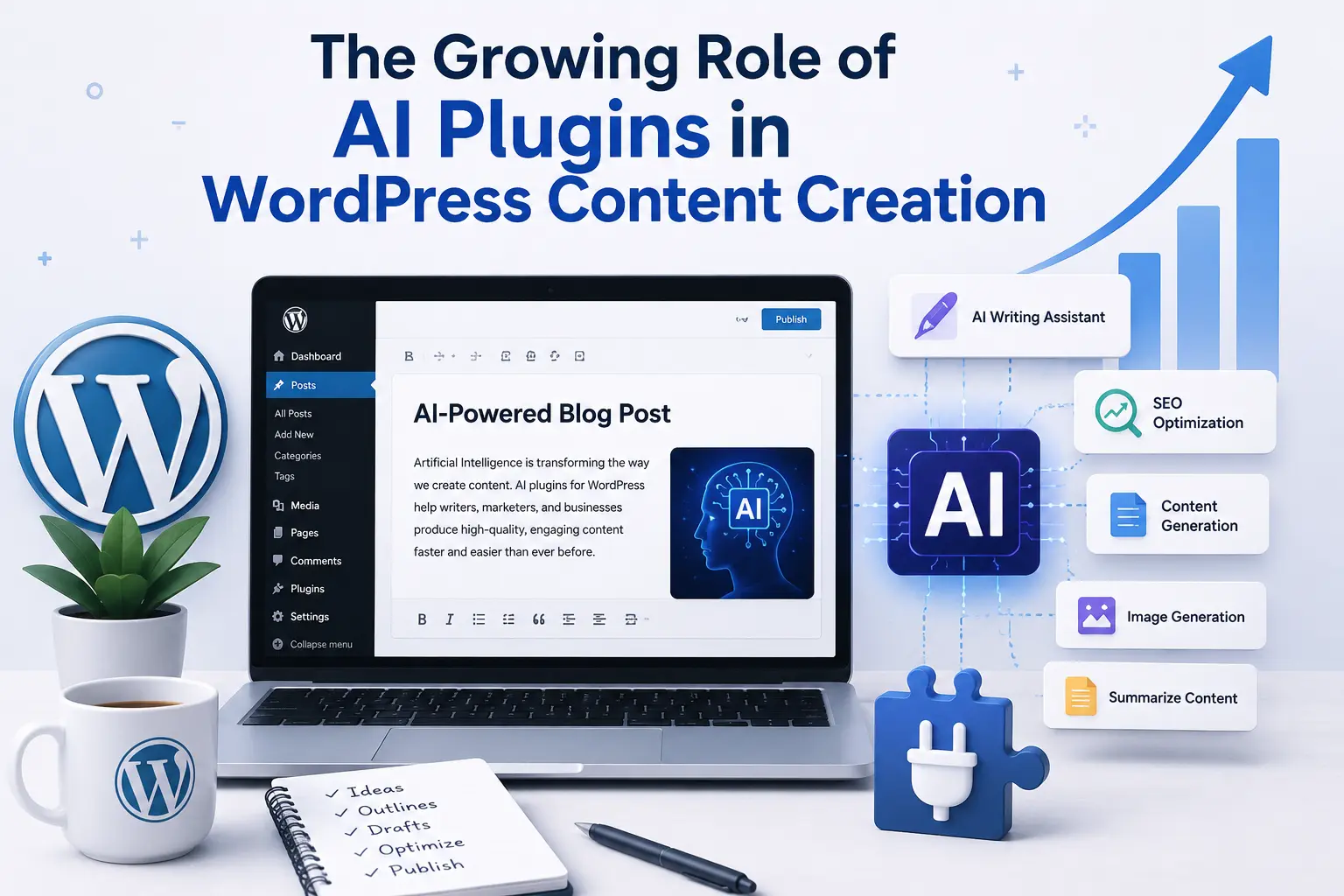
The editorial ecosystem within WordPress is undergoing a major shift as machine learning applications embed themselves directly into the block editor. Editorial teams are moving past simple copy-paste workflows from external chat interfaces. Instead, native artificial intelligence plugins are restructuring how content is researched, formatted, and optimized for search algorithms directly from the dashboard.
This integration transforms the content management system from a passive text repository into an active collaborative workspace. Understanding how to manage these automated tools ensures that website owners maintain high content standards while scaling their production workflows efficiently.
Expanding Editorial Capabilities Beyond Basic Drafting
Modern AI extensions inside the dashboard handle intricate operational tasks that go far beyond spinning paragraphs. These tools interface directly with the site’s database, allowing them to cross-reference existing articles and maintain brand consistency across extensive media libraries. The primary value lies in eliminating administrative bottlenecks that stall the publication process.
-
Automated Contextual Interlinking: Intelligent modules scan incoming text to instantly recommend and insert hyperlinks to older, relevant articles published on the domain.
-
Taxonomy Management: Plugins analyze the semantic core of an essay to suggest highly accurate categories and tags, preserving clean site architecture.
-
Multi-Language Localization: Translation tools adapt existing content for international audiences while preserving the regional tone, formatting, and cultural nuances of the source material.
-
Media Asset Procurement: Systems generate contextual image alternative text and suggest appropriate royalty-free visuals or graphics based on the explicit intent of the paragraph.
Ensuring Quality and Compliance with Search Guidelines
An influx of automated text presents a distinct challenge for long-term organic visibility. Search engines continuously refine their systems to filter out unhelpful, mass-produced material that lacks genuine depth. Successfully utilizing algorithmic plugins requires a strict governance framework to ensure the output aligns with Google’s E-E-A-T (Experience, Expertise, Authoritativeness, Trustworthiness) criteria.
-
Enforce Human-in-the-Loop Verification: Treat plugin output strictly as a rough structural outline that requires mandatory manual refinement, fact-checking, and anecdotal enrichment by an industry expert.
-
Inject Unique Subject Matter Insight: Supplement automated summaries with exclusive corporate data, original case studies, or firsthand customer quotes that software cannot replicate.
-
Verify Technical Data Accuracy: Machine learning models occasionally present fabricated information with high confidence, necessitating rigorous validation of all historical timelines, technical definitions, and statistical points.
-
Refine Tone and Readability Scales: Standardize linguistic outputs by stripping away repetitive structural cadences and corporate jargon, reshaping the syntax to match a clear human voice.
Optimizing Metadata and Semantic Architecture Globally
Beyond visible editorial text, artificial intelligence plugins excel at managing hidden structural elements that search crawlers prioritize. Machine learning systems analyze a document’s semantic coverage in real time, comparing the draft against top-ranking marketplace rivals. This automated audit guides the creator to cover essential subtopics before hitting the publish button.
The software dynamically compiles schema markup, constructs precise meta titles, and drafts descriptive snippets optimized for featured snippet placement. By automating these technical components, the creator can focus fully on the depth and narrative quality of the main article. This combination of structural accuracy and genuine human value creates content that performs exceptionally well across both traditional search layouts and generative AI overviews.
Conclusion
AI plugins within the WordPress dashboard are redefining creative efficiency by taking over repetitive optimization and formatting tasks. The website owners who thrive will be those who use this automation to handle technical execution while doubling down on human experience and editorial integrity.
FAQs
Can using AI plugins for content creation cause a website to be penalized by Google?
No, search systems do not automatically penalize content simply because it was created using automation. Visibility issues only arise if the generated material lacks original insights, provides inaccurate data, or is produced solely to manipulate search rankings without helping the user.
Do these plugins slow down the WordPress administrative dashboard?
Some asset-heavy extensions can add processing lag if they make constant external API calls during a live writing session. Opting for plugins with asynchronous data processing or server-side caching minimizes dashboard latency.
How do modern semantic plugins suggest relevant internal links?
These tools read the natural language patterns of your entire published post database. By identifying semantic connections between old and new topics, they find natural anchor phrases to build contextual link structures automatically.
Should I let AI plugins write my entire blog post from scratch?
Doing so is risky. Fully automated drafts often lack personal experience, original analysis, and unique perspectives, which are vital for establishing search trust. Using plugins for outlines, ideas, and optimization yields much better results.
Is it necessary to disclose the use of AI assistants to my website visitors?
While not universally legally mandated for standard blog copy, adding a transparent editorial policy builds trust with your readers. Disclosing that automation assisted with research or structural formatting demonstrates institutional integrity.





Leave a Reply