


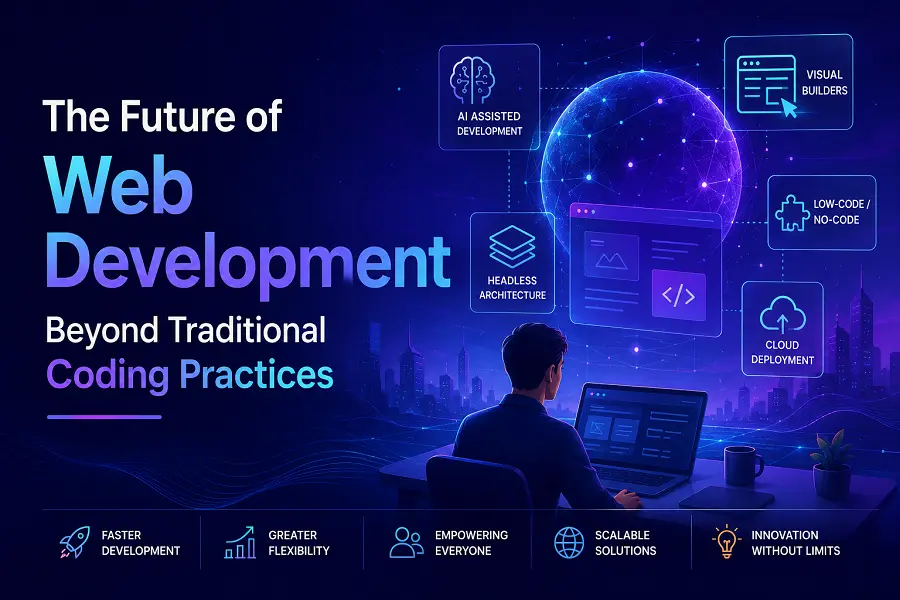
Web development is undergoing a fundamental shift. Writing every line of code by hand is no longer the sole path to building powerful digital experiences. As technology evolves, the focus is moving away from syntax syntax errors and moving toward architecture, logic, and user experience.
The Rise of Intelligent Automation and AI Integration
Artificial intelligence is changing the developer’s toolkit from a simple text editor to a collaborative ecosystem. Machine learning models now predict code blocks, automate debugging, and translate natural language into functional components. This shift does not eliminate the developer; instead, it elevates their role.
-
Predictive Code Completion: Development environments now anticipate developer intent, reducing repetitive keystrokes.
-
Automated Error Detection: Systems identify vulnerabilities and bugs in real-time before the testing phase begins.
-
Natural Language Translation: Engineers can describe a feature in plain English, and AI assistants generate the foundational structure.
-
Refactoring Assistance: Legacy codebases are automatically updated to modern standards with minimal manual intervention.
Visual Development and the Evolution of Low-Code Platforms
Low-code and no-code frameworks have progressed beyond basic template builders. Modern visual development platforms allow teams to build enterprise-grade applications with complex databases, API integrations, and custom logic without touching a traditional terminal.
-
Visual Architecture Modeling: Designing database schemas and user flows using drag-and-drop interfaces that compile into clean, production-ready code.
-
Rapid Prototyping to Production: The gap between design tools and deployment has vanished, allowing instant synchronization between UI mockups and live applications.
-
Democratization of Development: Business analysts and product managers can build internal tools, freeing up engineering resources for deeper technical challenges.
-
Component-Based Ecosystems: Reusable visual blocks ensure design consistency and security compliance across entire organizations.
Edge Computing and Serverless Architecture Shifts
The physical location of code execution is changing. Traditional server management is giving way to decentralized, serverless architectures that execute functions closer to the end user. This minimizes latency and removes the burden of infrastructure maintenance.
Developers no longer configure virtual machines or manage server scaling. Cloud providers automatically handle the allocation of resources on demand. This allows creators to focus entirely on writing business logic while edge networks distribute the application globally, ensuring near-instant load times for users regardless of their geographical location.
Conclusion
The future of web development belongs to those who adapt to abstracting away repetitive tasks. By embracing AI collaboration, visual development environments, and serverless infrastructure, creators can build faster, more secure, and highly scalable digital products. Success will be measured by creative problem-solving and architectural design rather than speed of manual typing.
Frequently Asked Questions
Will AI completely replace web developers?
No. AI is replacing the repetitive parts of coding, such as syntax writing and basic debugging. Developers are transitioning into architects, product designers, and systems integrators who direct these tools.
What skills should modern web developers focus on now?
Focus on system architecture, API integration, data security, user experience design, and learning how to effectively prompt and manage AI development tools.
Can low-code platforms handle large-scale enterprise applications?
Yes. Modern visual platforms generate optimized code, support custom scripting, connect to secure databases, and scale automatically to handle millions of users.
How does edge computing benefit web development?
Edge computing processes user data at the nearest regional data center instead of a centralized server. This drastically reduces website load times and improves security.
Is manual coding still relevant for beginners?
Yes, understanding foundational concepts like HTML, CSS, and JavaScript remains essential. It allows you to debug automated outputs and understand what happens behind visual interfaces.






Leave a Reply